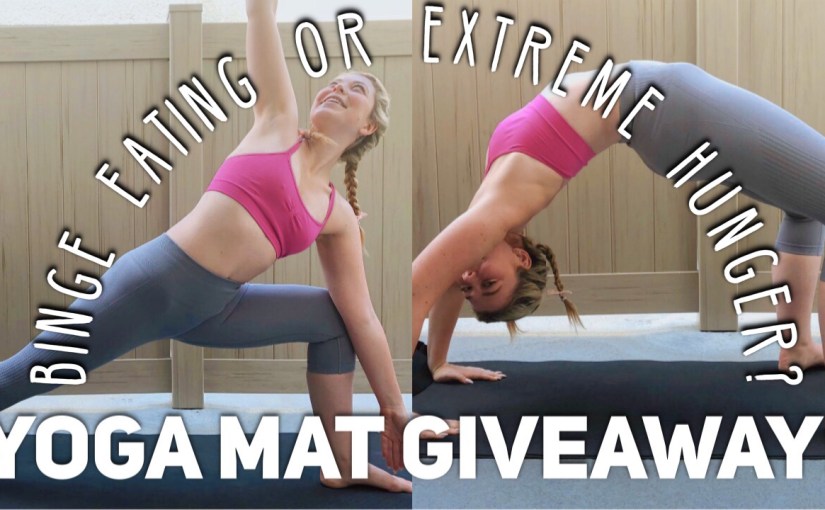
Have You Developed Binge Eating Disorder? (+Giveaway!)

“I’m in recovery and I’ve been eating a lot more than usual. I think I’m developing binge eating disorder. I feel like I’m losing control around food. HELP!”

I can empathize with this feeling, I felt this way at the beginning of recovery as well.  During the beginning when the extreme hunger was at its peak I didn’t know how to process what I was doing. I was scared, and it was emotional, and I all but completely convinced myself that this was binge eating disorder.
tumblr_msf7y5SeRs1qf1498o1_500.jpg

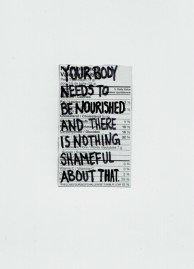
When you are recovering from an eating disorder or restrictive eating or chronic dieting, your body needs to replenish the backlog of caloric deficit that you have built up over the years.  Even if you have been in quasi recovery for a long time.  Your body still has not had the chance to metabolically restore itself to its set point.  You will continue to get these strong urges to eat large amounts of food until your body has had its chance to properly heal. Until you are energy balanced and your metabolism is back to functioning optimally your body will continuously call out for more food.  This desire to eat (and eat and eat and eat) is perfectly natural when you are recovering from disordered or restrictive eating.  Your body heals itself through calories and eating what seems like a lot or a “binge-able amount” isn’t actually a binge but a natural bodily response to starvation (and/or restriction).
tumblr_mg346oaUm31qf1498o1_500.jpg

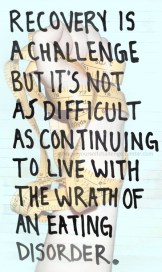
Eating disorders gain their power from control and often in recovery the hardest part is feeling the loss of that control. It’s a scary and difficult time to navigate, but just because it FEELS like you are going off the rails by eating a ton doesn’t mean you are developing a new psychopathy.  Binge eating disorder is a very serious mental health disorder with many other symptoms and aspects other than just “eating a lot” and “feeling out of control”.  When you are a person who is recovering from restrictive eating in any way, anorexia, orthorexia, EDNOS, or are in quasi recovery, responding to the extreme hunger that your body feels in recovery is not the same thing as having binge eating disorder.

The thought process that the unrestricted eating in recovery is actually BED is unbelievably common.  Most people have a certain picture of what their recovery will look like and when it goes off the rails and outside the lines of the plan the reactions can be extreme.  Recovery is about letting go of structure, numbers, and plans around food and just letting your body have what it truly needs. This is scary, but it’s a sign you are on the right path.  Learning to become comfortable with the discomfort is a huge and important step forward. Your body knows what it wants and needs, and you should honor that to get yourself better.

ALSO – I’m having a giveaway over on my Instagram. The company Levoit has agreed to send one of my followers their super dope yoga kit.  I’m super duper thriled because I have been looking for a way to thank you all for getting me to 1,000 subscribers on my Youtube channel!! If you are interested in entering the giveaway all of the details are on my instagram.  Giveaway ends on 5/2/18.
Processed with VSCO with t1 preset

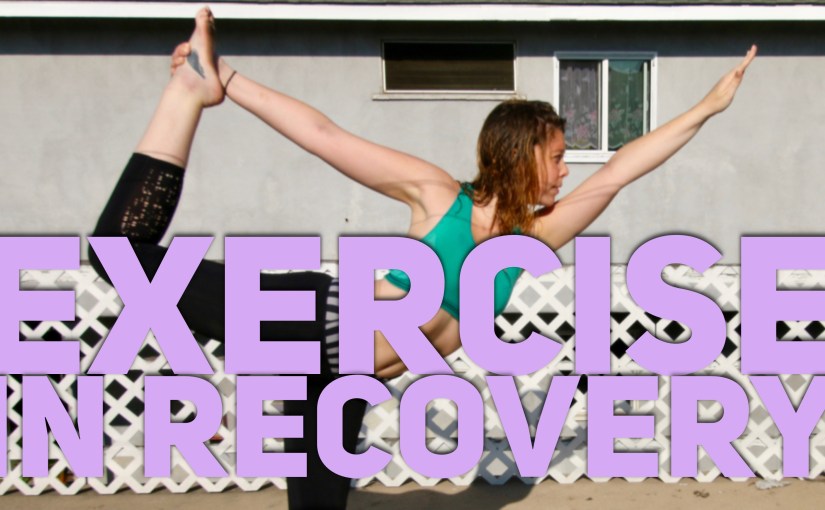
To Exercise Or Not To Exercise?

That is the question… Should you exercise in recovery?  The short answer is no.

For those recovering from disordered relationships to their bodies and food, exercise is a bad idea.  Exercise burns calories and the goal of eating disorder recovery is weight restoration, so doing any exercise to slow or impede this process goes directly against any recovery efforts.  Another goal of recovery is to regain or discover a healthier mentality about your body and food.  Trying to burn calories in this process can keep you stuck in a mindset that isn’t beneficial.  It is true that there is more to exercising than just burning calories such as becoming stronger with weight training or more centered with yoga, however those benefits will still be there and can be reaped AFTER recovery has been achieved and maintained.

giphy-2

In my recovery, I went through a few phases of “quasi-recovery” before I fully committed to a robust recovery plan which you can read about in this post.  In my “quasi-recovery” state I continued to exercise.  I was exercising less than when I was sick but the mentality behind my exercise was still dangerous.  I was still counting calories and aiming for a deficit.  I was still trying to stall the weight gain.  I was using exercise as a crutch to keep me from truly letting my body heal and find its set point.  When I finally made the very difficult and complicated decision to truly recover and eat without any restrictions I made the equally difficult decision to stop exercising completely as well.

At first it was challenging, I found myself doing pushups and squats absentmindedly in my bedroom to compensate for the guilt I felt not working out.  Eventually I stopped even that and truly let my body rest for the first time in a long time.  As the weight came back on and my body changed, my mindset began to change too.  I slowly but surely learned that exercise was just a way I was punishing my body for what I ate.  I learned to love myself and enjoy all of the things that recovery brought back into my life.  I needed that time of complete rest to truly understand how exercise was not good for my recovery.

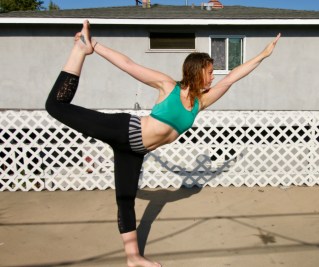
IMG_0745

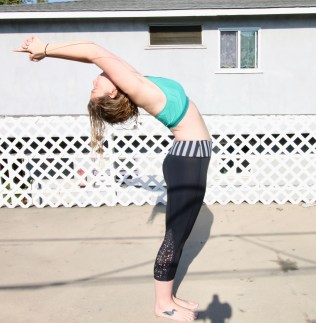
It wasn’t until I was fully weight restored to my set point and mentally recovered for an entire year that I began to wonder about exercising again. This time however, I noticed a very important difference in my mindset.  I didn’t want to punish myself, burn off all of my fat, or create any kind of deficit.  I wanted to move my body with love and celebrate what it could do.  I began doing yoga again.  I have been doing yoga for a few months now and not once have I felt “too fat” or “not good enough.”  Not once has weight loss been my ultimate goal.  I can feel myself getting stronger and more flexible and I look at myself in the mirror as a powerful warrior who has won the battle.

However, despite all of my progress I can never forget that I have a history with eating disorders.  As great and body positive and happy as the workouts make me now, I know that there is always a chance the anorexic voice can creep back in.  If I ever feel like I need to shed the weight, if I ever force myself to a class I really don’t want to do just out of guilt, and if I ever start to abuse exercise again I know I need to completely stop.

Exercise can be wonderful if done safely and as a celebration of movement and strength, but for those attempting to recover from an eating disorder none of those benefits are pertinent.  The key to recovery is to eat without restriction, stop all exercise, and learn to be okay with yourself without making any changes to who you naturally are.

IMG_0739

Namaste