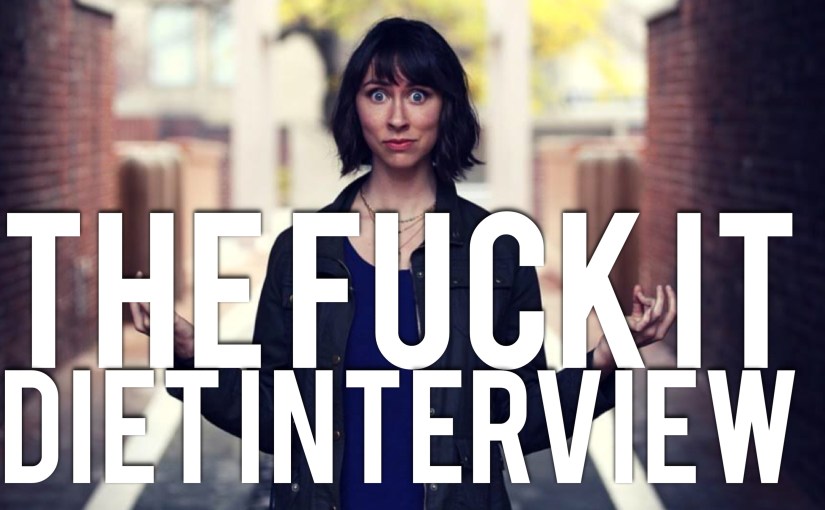
 Recently I had the absolute pleasure of connecting with Caroline Dooner. Caroline is the creator of The Fuck It Diet, which teaches radical normal eating to chronic dieters. She also teaches intuition and advocates hardcore for #rest. You can follow her on instagram, and get her free intro course, “Eating Should Be Easy” over on The Fuck It Diet.
When I was going through my own recovery I stumbled upon her website and it felt as if her words were speaking directly to me. Caroline has been through the ringer of diet culture and found a way out that I strived to emulate. Her writing and philosophies on making eating simple were such powerful sources of inspiration for me and many others trapped in diet culture. Today she continues to help people through her blog, podcasts, and e-books. She believes that eating should be easy because, fuck it, it’s just food right?
I was delighted when she agreed to answer some of my burning questions and it was wonderful to be able to get her seasoned perspective.
RR: Why the name “The Fuck It Diet”?
CD: It’s how I felt when I finally realized that dieting was backfiring and doing the opposite of what I have always hoped it would. It’s how I felt after being on diet after diet, hoping that the next one would finally heal my food addiction. It is the true exasperation of realizing it’s never going to work.
RR: What was the life event that inspired you to start the site?
CD: I had been dieting obsessively for 10 years. You could call it an eating disorder, or you could just call it obsessive dieting, there is a big overlap for lots of people anyway. But I was Paleo, and bingeing on all the paleo treats I could get my hands on, and finally started hearing whispers in the Paleo community, that not eating enough carbs will hurt your metabolism, and wreck your hormones, and make you more insulin resistant, which had been the thing I was trying to heal.
But the event/moment that spawned it, was my 24th birthday. I binged on squash pancakes and low sugar almond flour cupcakes, and had a legitimate epiphany. I can’t do this anymore. This is going to keep happening over and over and over, until I step out of this cycle, learn to eat normally, and heal my relationship to weight.
I had tried to heal my eating many times before, going on stints of intuitive eating, or something similar. But it was never truly the cure, because I was still trying to eat the smallest amount possible, and still petrified of gaining weight. The Fuck It Diet was different.
RR: How long did it take for you to heal your relationship with food?
CD: It was a process that evolved over the first few years of my no-holds-barred eating, and my work on deeper and deeper body acceptance. But I would say that between 6 months to a year is where I noticed a big shift.
Even still, just over the course of eating a certain food for a week would change my relationship with that certain food. So there were small victories, and then bigger shifts that happened over time.
RR: In your opinion, what you think the most negative impact of diet culture is?
CD: It’s really hard to choose just one, but diet culture puts you at odds with your body. The way you trust it, and your appetite, and your weight. It makes you totally out of touch with your own wisdom, intuition, cravings. And ruins your health and self-esteem.
RR: Do you think that diet culture is responsible for the rising rate of eating disorders?
CD: Hell to the yes.
RR: Your blog and podcast focuses a lot on spiritual healing – do you think it’s harder to recover if you aren’t spiritual?
CD: Ah yes, it’s such a good question. I have always been seeking guidance, or peace, or help, or knowledge on a spiritual level. And I know that is why and how TFID revealed itself to me. But there are some pretty basic facts and truths, like the biological and metabolic reaction to restriction. Even energetic principals aren’t necessarily “spiritual”. And I am expressly anti-dogma of any kind, diet dogma, spiritual dogma, or otherwise.
Trust in a bigger picture, and a bigger purpose than just being tiny and beautiful will certainly be a big help, but short answer: no. You don’t have to be spiritual to recover.
(pssst. she has a great podcast about this topic here)
RR: What would you say to girls who are afraid of this mindset because of their fear of getting “fat”?
CD: That this is what those businesses want you to fear. That that is just this heartbreaking thing that we have been perpetuating, and it’s so destructive and toxic. And I understand, I was the same way for years. Fat was the last thing I would ever accept being. It’s also because we have so many beliefs about what being fat means. But it’s just so misguided. What’s that JK Rowling quote? “is ‘fat’ really the worst thing a human being can be? Is ‘fat’ worse than ‘vindictive’, ‘jealous’, ‘shallow’, ‘vain’, ‘boring’ or ‘cruel’?”
RR: What is your most important tip to successfully practice intuitive eating?
CD: Do not get caught in the trap of believing you need to be eating the smallest amount possible. That’s a diet. We need to actually feed ourselves.
RR: What has been the most inspiring recovery story you’ve witnessed/had a hand in?
CD: It’s honestly too hard to choose, but in general, my favorite kind of story, and this happens again and again, is that healing from food and weight obsession, opens up a confidence and creative spark that allows people to really trust their own genius, go against the grain, choose a life that people might not understand. It let’s people really listen to their true desires.
RR: What is your number one piece of advice to someone struggling to recover/normalize their relationship with food?
CD: Do not discount how interconnected our relationship with weight is with our relationship with food. You cannot heal the one without the other.
RR: And finally, just for fun – what’s your favorite food?
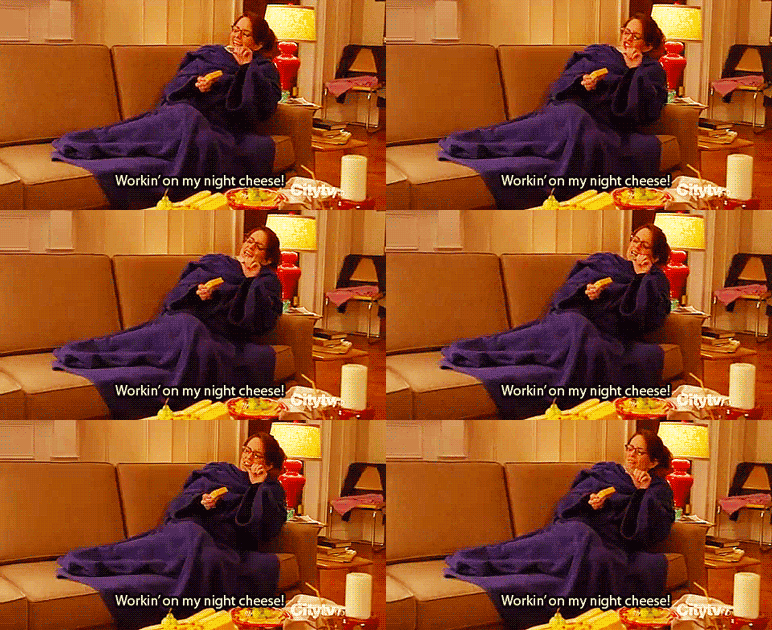
CD: My favorite food is cheese. No contest.
Huge thanks to Caroline for giving me the opportunity to pick her brain. It meant a lot for me to be able to have this opportunity considering how incredibly helpful I found The Fuck It Diet and everything she put into it while I was struggling to recover. If you’ve never heard of The Fuck It Diet – it’s about time you checked it out!
New to Ladle by Ladle?
Check out my Youtube channel where I make new videos about recovery, recipes, and intuitive eating: Ladle By Ladle
SOCIAL:
Instagram – @ladlebyladle
Facebook – facebook.com/ladlebyladle
 ladle-by-ladle.com