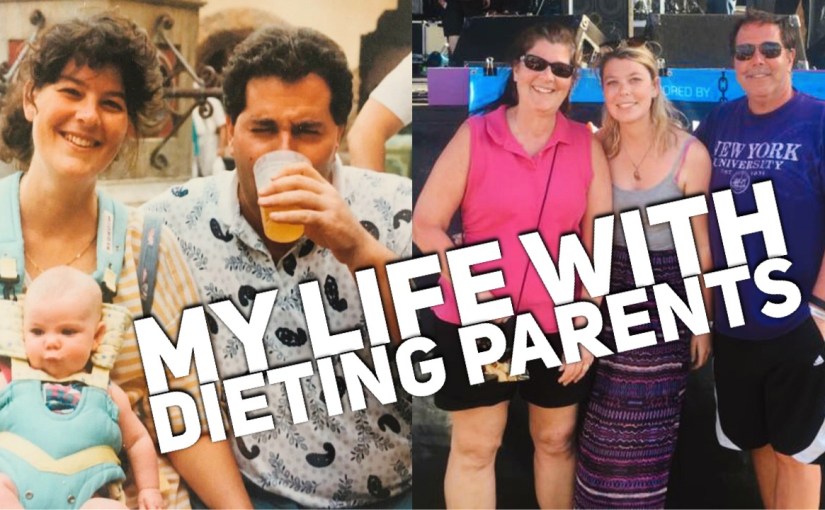
Growing Up With Yo-Yo Dieters

Since before I was born my parents have struggled with their weight.

I don’t know every detail of their personal story and I don’t speak for them. I am simply going to talk about this from my perspective and the impact it had on me.
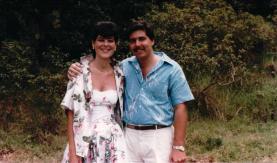
289906_10150894984376693_184261401_oPictures of my parents in their teenage years show them as very beautiful, classic, 70s looking people. I know because they’ve told me that when they were in their early twenties they both started trying to lose some weight with something called the rice diet together. The rice diet is a very old low calorie fad diet that focuses on eating mainly rice and fruit. Nowadays we can look at the rice diet as just another fad diet with easy to see short term benefits but detrimental long term disadvantages. It is very clear to me that from this point on my parents became trapped in a classic yo yo dieting cycle that they stayed in for over a decade.

They would successfully lose weight with restrictive, hard to maintain diets that they eventually could not sustain in real life. The weight would come back on every time but of course with additional weight gain because their body’s metabolisms were protecting themselves for when they did it all over again. We all know here that there is always going to be an overshoot when you gain back weight from an unsustainable diet but the problem was that my parents repeated these weight loss techniques over and over again, completely messing with their natural metabolisms and ultimately always gaining more weight and being unsatisfied with themselves.
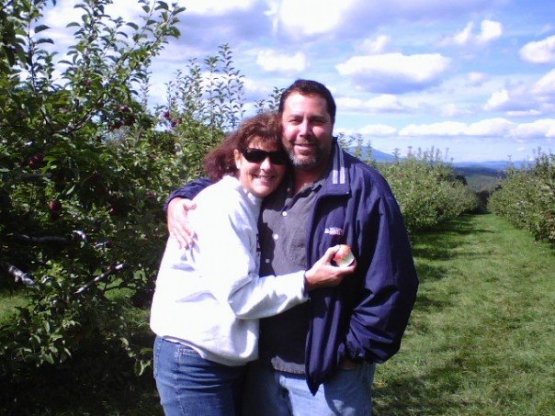
199580_5323071661_7062_n

My memories of food growing up revolve around weight watchers, Atkins, Nutrisystem, and more. I remember my mother had dozens of notebooks with every day’s food point calculations. I remember my dad getting sent boxes of pre-made meals and winning little teddy bears every time he lost weight. I remember having diet books sitting casually on the coffee table or in my dad’s bookshelf. I remember fat free yogurt, 90 calorie cookies, and diet sodas. I remember my dad buying and failing to follow through with exercise machines, DVD programs, and workout regimes. I remember my mom going to the gym so often that I was a regular at the daycare facility there. I remember weight loss goals being written in my parent’s bathroom, watching them take before pictures that never got after pictures – because despite diet culture existing in every facet of our lives, my parents never permanently lost the weight that seemed to haunt them.

I have no idea if my parents would be at the weights they were so unhappy with if they didn’t constantly force their body’s through diet after diet after diet. I often wonder now if they would be a little smaller had they never begun messing with their bodies at all. I don’t think they’d be super model thin – but who is? Certainly not anybody in my family – and we never will be, that’s just not in our genetics.

Now when it came to me, food was an entirely different story. I was able to eat whatever13151754_10153602205931662_7926056698667349285_n I want, and I wanted cookies and candy and ice cream. My parents did not food shame in front of me. Occasionally at the start of one of their new diets all of the junk food had to be thrown away, but I knew it was about them and not about me. Despite calling themselves fat they never once called me fat.  When I gained some weight in high school and complained they always assured me I was beautiful and didn’t need to change. I ate intuitively. I ate junk food and healthy food. I did not consider dieting until after I moved away from the unconditional love my parents surrounded me with.

Despite how wonderful they were, growing up with their attitudes internalized a lot of incorrect messages within my mind.

  1. It incorrectly taught me that being fat was wrong, ugly, and unhealthy.
  2. It incorrectly taught me that the only way to combat being fat was by restrictive and obsessive dieting
  3. It incorrectly taught me the only way to try and attain happiness was to lose weight quick
  4. It incorrectly taught me that junk food was bad food

I don’t blame my parents for my eating disorder. I don’t blame anybody – anorexia is a mental illness that is triggered and effected by the world around us. Media, entertainment, advertising, clothing stores, commercials for diets, fat shaming, and a general lack of respect and proper understanding of healthful nutrition are all reasons people get stuck the way I did. My ED was however, triggered by the first diet I ever attempted. Self-conscious about the weight I put on naturally in college I attempted my first diet much like my parents did in their twenties. My diet morphed in a way theirs never did though of course.

13497872_10153684094931662_4697141297950104532_oNow my parents and I have our shit way more figured out. We have all learned a lot through our own journeys about our weight and health. Set points are real and my family’s is a little bit higher than average. We cannot chase an ideal that our body’s will never be happy with because we will be chasing forever instead of enjoying where we are now. No food is scary, no food is bad. Food is food. If we eat what we love, when we love, while listening to our body instead of punishing it we will be right where we need to be. Eating full fat yogurt and fresh baked cookies won’t set our health goals back. Wherever we are in our journey is perfect because we are all good people and that is what makes us beautiful.

That’s what it was like growing up in a household with parent’s who yo-yo dieted my entire childhood. My parents are loving, hardworking, nurturing, hilarious, fun, intelligent people. That’s how I know that nobody is immune to diet culture, but that with a little bit of work – we can all fight it.
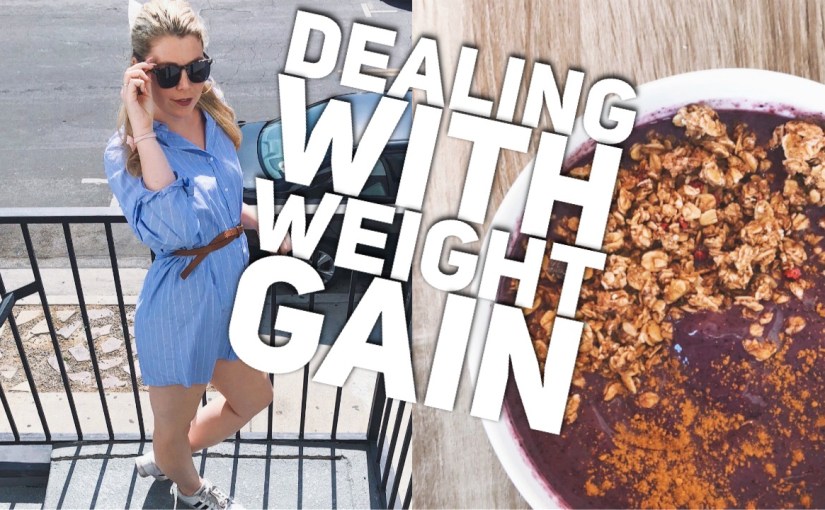
Dealing with Weight Gain: Set Point Vs. Minimum “Healthy” Weight

What is your healthy weight?

I talk a lot about set point weight vs. minimum “healthy” weight (if you’re new here or have no idea wtf I’m talking about check out this post) but today I wanted to get into the difference between them. I will also touch on a few tips for dealing with the weight gain that comes with recovery and finding your set point.

Your lowest “healthy” weight is the minimum weight that is healthy for your body according to the bullshit BMI scale. A BMI of around 20 for example (but just a reminder, BMI is bullshit, I can’t say that enough).  Your set point weight is the weight that your body maintains happily without any interference.  It is the weight that your body likes to be when you are just living your life, eating freely and intuitively, and only exercising in the form of activities you love to do or not at all. It’s possible these weights are the exact same, everyone is unique, but it isn’t likely. When weight restoring for any recovery from a disordered relationship to your body or food your set point is the only weight that will keep you happy for life.

weightcollage
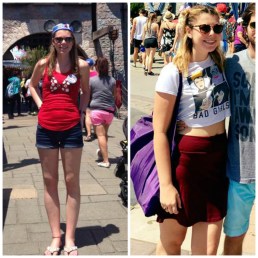
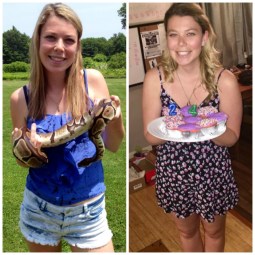
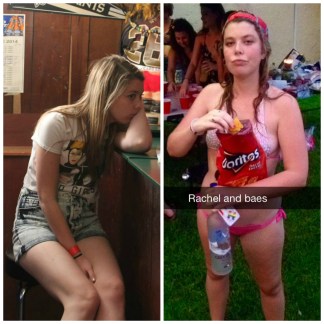
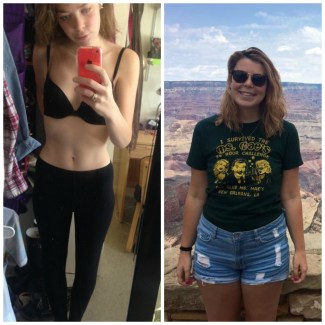
Left: Quasi Recovery, Minimum “Healthy” Weight – surviving on calorie counting and over exercising                                        Right: Set Point, Thriving on intuitive eating and living in freedom from numbers and scales

When I was in quasi-recovery I was maintaining my minimum “healthy” weight through calorie counting and intense exercising.  Way too much space in my brain was taken up by numbers and scales. I thought that this was just the way my life would be forever because there was no way I could be happier if I gained weight.  At that point I had already gained a little bit of weight from my anorexic body and was not comfortable with the idea of gaining ANY more.

Then one day it clicked and I began my journey towards my set point, but gaining weight was hard. It was not rainbow and sunshine. Here are some tips from my personal experience:

  1. Buy flowy clothes – loose dresses, leggings, big t-shirts, track pants.  As you gain weight you will not only put on weight you will also retain water, experience swelling, and possibly overshoot.  Feeling your body change and expand in clothes can be very triggering. It’s best to avoid it altogether. No more jeans or bodycon dresses for awhile (and you’re welcome btw, no one likes wearing that shit anyway!)
  2. Avoid mirrors, avoid scales – any form of body checking is futile and can be a quick trigger into a relapse. I covered my full length mirror and only used a small mirror for makeup. Despite that, there were days when I caught a glance of my reflection and thought a big fat ugly monster was staring back at me, but that monster was just me. After I finally settled into my set point I realized how distorted my own view of myself was while I was gaining weight.
  3. Be consistent with a counselor. Nothing is as helpful as stable accountability and someone to be honest about reality with you as your brain tries to fuck with you about your body and weight.
  4. Tell your friends and family so that they know exactly what’s going on. Sometimes people are afraid to recover or gain weight on their own because they are worried what others will think. You should never compromise your health for the opinions of others, but if you tell your friends and family then they will be aware and you don’t have to feel any shame around them.

It took me about a year to find my set point.  Now that I’ve been at this weight for over two years I am never looking back.  I’m at a weight that I once thought would be impossible for me to ever love myself at.  But I love myself more at this weight than I have at any other point in my life. I can eat whatever the fuck I want, I only workout when I feel like it, and I can just be me and live my life. I don’t have to stress about my weight because I am right where my metabolism and body wants to be at.  That freedom is the difference between surviving to maintain your minimum “healthy” weight and thriving at your set point. It takes time and patience with yourself, but it is worth it.

Minnie Maud Recovery

Minnie Maud is an eating disorder recovery method developed by Gwyneth Olwyn.  It has since been rebranded as the Homeodynamic Recovery Method.  The website with all of the pertinent information can be found here. What follows is my own analysis of the method and a brief overview of my successes with it.

MinnieMaud Guidelines are the guidelines for recovery from restrictive eating disorders such as anorexia, binging/purging, bulimia, orthorexia and any EDNOS involving food restriction that I followed in recovery. The “Minnie” refers to the Minnesota Starvation Experiment and the “Maud” refers to the anorexia family based treatment program, the Maudsley protocol.

The guideline’s food amounts are what energy-balanced, non-eating-disordered people normally eat to maintain their health and weight. Meaning your minimum intake guidelines are what you can expect to eat during AND after recovery. However, you can expect to eat far more than minimum intake during the energy-restoration part recovery. (AKA extreme hunger).

The way to successfully follow the MinnieMaud program is to:

  1. Eat the minimum intake every single day. It is a minimum intake and you are both encouraged and expected to eat more. Never restrict food intake. Your minimum intake is between 2500-3500 depending on your age, height, and gender and can be found on her website.
  2. No weighing yourself or measuring yourself. This is the easiest way to relapse, so just avoid it completely. While I was gaining weight, I covered mirrors, threw away my scales, and bought loose flowing dresses that would fit me even when I was bloated or heavier. All of these things were crucial to me being okay with the weight gain and getting through the hardest part.
  3. No exercise.  At all.

The MinnieMaud guidelines believe that restrictive eating disorders are neurobiological conditions. The condition can be either active or in remission, but it is never completely cured.  Part of remission is addressing the anxiety and guilt you associate with food head on with a therapist to avoid repeating inappropriate response behaviors to eating such as over exercising or restricting food.

So, the three steps to recovery are:

  1. Weight restoration – to your SET POINT.
  2. Repairing and reversing physical and metabolic damage.
  3. Developing new non-restrictive neural patterns in response to usual anxiety triggers.

These steps can all be achieved through following the program.

your-eatopiaI discovered Minnie Maud over a year before I finally committed to it.  The one predicament about this method is that you have to want recovery for yourself in order to successfully go through with it.  When I found the program, it was still available on the original Youreatopia site.  I haunted the site and forums for months as I unsuccessfully attempted to recover through quasi recovery.  When I finally found a therapist who supported Minnie Maud and I committed at the beginning of 2015. My whole world began to change and by the end of that year I was finally in remission.
 

Clearly MinnieMaud worked for me.  I still consider myself in remission to this day.  After I started eating the minimums within a few weeks extreme hunger hit me and for the next month and a half to two months I was eating between 5000-10000 calories a day, sometimes more.  It was like I had a hunger deep inside me that could never be satisfied.  Then that eventually calmed down and I kept eating to the minimums. I love the concept of a minimum intake because it completely flipped the script from what I had been implementing for years.  Instead of being afraid of going over a certain number, I now had absolutely no limit!  It is a freeing feeling.  I felt the healing relationship to food.  I felt the physical transformation.  I felt the eating disorder disappear into the furthest, darkest corner of my brain.

2015
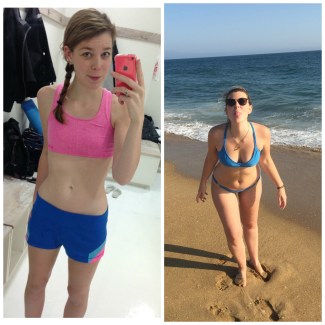
Left: Jan 2015, just deciding to do MM. Sad, thin, empty, confused, miserable. Right: Sep 2015, VERY happily enjoying my summer 9 months into MM and 4 dress sizes bigger. Happy, social, free.

If you are considering this method of recovery I cannot recommend it highly enough.  If you are still not sold, do the research on it yourself.  That’s what I did and it was more than enough to convince me.  People can say what they want about Minnie Maud but they cannot argue with a success story like mine and the many others out there.  The best way to fight food restriction is with food.  Food is medicine, it keeps us alive, and none of us are born with issues about it. MinnieMaud finally allowed me to remember what it was like to have a normal relationship with food and my body, it taught me so much about being a kinder compassionate human both to myself and to others.  It allowed me to find myself again after years of hiding being an eating disorder and for that I am eternally grateful.

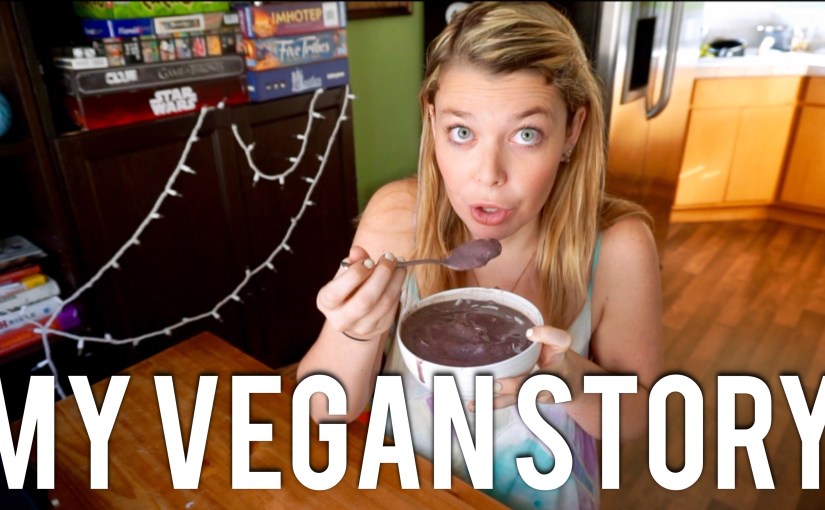
My Vegan Story: Veganism after ED Recovery

In the last 2 months I have transitioned to a vegan lifestyle.  While I do think it’s possible to recover while being vegan if you are ethically vegan and feel passionately about it, I’m not going to recommend it.  I think a huge part of eating disorder recovery is having the freedom to eat whatever you want no matter what.

When I was sick I was a pescatarian.  I wanted to believe I was doing it for the right reasons but there was just really no way to tell because the timing of my eating disorder and my vegetarianism coincided a little too conveniently.  When I recovered I stayed pescatarian for the most part but if I wanted to eat meat I let myself.  I didn’t feel good about it morally which helped me realize that I really did have an ethical dilemma going on in my head, but I still let myself eat it because my recovery was about having zero limitations in my diet.  So, I ate meat for a few months of recovery and then I phased it back out because it went against my own morals.  After being vegetarian again for a few years I started wondering if I was still truly doing it for the animals.  I decided to test myself and let myself eat meat again.  I ate only chicken and I had it about two or three times and felt so horrible. Not the kind of guilt that comes with ED thoughts but the guilt over being a part of a system that I hate so much.   That experiment made me realize that I’m not eating animals because I really do care about them – and it has nothing to do with my diet. I truly don’t want to be a part of a system that I so strongly oppose.  So, I decided to try veganism because taking any part in the system of animal slavery, abuse, torture, and murder was not who I wanted to be.  It wasn’t that hard, I was already vegetarian and I always found that after I recovered lactose really made my stomach hurt.  I think I made myself lactose intolerant by cutting it out of my diet for so long, so it was actually quite easy for me to transition.

As far as my biggest justification for my veganism (not that I need one, but I do have one…) Climate change is this huge looming doomsday that’s off in the not so distant future and everyone’s kind of ignoring it.  We’re down here squabbling about issues which are important but the bigger picture is that the earth is going to die, climate change is going to wipe us all out, we’re responsible, and we’re not doing anything about it.  So I think about it like this: you have the White Walkers in the North and they’re going to kill all of us but we’re all down here wondering who should be sitting on the Iron Throne when really, does that matter at all?  I mean eventually hopefully one day we can worry about those issues, who’s sitting on the Iron Throne, etc.  In the meantime, shouldn’t we all be focusing on killing those White Walkers?!?  Believe it or not animal agriculture is a leading cause of global warming (go watch Cowspiracy on Netflix asap) and it’s insane to me that everyone continues to ignore it instead of doing something about it!

I also care deeply about the animals and I think that the way we treat them is the most unethical and inhumane injustice in our society.

For those of you who are still recovering from an eating disorder – despite my strong views on veganism, I do not recommend starting a vegan diet in recovery.  You have to be in the right headspace to make a decision about your diet like that and if you are recovering from a restrictive eating disorder or you are in a restrictive eating disorder that is not the time to make that kind of decision.  While I don’t find veganism restricting at all, if I was in a headspace of restriction I sure as hell would find a way to. I think it’s great when people want to go vegan I just think you need to make sure you’re in the right state of mind to make that decision and once you are recovered please join us!  Until then do what’s right for you ❤

psssst – if you like my videos make sure to subscribe to my channel!

To Exercise Or Not To Exercise?

That is the question… Should you exercise in recovery?  The short answer is no.

For those recovering from disordered relationships to their bodies and food, exercise is a bad idea.  Exercise burns calories and the goal of eating disorder recovery is weight restoration, so doing any exercise to slow or impede this process goes directly against any recovery efforts.  Another goal of recovery is to regain or discover a healthier mentality about your body and food.  Trying to burn calories in this process can keep you stuck in a mindset that isn’t beneficial.  It is true that there is more to exercising than just burning calories such as becoming stronger with weight training or more centered with yoga, however those benefits will still be there and can be reaped AFTER recovery has been achieved and maintained.

giphy-2

In my recovery, I went through a few phases of “quasi-recovery” before I fully committed to a robust recovery plan which you can read about in this post.  In my “quasi-recovery” state I continued to exercise.  I was exercising less than when I was sick but the mentality behind my exercise was still dangerous.  I was still counting calories and aiming for a deficit.  I was still trying to stall the weight gain.  I was using exercise as a crutch to keep me from truly letting my body heal and find its set point.  When I finally made the very difficult and complicated decision to truly recover and eat without any restrictions I made the equally difficult decision to stop exercising completely as well.

At first it was challenging, I found myself doing pushups and squats absentmindedly in my bedroom to compensate for the guilt I felt not working out.  Eventually I stopped even that and truly let my body rest for the first time in a long time.  As the weight came back on and my body changed, my mindset began to change too.  I slowly but surely learned that exercise was just a way I was punishing my body for what I ate.  I learned to love myself and enjoy all of the things that recovery brought back into my life.  I needed that time of complete rest to truly understand how exercise was not good for my recovery.

IMG_0745

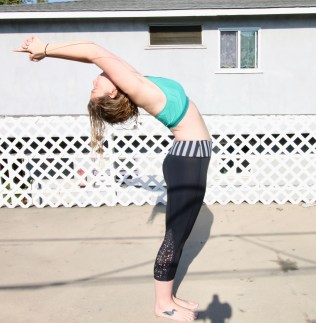
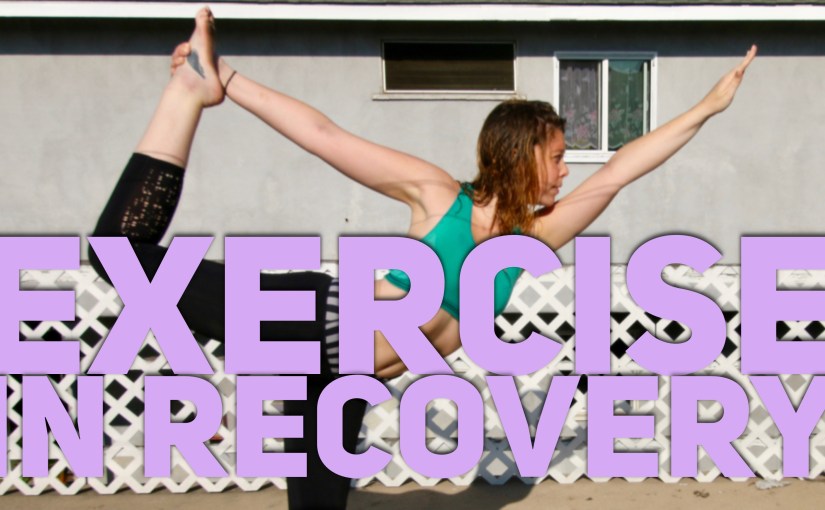
It wasn’t until I was fully weight restored to my set point and mentally recovered for an entire year that I began to wonder about exercising again. This time however, I noticed a very important difference in my mindset.  I didn’t want to punish myself, burn off all of my fat, or create any kind of deficit.  I wanted to move my body with love and celebrate what it could do.  I began doing yoga again.  I have been doing yoga for a few months now and not once have I felt “too fat” or “not good enough.”  Not once has weight loss been my ultimate goal.  I can feel myself getting stronger and more flexible and I look at myself in the mirror as a powerful warrior who has won the battle.

However, despite all of my progress I can never forget that I have a history with eating disorders.  As great and body positive and happy as the workouts make me now, I know that there is always a chance the anorexic voice can creep back in.  If I ever feel like I need to shed the weight, if I ever force myself to a class I really don’t want to do just out of guilt, and if I ever start to abuse exercise again I know I need to completely stop.

Exercise can be wonderful if done safely and as a celebration of movement and strength, but for those attempting to recover from an eating disorder none of those benefits are pertinent.  The key to recovery is to eat without restriction, stop all exercise, and learn to be okay with yourself without making any changes to who you naturally are.

IMG_0739

Namaste

How I Recovered

I want to start off by saying that I am not a dietician, psychologist, or doctor of any sort.  If you are experiencing serious medical concerns, please go see a doctor as soon as possible and if you are having any abnormal, anxious, depressed, or suicidal thoughts or feel like you need a trained ear to help support you please seek counseling from a professional.

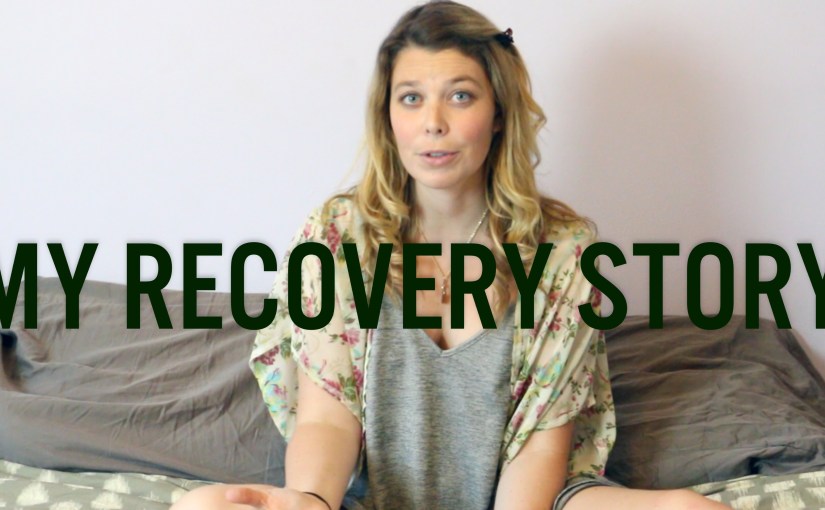
medisneyFor me, recovery from my eating disorder took a long time and happened in several phases.  Boiling the whole process down to a series of easy-to-follow steps just isn’t realistic because this disease is complicated and different for everyone who is affected by it.  This is my recovery story and though it may not be exactly the “right” method, it is the one that set me free.

TRIGGER WARNING – There are descriptions of restrictive eating in here.

The day I googled “symptoms of anorexia” I felt my stomach sink as my eyes scanned the pages identifying with all the evidence I saw.  After a lot of crying and googling for more answers, I was finally ready to accept that I might have a problem.  However, I sat on that knowledge without doing anything about it for a long time.  I told my boyfriend and my parents and they were supportive and not surprised but I didn’t really know where to go from there.  I made an appointment with a therapist, I did some more online research, but mostly I just ignored the truth for as long as I could.

tumblr_nah2rs86fm1qf1498o1_r1_500I saw therapists and went to doctors but the most impactful discovery for my recovery was online communities.  It all started with my Tumblr recovery page.  I discovered other girls who were recovering from anorexia and what that process looked like for them.  I spent hours and hours reading posts from recovering girls and the articles they found interesting.  The first step of course, was to increase my intake.  It happened slowly over the course of a few months.  I increased to 1200 a day then 1300 than 1500 and so on until I settled on 1700 a day for many months.  I stopped all workouts that weren’t yoga.  I made a list of all the food that scared me and I vowed to try and eat everything on the list at least once.  I started photographing my meals and posting about my days on my tumblr.  I was in this state, which I refer to as “quasi-recovery” for over a year.  I went through several periods of relapse where I would return to my old ED behaviors before returning to quasi.  I was still an unhealthy low weight, but I wasn’t losing anymore I was maintaining.  At least I was eating I thought…  sure, I was still cold all the time, afraid of certain foods, isolating myself, losing my hair, not menstruating, feeling depressed and suicidal, I sprained my ankle in my sleep because my bones were so weak, and sitting down still hurt because all my bones stuck out of my body… but for some reason I still felt like I was “recovered”.  Just because I wasn’t eating only 500 calories a day and the fog in my head was dissipating I thought the battle was won.  The problem was that numbers still ruled my life and I was not happy.  I was not recovered.
your-eatopiaThe beginning of my salvation came upon the discovery of youreatopia.com and the Minnie Maud method of recovery.   In summary, it is a system of recovering in which the person eats at least 3,000 calories (some cases it is 2,500, and some it is 3,500, but for me, it was 3,000) and stays as sedentary as possible. This is all in an effort to restore one’s metabolism, while simultaneously expanding from the mental restriction of anorexia.  The 3,000 calories required is the minimum, however, if one’s hunger is not satisfied at 3,000, then they are encouraged to eat until satisfied. In fact, many people who recover this way experience what is called extreme hunger and can eat upwards of 10,000 calories a day.  Minnie Maud is named after the Minnesota Starvation Experiment, which is an fascinating study of starvation on the human body. I was spellbound by the study, and I encourage you to read through it too to discover the negative impact of calorie restriction.  Minnie Maud is controversial because the woman behind it all doesn’t have any known credentials but many girls follow her advice with success regardless.  I had known about Minnie Maud for months but never truly considered it as the right option for myself.  In truth, it scared me.  I think my eating disorder knew that doing this would work, so it constantly told me it was the wrong thing to do.  I haunted the online forums but never truly committed.  Then one day after almost 2 years of quasi-recovery, I just did it.  I ate the minimums and didn’t move all day.  It felt horrible, I hated myself, but also a little tiny part of me felt a little freer.  I started following the guidelines every day.
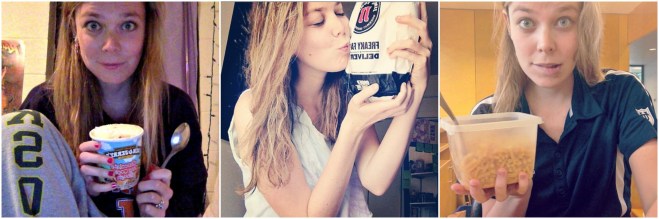
The extreme hunger was very real.  At the worst of it I was eating over 5,000 calories a day and I had the feeling of food being stuck in the back of my throat constantly.  I worried incessantly that I was becoming a binge eater but I just kept going because I didn’t know what else to do and I wanted this to work.  With the freedoms the minimums gave me I was finally able to eat foods I had avoided for years, pasta, cheese, ice cream, candy, avocados, bread, and so much more.  I finally was able to stop counting calories like a maniac.  One exciting day that I will never forget is the day that I was able to delete MyFitnessPal from my phone.  The app had been controlling me like a mindless zombie for years and all of a sudden poof!  I didn’t need it!  I still had a lot of negative thoughts, the first few months on Minnie Maud were not all roses and sunshine.  I had to cover all my mirrors and hide my scale.  I was truly gaining weight for the first time in years and that made me more nervous than anything else.  However, a big component of the Minnie Maud system is the theory of a “set point.”  That you can keep eating the minimums for the rest of your life and eventually the weight gain will taper and each body will hover around the weight that is right for it.  I was skeptical, but I had read success stories and knew girls who had recovered and I used the anecdotal evidence to keep myself going.

fearfood
Pictures from my tumblr of me challenging myself to “fear foods”

Two months in to Minnie Maud my ex-boyfriend of almost three years broke up with me.  It was so devastating for me at the time.  He had been there from the beginning and had always been supportive.  The problem was he bore the brunt of most of the negative thoughts.  I depended on him for emotional support and it just got to be too much for him (tangent: let’s not blame that breakup on me though, he was a cheating asshole who left me for someone else and couldn’t own up to it like a man.)  I thought that it would be the worst thing for my recovery, but in truth after grieving for a month I started making more progress than I ever had before.  I didn’t have him as an emotional crutch and I finally had to just depend on myself to push through. The bulk of my recovery happened in the five months after he left me.  Mid way through that same year I looked at myself in the mirror and knew the battle was truly over.  The last hump of recovery was the hardest. In my final month of recovery I was still counting calories and weighing myself.  I was eating tons of food – to the point of stomach pain every day.  My body and brain were begging me to eat. and eat. and eat. I was uncomfortable, but I didn’t stop.  I never stopped.  I felt large, and insecure, it was not easy.  Then one day without me even noticing, it was easy.  One day – I didn’t count my calories.  I didn’t step on the scale.  I didn’t think about food unless I was eating it.  My body felt fantastic.  I felt fantastic, and I knew I was healed.  I don’t think about numbers, I don’t care about food, and every day I love my ever expanding beautiful soul.

tumblr_n40u2dqi5d1qmibiao1_500In the end, I gained 40 pounds back.  I experienced painful swelling, bloating, and stretch marks but I pushed forward anyway.  I ended up at a weight that I could truly love myself at without hurting myself.  The best part of recovery was feeling my personality return and grow into something more exciting than it had ever been before.  I did stop gaining weight eventually despite not changing my eating habits.  I was the same weight I had been before I became anorexic because set point is real.  I haven’t obsessively counted calories in almost a year but I have to imagine I’m still eating near the minimums every day and my weight has stayed stable give or take a pound or two since the initial weight gain.  I don’t usually weigh myself, I can just tell by my clothes. I felt truly recovered from the thoughts and the actions about 7 months into Minnie Maud.  Today, I eat and eat and eat – not because I think I have to but because I live in an amazing city with delicious food. I eat because I work in an industry that feeds me decadent delicious free meals. I eat because it is an important way that I connect with the people I love. I eat because food is delicious. I eat because we need food to live. I eat because I remember what it’s like not to and I will never go back to that life again.  I am recovered.
 

Starting Over

Welcome, everyone, to the new Ladle by Ladle.

This blog originally began in the summer of 2014 as my way of sharing recipes (mostly baked goods) with friends, families, and whoever else stumbled upon them.  Well, two years have gone by since then and a lot has changed.

2When I started writing my recipes I was newly discovering what life could be like again if I recovered from my eating disorder.  I ended up abandoning the blog after a few months for bigger recovery goals like drinking, socializing, getting take out, and trying to forget about how difficult it once was to put a cookie down my throat.  As I slowly recovered over the following year my fascination with food plummeted, as it should have, and maintaining a blog like this wasn’t good for my fragile newly recovered psyche.
It has been about three and a half years since I became anorexic, two and a half years since I decided to try and recover, and one and half years since fully recovering.  You can read about my slow decline into the grips of ED in more detail HERE in an article I wrote for Spoon U when I was in college.

When I was sick I was brought to the hospital for complications of being underweight several times, I went to therapy, I talked to family and friends, but absolutely nothing was helping me.  I knew that something was wrong but I could not accept my responsibility to do anything about it.  To me, the pain was worth the price of being thin.  Until one day as I was in bed wrapped up under four blankets with the heat on staring at my dorm room wall wishing I could die instead of dealing with it all, I began to realize that I was not okay.  I took a look at my life and saw what a shell of a human I had become.  I had isolated myself from all of my friends.  I had made my family and long distance boyfriend feel helpless as they could only watch my destruction from afar. I hadn’t had a single thought that wasn’t about food, calories, weight, or exercise in over a year.  I looked at myself in the mirror and I only saw failure where others saw sickness.  I put gum in my mouth from my third pack of the day and decided to look online for help.

On the internet I found my salvation.  It started with discovering blogs of other girls who were recovering.  It was shocking to read about people who felt the same way that I did.  I read tumblr accounts of people who I felt understood me and the way I was seeing the world, my body, and food.  I found blogs like youreatopia and thefuckitdiet.  I was seeing girls who were able to challenge themselves to a piece of pizza or bowl of ice cream, feats that I didn’t think would be possible for myself.  Discovering the possibility of recovery by seeing what it could look like was the first step in the longest and most difficult journey of my life.

1I continued to use the power of the internet (coupled with external support) to conquer my illness and get myself into a full and robust remission from anorexia.  The process was tough and challenging, and perhaps even more difficult than being sick was because I was fighting against the voice in my head instead of succumbing to it.  However, I powered through and I am so grateful for the life I get to lead today because of it.

Now it is time to give back and so I’ve returned to Ladle by Ladle, given it a small makeover, and am going to make this my new recovery blog – from the perspective of someone who has recovered from restrictive eating and all that it entails.  I am going to share my own tips and method of recovery from ED with the hopes of helping someone who is where I once was.  Perhaps seeing the possibility of recovery and understanding what it takes to get there can be someone else’s first step on their life changing journey.  So I’m here, and my advice and stories will be peppered with some outrageously in your face body confidence and also to keep true with the original intent of the blog… some delicious recipes!

*The advice I give is not professional medical advice, merely anecdotal evidencePlease do what is best for your own body and seek help from a medical professional for official guidelines to recovery.