
Is Body Positivity Promoting Obesity?

A concern I hear from time to time is that by promoting a weight stabilizing, non judge mental, and body positive model of recovery I am encouraging unhealthy lifestyles and promoting obesity. Most of the time the criticism comes from people who know very little about body positivity and are still deep in their eating disorder or in diet culture denial. They just somehow ~*know~* there must be something wrong with people being happy, even if they’re fat…
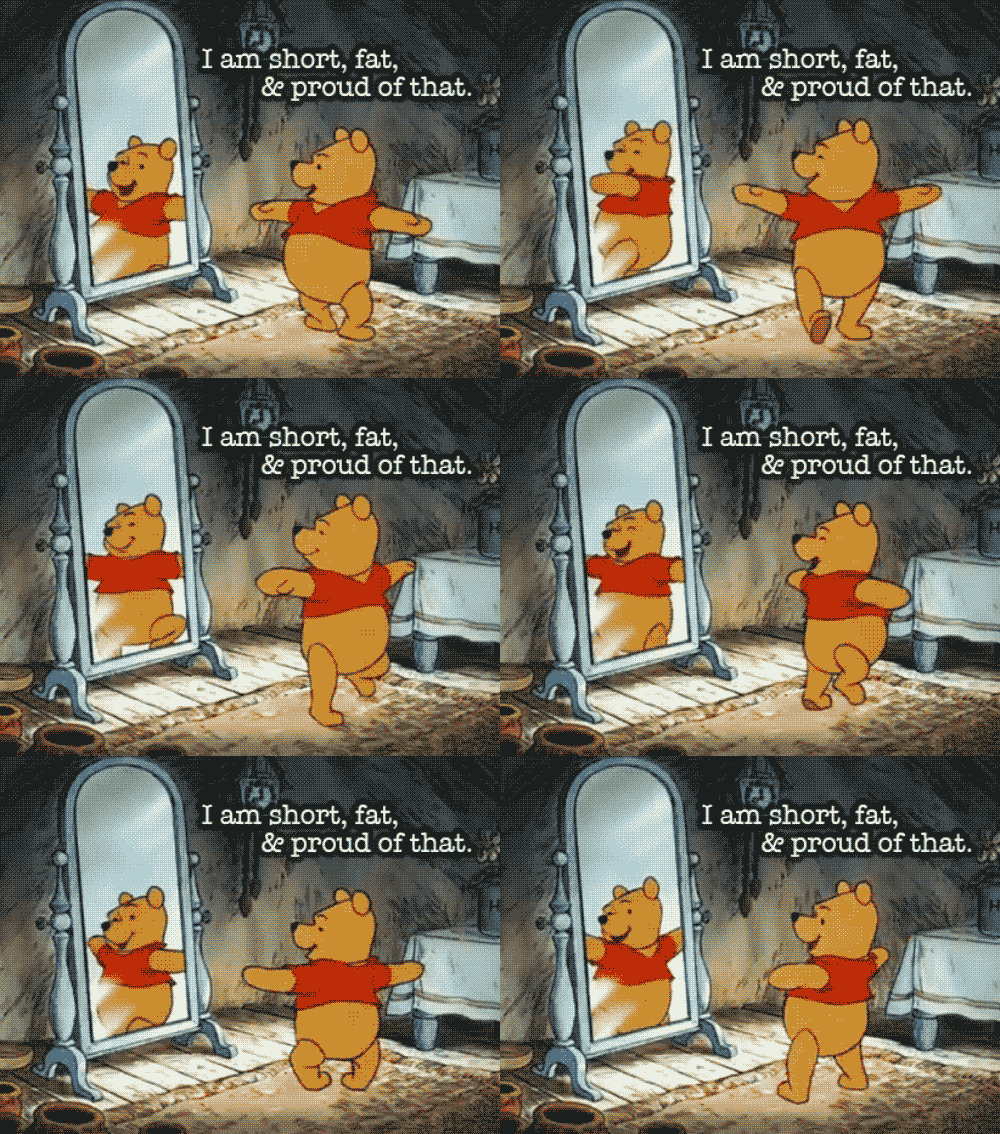
winnie the pooh GIF

“Promoting obesity” implies that the goal of recovery and body positivity is to actively encourage everyone in the world to get fatter. The thing is, that is not a message I’ve ever heard or said. There is no one body type being promoted as the only way to be happy, recovered, or confident. The idea is simply that however your body looks, you are good enough. You are worthy of respect, happiness, and love. You are allowed to exist contently in that body. You do not have to waste your life forcing yourself into a different size to be worthy, you already are when you are at whatever size allows you to be free from your eating disorder and mentally at peace. That’s it.
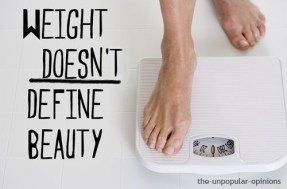
tumblr_mqo5t2Z5Tr1r4km2fo1_500

The real issue of the promoting obesity argument is of course about “health”. It’s about the culturally engrained assumption that fat equals unhealthy. There is so much wrong with that assumption. First of all, you truly cannot tell a person’s health from just looking at them. You just can’t. You are not their doctor. You do not know their life. It is unfair and incorrect to assume that just because someone doesn’t fit into a societally ideal body that means they are automatically sick. Also, thinking that shaming someone with very thinly veiled faux concern will have a positive effect on their health is ludicrous. Even if you could tell someone’s entire medical history from looking at them, how does dehumanizing, humiliating and shaming them help? Mental health is just as important as physical. Recovery and body positivity communities do not “promote obesity”, we stand at the frontlines of deconstructing the idea that not being thin automatically makes someone ill or bad. Instead let’s all focus on being more empathetic and kind human beings who accept that some of us are naturally large, some are naturally slim, and some are in the middle – but that the most important concern is that we are happy. Because guess what? Everyone no matter what their size, is worthy of respect.
a32b9c392d3cb0aba830ee6399a7d444

Fat people are allowed to exist. We live in a society that promotes a certain body type as the key to beauty, happiness, respect and self love. Just because the media portrays that though, doesn’t make it true. The reality is there is no weight gain industry selling pills, lollipops, teas, apps, or surgeries to be fat. Instead thinness is promoted and sold to us by the diet industry as the only way to be worth something. I am trying along with the body positive movement to change that narrative. We are not “promoting obesity” we are promoting happiness. I’m promoting the radical idea that you have permission to love yourself at a bigger size if it means you can be mentally freed from the prison of your eating disorder or of diet culture.

If you like this make sure to check out my youtube channel, instagram, and twitter for more self love, eating disorder recovery, and body positive content!

If you are interested in joining my private facebook group with other badass recovering, anti-diet culture warriors check out my patreon here.
Chronic Dieting vs. Eating Disorders

A question I am asked somewhat regularly is: what is the difference between chronic dieting and having a full-blown eating disorder? Or more accurately, eating disordered vs disordered eating.

I consider dieting disordered eating because it often comes with disordered red flags: Feeling that your Self-worth is related to the size of your body, body dysmorphia, exercise addiction, obsessive calorie counting, anxiety around food or specific food groups, inflexible meal times, refusal to eat in restaurants or outside of one’s own home, food restriction, and feelings of guilt or failure. In my opinion, the only difference really between the disordered eating patterns of a chronic dieter and a person with a full-blown ED is the degree to which these abnormal behaviors are taken. But even if the severity is lower in chronic dieters, it is still a major problem. It is still disordered. More dangerously, a chronic dieter is at a very high risk for developing a full-blown eating disorder. They also can experience symptoms of metabolic damage like gaining weight on restricted calories, osteoporosis, insomnia, and feeling weak and tired.

So, in my opinion there is a very small difference between chronic dieting and eating disordered people. Both issues can and should be recovered from. They can both be physically recovered from by eating to repair the metabolism and find your body’s set point. Fortunately, chronic dieters often won’t have as deep of a mental connection to the control of food restriction. While they may be anxious or depressed, the difference between a chronic dieter and a person with an eating disorder is that their anxiety and depression won’t be as inextricably linked to their body issues and need to control food so physical and mental recovery should come much easier. Having dieted for years and years and having an eating disorder are different, but not by as much as you think. Whether you fit into one category or the other you deserve recovery.

It’s hard to unlearn dieting behaviors especially when they are constantly reinforced by society around us every day, but it is possible. Getting out and recovery for a chronic dieter involves eating without any judgement or restriction and allowing your body anything it calls out for. Sweets, processed foods, fried food, a lot of food, food at weird times – whatever it needs to repair the damage that’s been done to your metabolism. Just like in any recovery weight gain will happen, but eventually as you continue to eat freely your hunger cues will normalize again and you will feel a connection to your hunger and satiety (a connection that is completely lost during a diet.)

Eliminate all categories and judgments such as “good” and “bad” when it comes to food. Allow yourself to eat all foods with the awareness that food is meant to be a positive, nourishing experience. It’s a long process – but it is so wonderful to have freedom and love within yourself once you’ve escaped.

Calorie Counting is Dumb

If you’re here, then you know that here at Ladle by Ladle we (and by we I mean me) are pretty anti-diet.  One weight loss method above all is something that needs to be looked at under a bigger microscope. Calorie counting.

There is a dogma that exists in diet culture that claims, “less calories in, more calories out = weight loss!” I’m not here to say that isn’t true. Technically it is… but the bigger picture is so much more nuanced and problematic than that one catchy slogan would lead you to believe.

Let’s begin with the biggest problems with weight loss via calorie counting:tumblr_maky8h0Lm51rbyzo6o1_400.jpg

  1. You lose track of natural hunger cues – when you abandon listening to your body’s needs in exchange for eating to numbers, you begin to lose all sense of what your body craves naturally. Soon enough, you lose the connection altogether.
  2. It makes you obsess about food – constantly calculating how much you’ve eaten, how much you still can eat, how many calories are in a specific food or dish. It’s WAY too much focus on food in an unnatural way and not enough focusing on things that actually matter.
  3. It’s not sustainable – like any fad diet or lose weight quick scheme, unless you develop an eating disorder, you will yo-yo up and down with your weight on this method just like any other method out there.
  4. It treats your body and your food like a math equation – too many times I’ve done this, “If my BMR is X and my activity level is Y then I need Z calories to lose weight because one pound is 3500 calories and if I cut that many out over a week then I’ll lose a pound!” Right? Wrong. Your body does not run on math equations, your body is a living breathing biological set of systems that doesn’t adhere to these arbitrary numbers. Your body works to attempt to keep you at your set point. The metabolism which controls your BMR is not something you can calculate based on height and weight because there are so many other unique variables in the equation such as hormones, genetics, and digestion. The math will always be fuzzy so while you can equate your caloric needs over and over again nothing will be able to account for the actual physiology of your body and its unique needs.

Now, you might snap back at me with, “I dieted by counting calories and I DID lose weight!” Girl, same. Let me guess, you then either you got caught in an obsessive and continuously restrictive lifestyle or eating disorder, or you gained it all back, or you eventually stopped losing weight and started gaining weight despite not stopping the counting! I know it’s crazy, you can read more about that last one here.

tumblr_msf7y5SeRs1qf1498o1_500.jpg

Your metabolism works on a sliding scale to keep you at your set point weight. So if you“overeat” from your bodies signals your metabolism will rev up to compensate and vice versa if you under eat. However, if you happen to get the drive to overpower your body’s attempts to keep you at a stable weight, then you will be met by a lowered metabolism and be hungrier and hungrier and more and more miserable until you just eat!

Then there’s me. I counted calories like it was my damn job for years and years and years. I was so good at it, but it also completely controlled my life. As I counted my way into an eating disorder I knew that counting was not the answer. Eventually I decided to recover and ate thousands and thousands of calories a day. Yes, I gained weight – but I didn’t gain weight forever. Eventually my body plateaued right where it wanted me without me changing my caloric intake at all (with a little overshoot, because my body did not trust me). My hunger cues evened out so that now I can sit comfortably at my set point without counting calories or dieting or stressing and just living instead.tumblr_mviamjOVu71sdxwyno1_500.jpg

You think you’re controlling your food with calorie counting but really, it’s your food that is controlling you. Take back your life and wake up to the fact that calorie counting is just another diet culture lie, and we know better than that now.