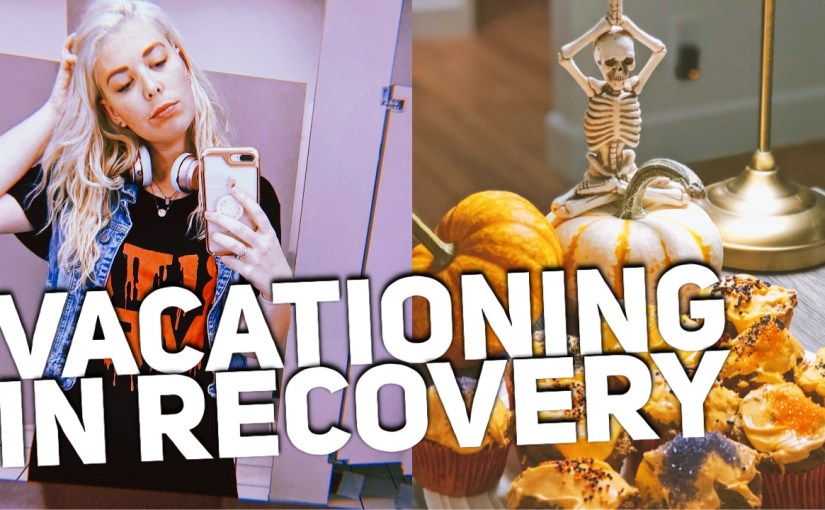

Vacation and Post-Vacation in Recovery


42824060_10155860706361662_3840365687985930240_o

I just took a little 2-day trip to New Orleans for a friend’s birthday and while my brain and body slowly phase out of vacation mode and being drunk for 48 straight hours I thought it would be a great idea to write about how to handle vacations while in recovery from an eating disorder.

Vacation is of course meant to be a fun and relaxing or inspiring time spent away enjoying a new place with yourself or friends or family. However, I know that for people still struggling with their disorder or in recovery from it, vacation can be a lot more complicated than that.

When I was sick I would flat out opt out of fun trips just because of my food and exercise anxiety. When I was in quasi recovery I would go on trips but there would be days and weeks of research and stress beforehand. Each meal was a challenge, every day of rest was torture, and looking back I remember more tumblr_maky8h0lm51rbyzo6o1_400mental stress than any enjoyment from those trips. After each trip there would be a few weeks of lowering my intake and upping my exercise to “make up” for some of my more indulgent meals. When I went into full recovery life became so much easier. Yes I was eating extreme amounts of food, gaining weight rapidly, and feeling constantly bloated and uncomfortable – but these temporary stresses and feelings allowed me to be able to eat whatever I wanted with no minimum or judgement. Therefor I was actually able to go places and have fun and focus on the trip itself because there was no need to overthink food or exercise.
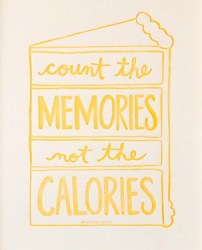
So for those of you who are still working through some things, here are a few tips for you on vacation:

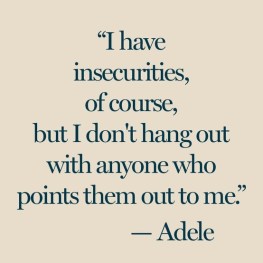
  • NO COMPARISON:  You don’t want to ruin your trip by making comparisons that will only serve to make your eating disorder stronger. If you are feeling awkward, remember that people don’t really care what you are doing. They are more interested in what they are doing. We’re all narcissists and the only person who is judging you is yourself. So stop that.
tumblr_mhdkafSWTC1rwsmexo1_1280

  • Keep Your Food Expectations Realistic:   The food is gonna be different than you’re used to. It’s gonna give you a “fear food” kind of reaction most likely. Most trips include eating out a lot and if you’re me, drinking a ton. Your eating won’t be perfect. It’s not supposed to be. There is literally no such thing as perfect eating anyway. Go into the trip knowing that you can’t control everything and be openminded.
  • Change Your Exercise Expectations:  You shouldn’t be exercising anyway but if you’re going on a trip that involves a lot of walking (around museums or whatever) just realize that you are going to be a lot hungrier as a result of the extra calories you’ll naturally burn. Be ready for it and allow yourself to eat yummy delicious local food!

Okay… now let’s talk about getting home after vacation. Typically people with active EDs will feel strong urges to engage in compensatory behaviors. Compensatory behaviors are simply activities done in an attempt to make up for having been “indulgent”. They are an attempt to erase shame, anxiety, guilt or other “bad” feelings about the food eaten. This is of course very silly and unnecessary because there is nothing guilty or shameful about enjoying food and having fun. You do not need to reverse any “damage” because that’s not how your body works, It will regulate itself without you getting involved and f*cking sh*t up.

Some common behaviors are the misuse of laxatives, compulsive exercise, doing cleanses, fasting, or restricting calories for a period of time.

Here’s the thing – in ED recovery and then afterwards in life, you should begin to realize that your life is not a constant never ending game of calories in and out and that your body will be happiest when you’re just enjoying yourself. Going on vacation and perhaps overindulging is not “bad”, it is not shameful, it does not give you permission to starve yourself, hurt yourself, or be mean to yourself. It does you no good to make yourself feel bad about enjoying your life. By compensating after vacations you’re reinforcing the idea that your waistline is more important than your happiness. NO. Recovery means giving up that control, and loving yourself without judgement.42895112_10155860706991662_2101684977203675136_o

Listen, I just ate a ton greasy, yummy, fried and smothered southern food. I guzzled alcohol like a machine. I spent most of my trip sitting or lying down. Did I freak out the second I got home? Fuck no I went to Subway and got a bag of potato chips and a sub and put off packing in favor of binge watching Netflix in my bed. The next day life went on. I’m home. No weirdness, no guilt. Just great memories. As it should be.
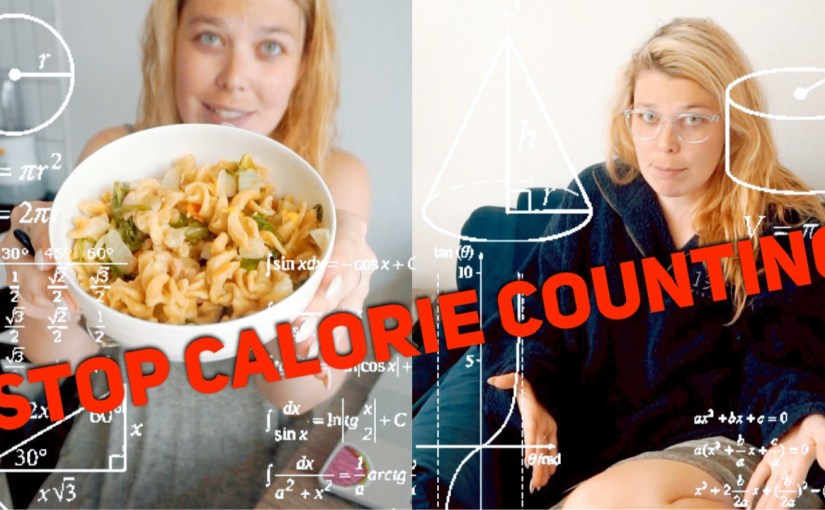
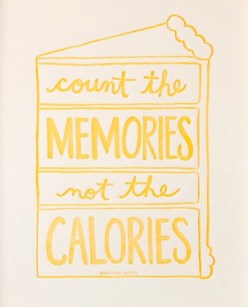
 

Calorie Counting is Dumb

If you’re here, then you know that here at Ladle by Ladle we (and by we I mean me) are pretty anti-diet.  One weight loss method above all is something that needs to be looked at under a bigger microscope. Calorie counting.

There is a dogma that exists in diet culture that claims, “less calories in, more calories out = weight loss!” I’m not here to say that isn’t true. Technically it is… but the bigger picture is so much more nuanced and problematic than that one catchy slogan would lead you to believe.

Let’s begin with the biggest problems with weight loss via calorie counting:tumblr_maky8h0Lm51rbyzo6o1_400.jpg

  1. You lose track of natural hunger cues – when you abandon listening to your body’s needs in exchange for eating to numbers, you begin to lose all sense of what your body craves naturally. Soon enough, you lose the connection altogether.
  2. It makes you obsess about food – constantly calculating how much you’ve eaten, how much you still can eat, how many calories are in a specific food or dish. It’s WAY too much focus on food in an unnatural way and not enough focusing on things that actually matter.
  3. It’s not sustainable – like any fad diet or lose weight quick scheme, unless you develop an eating disorder, you will yo-yo up and down with your weight on this method just like any other method out there.
  4. It treats your body and your food like a math equation – too many times I’ve done this, “If my BMR is X and my activity level is Y then I need Z calories to lose weight because one pound is 3500 calories and if I cut that many out over a week then I’ll lose a pound!” Right? Wrong. Your body does not run on math equations, your body is a living breathing biological set of systems that doesn’t adhere to these arbitrary numbers. Your body works to attempt to keep you at your set point. The metabolism which controls your BMR is not something you can calculate based on height and weight because there are so many other unique variables in the equation such as hormones, genetics, and digestion. The math will always be fuzzy so while you can equate your caloric needs over and over again nothing will be able to account for the actual physiology of your body and its unique needs.

Now, you might snap back at me with, “I dieted by counting calories and I DID lose weight!” Girl, same. Let me guess, you then either you got caught in an obsessive and continuously restrictive lifestyle or eating disorder, or you gained it all back, or you eventually stopped losing weight and started gaining weight despite not stopping the counting! I know it’s crazy, you can read more about that last one here.

tumblr_msf7y5SeRs1qf1498o1_500.jpg

Your metabolism works on a sliding scale to keep you at your set point weight. So if you“overeat” from your bodies signals your metabolism will rev up to compensate and vice versa if you under eat. However, if you happen to get the drive to overpower your body’s attempts to keep you at a stable weight, then you will be met by a lowered metabolism and be hungrier and hungrier and more and more miserable until you just eat!

Then there’s me. I counted calories like it was my damn job for years and years and years. I was so good at it, but it also completely controlled my life. As I counted my way into an eating disorder I knew that counting was not the answer. Eventually I decided to recover and ate thousands and thousands of calories a day. Yes, I gained weight – but I didn’t gain weight forever. Eventually my body plateaued right where it wanted me without me changing my caloric intake at all (with a little overshoot, because my body did not trust me). My hunger cues evened out so that now I can sit comfortably at my set point without counting calories or dieting or stressing and just living instead.tumblr_mviamjOVu71sdxwyno1_500.jpg

You think you’re controlling your food with calorie counting but really, it’s your food that is controlling you. Take back your life and wake up to the fact that calorie counting is just another diet culture lie, and we know better than that now.

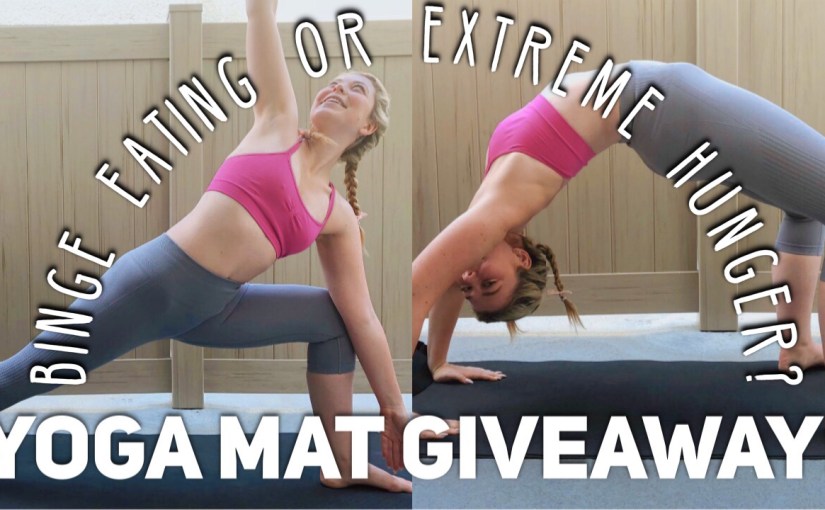
Have You Developed Binge Eating Disorder? (+Giveaway!)

“I’m in recovery and I’ve been eating a lot more than usual. I think I’m developing binge eating disorder. I feel like I’m losing control around food. HELP!”

I can empathize with this feeling, I felt this way at the beginning of recovery as well.  During the beginning when the extreme hunger was at its peak I didn’t know how to process what I was doing. I was scared, and it was emotional, and I all but completely convinced myself that this was binge eating disorder.

tumblr_msf7y5SeRs1qf1498o1_500.jpg

When you are recovering from an eating disorder or restrictive eating or chronic dieting, your body needs to replenish the backlog of caloric deficit that you have built up over the years.  Even if you have been in quasi recovery for a long time.  Your body still has not had the chance to metabolically restore itself to its set point.  You will continue to get these strong urges to eat large amounts of food until your body has had its chance to properly heal. Until you are energy balanced and your metabolism is back to functioning optimally your body will continuously call out for more food.  This desire to eat (and eat and eat and eat) is perfectly natural when you are recovering from disordered or restrictive eating.  Your body heals itself through calories and eating what seems like a lot or a “binge-able amount” isn’t actually a binge but a natural bodily response to starvation (and/or restriction).

tumblr_mg346oaUm31qf1498o1_500.jpg

Eating disorders gain their power from control and often in recovery the hardest part is feeling the loss of that control. It’s a scary and difficult time to navigate, but just because it FEELS like you are going off the rails by eating a ton doesn’t mean you are developing a new psychopathy.  Binge eating disorder is a very serious mental health disorder with many other symptoms and aspects other than just “eating a lot” and “feeling out of control”.  When you are a person who is recovering from restrictive eating in any way, anorexia, orthorexia, EDNOS, or are in quasi recovery, responding to the extreme hunger that your body feels in recovery is not the same thing as having binge eating disorder.

The thought process that the unrestricted eating in recovery is actually BED is unbelievably common.  Most people have a certain picture of what their recovery will look like and when it goes off the rails and outside the lines of the plan the reactions can be extreme.  Recovery is about letting go of structure, numbers, and plans around food and just letting your body have what it truly needs. This is scary, but it’s a sign you are on the right path.  Learning to become comfortable with the discomfort is a huge and important step forward. Your body knows what it wants and needs, and you should honor that to get yourself better.

ALSO – I’m having a giveaway over on my Instagram. The company Levoit has agreed to send one of my followers their super dope yoga kit.  I’m super duper thriled because I have been looking for a way to thank you all for getting me to 1,000 subscribers on my Youtube channel!! If you are interested in entering the giveaway all of the details are on my instagram.  Giveaway ends on 5/2/18.

Processed with VSCO with t1 preset

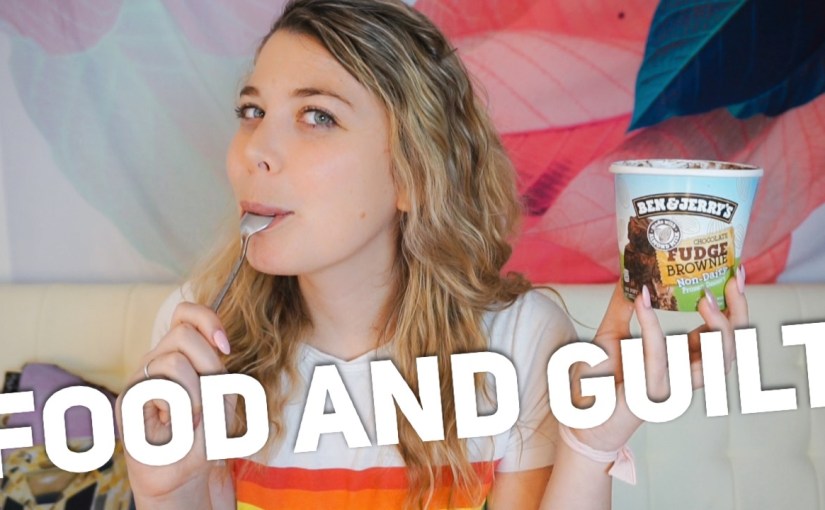
Food & Guilt

Food and guilt, two concepts we often conflate when we shouldn’t.  How does this happen? and how can we change our perception of food so that guilt never comes into the equation again?

icecream

The truth is food is food – it is not innately good or bad. Whether or not someone has an eating disorder has nothing to do with the food itself and everything to do with the person’s perception of the food. Eating disorders are not food disorders they are mental disorders that impact the way we perceive food.

tumblr_maky8h0Lm51rbyzo6o1_400.jpg

More than just people with eating disorders experience food guilt though.  It’s the common problem of feeling bad for the simple and necessary act of eating.  So, why does this happen?  Here’s my take: our thin-centric, body obsessive, over advertised, and hyper aware culture has pounded the idea into all of us that some foods are “bad” while some are “good.”  This categorization is based off of someone else’s interpretation of nutritional science and it is how the diet industry continues to thrive.  Some nutritionists say eating mostly fat is best, some say the key is to cut out all carbs, some say cooked food is wrong, some say juice is the only right thing.  There are so many diets and opinions out there they can’t all be right.  Maybe none of them are.  Maybe the truth is, “health” means something different for everyone and food is just food, whatever and however you want to eat it is just fine. But the more society and culture dictate that some foods are bad while others are good all of us are left scrambling to figure out how to navigate eating amongst the messages.


Often we tell ourselves we can’t have a certain food because of ~reasons~ so gosh darnit our mammalian brain NEEDS it like a toddler who was told they can’t have something.  When you deprive yourself of something your body begins to crave it more, which means that once you eventually eat the damn “bad” food you react with feelings of guilt due to your “lack of self control”. music video eating GIF by Weezer

So, food guilt.  How do you stop it?

The first step, like with any problem is to acknowledge it and recognize it as silly and unimportant.  There are better things that can be taking up space in your brain. Just recognizing the phenomenon can be enough to take away its power.

The second step is to honor your hunger. Eat when your body tells you too and more importantly eat what you are craving honestly.

Finally, remove your judgement from your cravings. If your body wants a cookie then give it a cookie.  There is nothing wrong with it, and eating it will not hurt you.

Once you finally begin to eat what you want without feelings of guilt or shame you will find that you won’t crave them overwhelmingly. When you do, you will feel free to eat them without the shame or guilt! It takes practice but it can be done.


Minnie Maud Recovery

Minnie Maud is an eating disorder recovery method developed by Gwyneth Olwyn.  It has since been rebranded as the Homeodynamic Recovery Method.  The website with all of the pertinent information can be found here. What follows is my own analysis of the method and a brief overview of my successes with it.

MinnieMaud Guidelines are the guidelines for recovery from restrictive eating disorders such as anorexia, binging/purging, bulimia, orthorexia and any EDNOS involving food restriction that I followed in recovery. The “Minnie” refers to the Minnesota Starvation Experiment and the “Maud” refers to the anorexia family based treatment program, the Maudsley protocol.

The guideline’s food amounts are what energy-balanced, non-eating-disordered people normally eat to maintain their health and weight. Meaning your minimum intake guidelines are what you can expect to eat during AND after recovery. However, you can expect to eat far more than minimum intake during the energy-restoration part recovery. (AKA extreme hunger).

The way to successfully follow the MinnieMaud program is to:

  1. Eat the minimum intake every single day. It is a minimum intake and you are both encouraged and expected to eat more. Never restrict food intake. Your minimum intake is between 2500-3500 depending on your age, height, and gender and can be found on her website.
  2. No weighing yourself or measuring yourself. This is the easiest way to relapse, so just avoid it completely. While I was gaining weight, I covered mirrors, threw away my scales, and bought loose flowing dresses that would fit me even when I was bloated or heavier. All of these things were crucial to me being okay with the weight gain and getting through the hardest part.
  3. No exercise.  At all.

The MinnieMaud guidelines believe that restrictive eating disorders are neurobiological conditions. The condition can be either active or in remission, but it is never completely cured.  Part of remission is addressing the anxiety and guilt you associate with food head on with a therapist to avoid repeating inappropriate response behaviors to eating such as over exercising or restricting food.

So, the three steps to recovery are:

  1. Weight restoration – to your SET POINT.
  2. Repairing and reversing physical and metabolic damage.
  3. Developing new non-restrictive neural patterns in response to usual anxiety triggers.

These steps can all be achieved through following the program.

your-eatopiaI discovered Minnie Maud over a year before I finally committed to it.  The one predicament about this method is that you have to want recovery for yourself in order to successfully go through with it.  When I found the program, it was still available on the original Youreatopia site.  I haunted the site and forums for months as I unsuccessfully attempted to recover through quasi recovery.  When I finally found a therapist who supported Minnie Maud and I committed at the beginning of 2015. My whole world began to change and by the end of that year I was finally in remission.
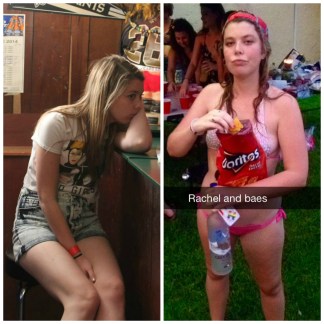
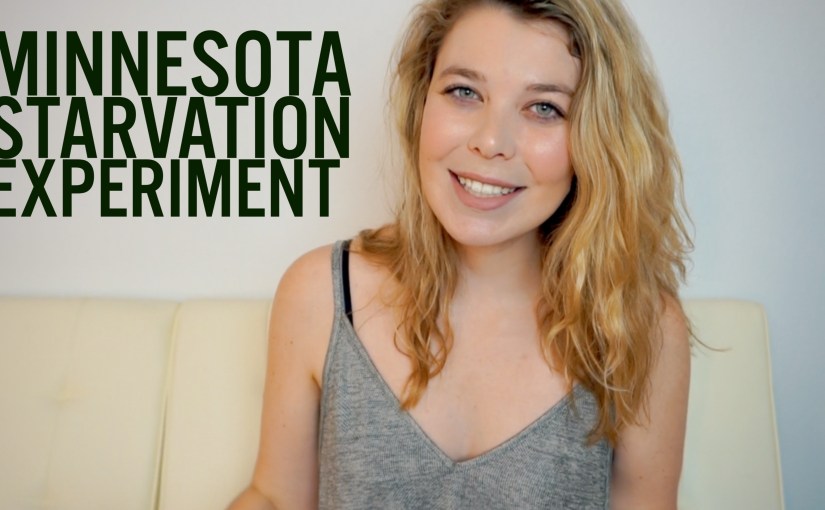
 

Clearly MinnieMaud worked for me.  I still consider myself in remission to this day.  After I started eating the minimums within a few weeks extreme hunger hit me and for the next month and a half to two months I was eating between 5000-10000 calories a day, sometimes more.  It was like I had a hunger deep inside me that could never be satisfied.  Then that eventually calmed down and I kept eating to the minimums. I love the concept of a minimum intake because it completely flipped the script from what I had been implementing for years.  Instead of being afraid of going over a certain number, I now had absolutely no limit!  It is a freeing feeling.  I felt the healing relationship to food.  I felt the physical transformation.  I felt the eating disorder disappear into the furthest, darkest corner of my brain.

2015
Left: Jan 2015, just deciding to do MM. Sad, thin, empty, confused, miserable. Right: Sep 2015, VERY happily enjoying my summer 9 months into MM and 4 dress sizes bigger. Happy, social, free.

If you are considering this method of recovery I cannot recommend it highly enough.  If you are still not sold, do the research on it yourself.  That’s what I did and it was more than enough to convince me.  People can say what they want about Minnie Maud but they cannot argue with a success story like mine and the many others out there.  The best way to fight food restriction is with food.  Food is medicine, it keeps us alive, and none of us are born with issues about it. MinnieMaud finally allowed me to remember what it was like to have a normal relationship with food and my body, it taught me so much about being a kinder compassionate human both to myself and to others.  It allowed me to find myself again after years of hiding being an eating disorder and for that I am eternally grateful.

The Minnesota Starvation Experiment

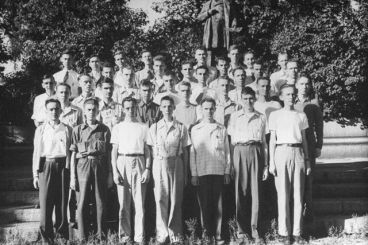
The Minnesota Starvation Experiment was a study done by Ancel Keys in the late 1940s to study the effects of famine on war torn countries in Europe post World War Two.  Besides fulfilling its intended purpose – the study also ended up shedding the first light on how dieting and food restriction effects the human body.

Here is an overview of how the experiment worked:

image

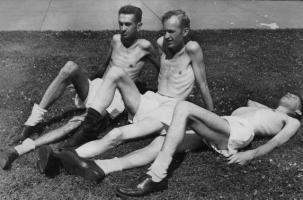
The subjects were all men.  First, they were studied under a 12-week control period in which they were fed a standard diet of 3200 calories.  During this time their psychological and physiological states were measured in order to determine each subject’s baseline condition.  At this phase each man was at their natural weight, which they all maintained on the control diet they were fed.

The next phase was the starvation period. For the following 24 weeks all of the men’s diets were cut by approximately half to 1570 calories per day.  It was during this phase that the behavior of the subjects began to change drastically.  They all began presenting symptoms that we commonly associate with chronic dieters or anorexia sufferers today.  Some of the symptoms observed included:

  • A decrease in strength and energy
  • Apathy towards everything except for food
  • A sudden and intense interest in food displayed through reading cookbooks for fun and to stare at the pictures
  • They took advantage of being allowed to chew gum by chewing packs and packs of it per day, and they guzzled coffee and water to stave off feelings of hunger
  • They became irritable around meal times
  • Many men became depressed
  • They lost weight (obviously)
  • Their heart rates decreased
  • They felt dizzy
  • They felt lethargic
  • They were constantly cold
  • Almost all subjects experienced body dysmorphic disorder and were unable to recognize how much weight they had actually lost

starvation-experiment_main


The next phase of the experiment was the recovery period.  The men were split into four subgroups and each group ate a different caloric intake to recover from the symptoms of starvation.  The first group ate 1970 calories, the second 2370 calories, the third 2770 calories, and final the fourth ate 3170 calories.  Even with the increase in calories all of the men were still left feeling hungry or starving.  These increased intakes were not helping and specifically the men in the lowest group were not feeling better AT ALL.  In light of this discovery Ancel Keys decided to add 800 calories to each groups intake.  Eventually he observed that the only factor helping these men recover was providing them way more food than he initially thought would be necessary.  He concluded that a person needs at least 4000 calories a day to recover and rebuild their strength.

After the recovery period was over the men were free to eat whatever they pleased, but Keys continued to observe a small handful of them.  He observed that most subjects continued to eat thousands and thousands of calories a day (12,000+ in some cases) for many months.  Many subjects reported to have an unending, insatiable, hunger months after the experiment ended.  As the subjects allowed themselves to re-feed through eating to their extreme hunger, their metabolisms began to heal, their strength returned, and many of the symptoms of starvation began to vanish.  Although to the layman it may appear that these men were massively “overeating” it became extremely evident that their bodies requires this seemingly inordinate amount of food to fully heal all of the damage.

On average the men regained their weight back to what it had been previously plus 10%.  You may identify this as an overshoot.  With unlimited food and unrestricted eating eventually their weight plateaued and about nine months later all of them were back to the weight they had been at the very beginning of the experiment.  This is one of the first documented and analyzed cases of a body’s “set point.”  Despite the original fear that all of this unrestrained eating would cause infinite and exponential weight gain, that proved to not be true.  This experiment demonstrated that over eating and starvation induced hunger only presented as long as a body was below its set point.

And that was the Minnesota Starvation Experiment.  It’s fascinating because just a cursory analysis of the study demonstrates how insanely harmful caloric restriction is on the human body. As you may note, all of the symptoms that the men experience in the starvation phase are eerily similar the symptoms felt by eating disorder sufferers and chronic dieters.  Sadly, most people who struggle with a disordered relationship to food today are often eating even less than the subjects of this study were.  A typical dietary recommendation for people seeking to lose weight is often a caloric total lower than the 1,580 calories the study subjects ate.  It is important to recognize that these “dietary guidelines” are dangerously low, unsustainable, and unrealistic amounts that should not be practiced.

Furthermore if you are stuck trying to recover from yo-yo dieting, binging and purging, restrictive eating, or any other disordered relationship to food this study gives you an excellent blue print for how to recover.  This was the science that I read when I decided to go all in on recovery using the Minnie Maud method.  This science validates that method of recovery (and now so does my own lived experience with it).

Please feel free to watch my video below for a synopses of the information above along with an outline of my own experience and my results from using this method to recover from anorexia.

How To Stop Counting Calories

There was a point in my life where I figured I would just be stuck counting calories forever, resigned to a life of sadness and disordered behavior.  However, this proved to be untrue as I transitioned from a religious calorie counter to an intuitive eater – and you can too.

When you stop counting calories, you start enjoying and experiencing your food for its texture and flavor instead of as just a number.  Eating becomes pleasurable when you aren’t constantly measuring, calculating, tracking, and obsessing over the food on your plate.  You’ll open up space in your brain to focus on things that actually matter.  You’ll be able to start eating intuitively by creating a stronger relationship to your body’s cravings and the food you eat.  Obsession with food will fall by the wayside.

The truth is, no matter how accurate you think your calculations are using your BMI, TDEE, BMR, etc. to calculate the right amount of calories for you – there is no way to truly know as every single body is different.  More to the point, without going crazy it is completely impossible to accurately know the calories of every food you eat.  Remember, all a calorie is is a unit of energy and our bodies NEED energy to live.  So here are some tips to stop counting calories forever.

GET RID OF CALORIE TRACKERS
This is a big one. I tracked all of my calories on “My Fitness Pal” but there are many others like it.  Cronometer, Lose It, Fat Secret, etc.  These apps were built to count calories so the best first step for a life without this burden is to get rid of them!  If you aren’t using an app than get rid of whatever device you use to track the numbers.  A notebook, planner, journal, or word document.  Delete it, burn it, or have a friend drive 20 miles away and throw it in a dumpster.  Getting that out of your life is a crucial first step.

GO OUT TO EAT AT RESTAURANTS
Most restaurants are impossible to gauge to calories for because you don’t know everything that goes into the food preparation. It helps to make sure you are with a friend or family member that can keep you distracted from trying to break down and calculate the meal components.  If you are financially incapable of dining out, that’s alright – just have a friend or family member cook a meal for you without telling you what is in it.  This is essentially the same concept.  You are looking to let go of the tightly wound control you have to maintain while counting calories by letting go of the control over food prep.

BLOCK OUT NUTRITION LABELS
Take a sharpie and cover them up so that you can’t look at them obsessively. Go grocery shopping in bulk bins or for items that don’t have nutrition labels on them at local shops of farmers markets.  Pick food for flavor and not for numbers.

HAVE FAITH YOURSELF TO EAT INTUITIVELY, BUT BE PATIENT
We are all born knowing how to eat. Your body knows what it needs and it is not trying to sabotage you.  It loves you and want to keep you alive, return the favor to it.  Eating intuitively takes practice but it is completely achievable for all of us since it is the way we are supposed to eat.  Remember that it will take time as well because you are breaking a very bad habit – and habits are not broken overnight.

If any of these steps seem impossible or overwhelming than feel free to take it slow.  I know how daunting and unreasonable these may seem – but if you implement these tactics into just one meal a day at first, and then slowly increase, you will eventually get there.  Take it from a girl who used to count the calories in gum – you can do this!


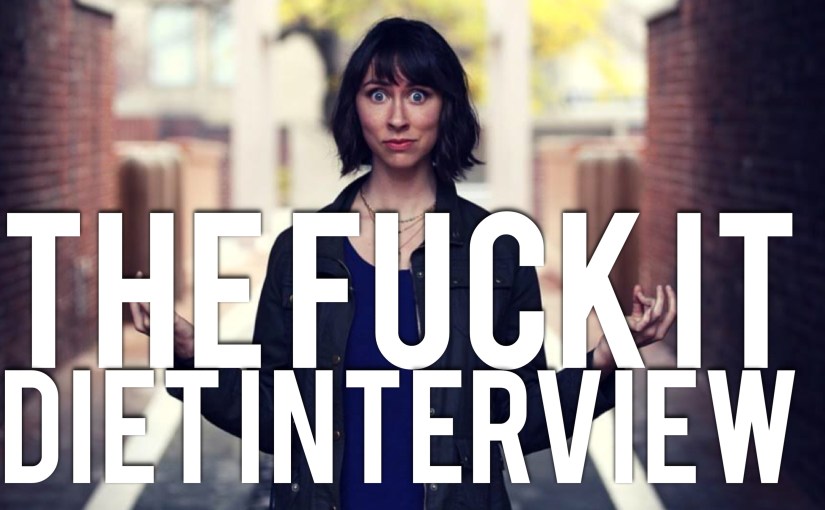
Interview With Caroline Dooner – Creator of The Fuck It Diet

Untitled-design-12Recently I had the absolute pleasure of connecting with Caroline Dooner.  Caroline is the creator of The Fuck It Diet, which teaches radical normal eating to chronic dieters. She also teaches intuition and advocates hardcore for #rest. You can follow her on instagram, and get her free intro course, “Eating Should Be Easy” over on The Fuck It Diet.
When I was going through my own recovery I stumbled upon her website and it felt as if her words were speaking directly to me.  Caroline has been through the ringer of diet culture and found a way out that I strived to emulate.  Her writing and philosophies on making eating simple were such powerful sources of inspiration for me and many others trapped in diet culture.  Today she continues to help people through her blog, podcasts, and e-books.  She believes that eating should be easy because, fuck it, it’s just food right?

I was delighted when she agreed to answer some of my burning questions and it was wonderful to be able to get her seasoned perspective.

RR: Why the name “The Fuck It Diet”?

CD: It’s how I felt when I finally realized that dieting was backfiring and doing the opposite of what I have always hoped it would. It’s how I felt after being on diet after diet, hoping that the next one would finally heal my food addiction. It is the true exasperation of realizing it’s never going to work.

RR: What was the life event that inspired you to start the site?

CD: I had been dieting obsessively for 10 years. You could call it an eating disorder, or you could just call it obsessive dieting, there is a big overlap for lots of people anyway. But I was Paleo, and bingeing on all the paleo treats I could get my hands on, and finally started hearing whispers in the Paleo community, that not eating enough carbs will hurt your metabolism, and wreck your hormones, and make you more insulin resistant, which had been the thing I was trying to heal.

But the event/moment that spawned it, was my 24th birthday. I binged on squash pancakes and low sugar almond flour cupcakes, and had a legitimate epiphany. I can’t do this anymore. This is going to keep happening over and over and over, until I step out of this cycle, learn to eat normally, and heal my relationship to weight.

 I had tried to heal my eating many times before, going on stints of intuitive eating, or something similar. But it was never truly the cure, because I was still trying to eat the smallest amount possible, and still petrified of gaining weight. The Fuck It Diet was different.

RR: How long did it take for you to heal your relationship with food? 

CD: It was a process that evolved over the first few years of my no-holds-barred eating, and my work on deeper and deeper body acceptance. But I would say that between 6 months to a year is where I noticed a big shift.

Even still, just over the course of eating a certain food for a week would change my relationship with that certain food. So there were small victories, and then bigger shifts that happened over time.

RR: In your opinion, what you think the most negative impact of diet culture is?

CD: It’s really hard to choose just one, but diet culture puts you at odds with your body. The way you trust it, and your appetite, and your weight. It makes you totally out of touch with your own wisdom, intuition, cravings. And ruins your health and self-esteem.

RR: Do you think that diet culture is responsible for the rising rate of eating disorders?

CD: Hell to the yes.

RR: Your blog and podcast focuses a lot on spiritual healing – do you think it’s harder to recover if you aren’t spiritual?

CD: Ah yes, it’s such a good question. I have always been seeking guidance, or peace, or help, or knowledge on a spiritual level. And I know that is why and how TFID revealed itself to me. But there are some pretty basic facts and truths, like the biological and metabolic reaction to restriction. Even energetic principals aren’t necessarily “spiritual”. And I am expressly anti-dogma of any kind, diet dogma, spiritual dogma, or otherwise.

Trust in a bigger picture, and a bigger purpose than just being tiny and beautiful will certainly be a big help, but short answer: no. You don’t have to be spiritual to recover.

(pssst. she has a great podcast about this topic here)

RR: What would you say to girls who are afraid of this mindset because of their fear of getting “fat”?

CD: That this is what those businesses want you to fear. That that is just this heartbreaking thing that we have been perpetuating, and it’s so destructive and toxic. And I understand, I was the same way for years. Fat was the last thing I would ever accept being. It’s also because we have so many beliefs about what being fat means. But it’s just so misguided. What’s that JK Rowling quote? “is ‘fat’ really the worst thing a human being can be? Is ‘fat’ worse than ‘vindictive’, ‘jealous’, ‘shallow’, ‘vain’, ‘boring’ or ‘cruel’?”

RR: What is your most important tip to successfully practice intuitive eating?

CD: Do not get caught in the trap of believing you need to be eating the smallest amount possible. That’s a diet. We need to actually feed ourselves.

RR: What has been the most inspiring recovery story you’ve witnessed/had a hand in?

CD: It’s honestly too hard to choose, but in general, my favorite kind of story, and this happens again and again, is that healing from food and weight obsession, opens up a confidence and creative spark that allows people to really trust their own genius, go against the grain, choose a life that people might not understand. It let’s people really listen to their true desires.

RR: What is your number one piece of advice to someone struggling to recover/normalize their relationship with food?

CD: Do not discount how interconnected our relationship with weight is with our relationship with food. You cannot heal the one without the other.

RR: And finally, just for fun – what’s your favorite food?

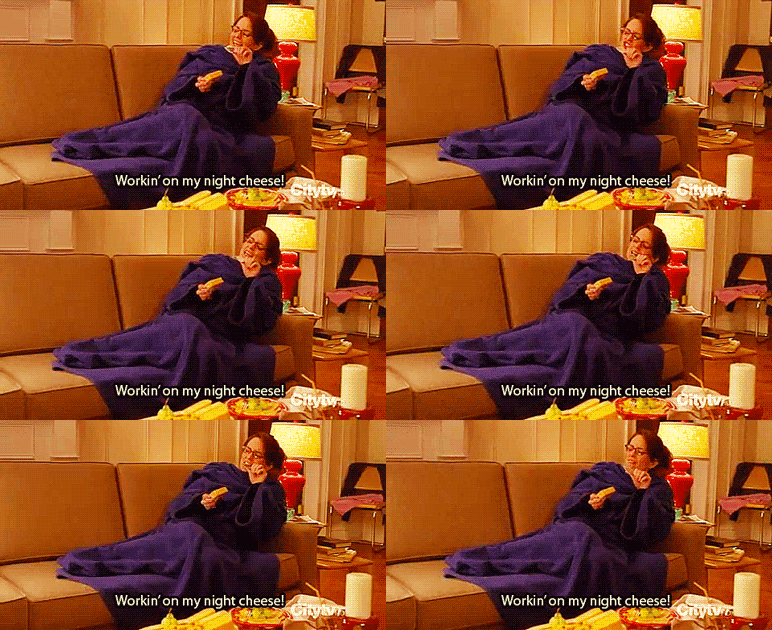
CD: My favorite food is cheese. No contest.

giphy

Huge thanks to Caroline for giving me the opportunity to pick her brain.  It meant a lot for me to be able to have this opportunity considering how incredibly helpful I found The Fuck It Diet and everything she put into it while I was struggling to recover.  If you’ve never heard of The Fuck It Diet – it’s about time you checked it out!

New to Ladle by Ladle?

Check out my Youtube channel where I make new videos about recovery, recipes, and intuitive eating: Ladle By Ladle

SOCIAL:
Instagram – @ladlebyladle
Facebook – facebook.com/ladlebyladle

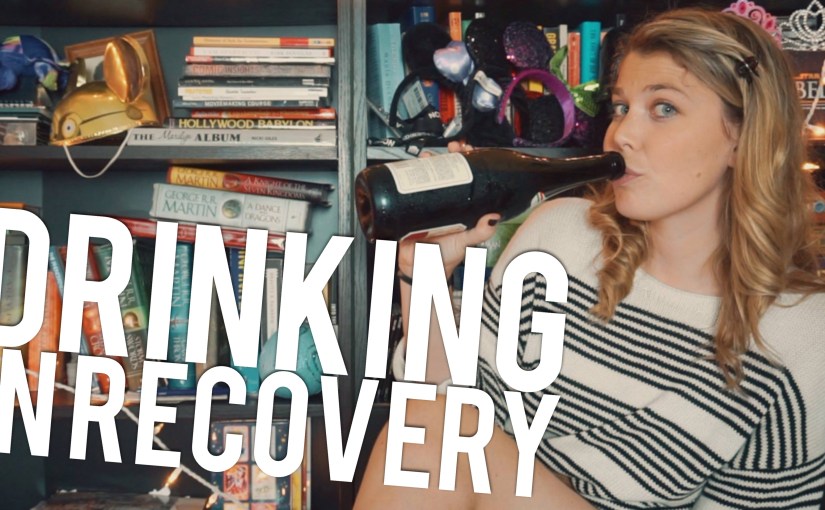
Drinking Alcohol in Recovery

It’s popular wisdom in the eating disorder recovery community that drinking alcohol/doing drugs is bad – and there is a lot of evidence to back that statement up. There is a strong correlation between people with substance abuse issues and eating disorders. Alcohol, of course, is detrimental to your health whether you are recovering or not. People who need to re-feed can rely on alcohol for a bulk of their calories and not get the proper nutrition they need. Alcohol is just an unhealthy way to self medicate anxiety. Listen, I understand all of that.

Here’s my well thought out, scientifically backed up, and thoroughly researched counter argument though: I love vodka.

giphy

I am not here to tell you not to listen to your therapists and doctors. Every single person is different and what they need to help themselves is unique. However, drinking in recovery was absolutely essential for me and perhaps more than one of you can relate to my reasoning.

Before I was sick I drank… a lot. I was in college and in a sorority in New Orleans. It was hard to avoid, and frankly I didn’t want to avoid it. I loved going out to bars, knowing bartenders, trying new drinks, hanging out with my friends, etc. When I developed ED alcohol was one of the first things I cut out. Doing this may have seemed like a very healthy decision for myself, but looking at it from the lens of an eating disorder I think we can all understand how it really wasn’t. It was simply another excuse to restrict more calories. When I was in quasi-recovery I still refused to drink OR if I did drink I would make sure not to eat all day to compensate. That was the wrong way to approach alcohol. I was rarely drinking and I still did not enjoy it the way I used to.
IMG_0181
When I finally committed to true recovery I began forgetting about the “empty calories” and returning to my pre-ED behavior towards drinking. Being able to have fun with my friends the way we used to was essential to me continuing to have the strength and will to re-feed. Returning to my old social life was a “Recovery Goal” of mine, and re-learning how to drink without care of calories was essential to achieving that goal.

Is this the right way to approach alcohol for every person in recovery? Certainly not. If you think that you have a real substance abuse problem than alcohol can hinder any potential progress you might make. If you drink alone often or view alcohol as a way to medicate anxiety instead of as a social lubricant

IMG_1476

or way to connect with others than you are abusing the sauce and should not imbibe. If you are still counting calories and restrict your intake to allow you to drink alcohol than I can tell you from experience that is very wrong, dangerous, and ultimately not even fun – so just stop. However, if drinking is a part of your social life that you miss and you understand your body and your limits (and you’re of legal drinking age!) then I think that drinking during recovery is essential to reminding yourself who you can become once again.

Did you drink/are you drinking in recovery?  Do you think you’re going about it the right way?  Or do you avoid booze completely?  Let me know in the comments, I’d love to hear other perspectives!

https://youtu.be/yYrGReO1x-M


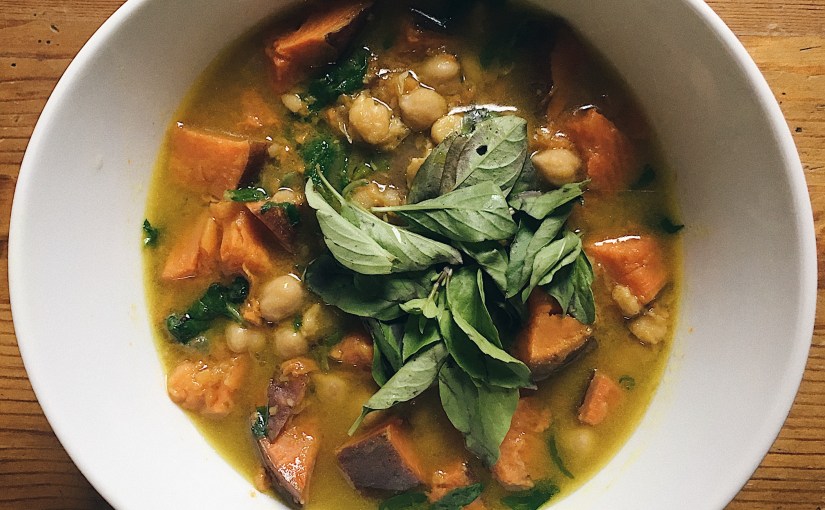
Sweet Potato Thai Green Curry – Recipe Video

Today I’d like to share the first of what I hope are many recipes to come.  I filmed this on Monday night after I came home from work.  This is one of my many simple and quick dinners that I make after a long day.  While I typically pre-make most of my meals, one or two nights out of the week I feel inspired to play around in the kitchen a bit.

One of the best parts of recovering from an eating disorder is the freedom that I have in the kitchen.  When I was sick I would have had to weigh the sweet potato, and measure out exactly how much coconut milk, olive oil, and chickpeas I used.  To be honest, I probably wouldn’t even cook with some of these ingredients because they are too calorically dense.  After recovery, all of that fear is just a distant memory.  Now I can experiment, estimate, make mistakes, and I know everything will be okay.  This has allowed me to become a better amateur chef and a happier person.

I hope you enjoy this meal as much as I did!  I think I actually preferred it heated up the next day.  It is super filling, nutritious, and it is vegan!  (I am not vegan – but this is!)

Bon Appetit!

Hey, if you liked this post (or any of my other ones!) try liking the Ladle By Ladle page on Facebook!  It’s a good way to stay up to date on the latest posts.

//pagead2.googlesyndication.com/pagead/js/adsbygoogle.js

(adsbygoogle = window.adsbygoogle || []).push({});