Work and School in Recovery

It’s no secret that once you finally feed yourself and let yourself rest in recovery, the exhaustion and extreme hunger can be overwhelming. The physical and mental symptoms are enough to keep you on the couch for weeks (and there’s nothing wrong with that if you have the ability to do so, in fact – that’s the best way to ride out recovery.) For most of us though, we realistically can’t just sit on a couch for weeks. We have school or work that we need to attend to keep our lives moving forward. So how can we do both?

Let’s start with school.
magic school bus wink GIF

First you have to decide, is school right for me and my mental and physical health right now? Can I afford to take some time off to work on myself? Has being in school stopped me from fully recovering in the past? Is school triggering for me right now? It is not wrong or shameful to take the time to take care of yourself. This is your life and you know what you can handle and what is right for you.

Eating and resting in recovery is a full-time job. If you don’t feel as if you’ve been hit by freight train of exhaustion at the beginning, then chances are you’re not really in full recovery. This is why taking time off if you can is a valid choice. Besides, you may not be able to put forth as much effort into school if you’re more focused on recovery – so taking time away could be actually better for your academic career.

If you do want to remain in school while recovering, then you will want to develop a very detailed plan of what you will do this time that is different from how you might have tried to balance school and recovery in the past. For example, when I was in school I planned to go see an on campus mental health professional, be honest with my family and friends, and prioritize recovery. If school got in the way of full recovery I chose my health first. I lightened my coursework, cut out toxic friends, and spent my mental energy fighting for myself. I was sick with my ED for most of my time at school and only had one semester to go when I finally committed to full recovery. I was very close to graduating so I went part time that last semester to be able to accomplish what I needed to for myself and my education.

Having a plan is very important. Being convinced that THIS time you are ultra-committed, and you are really, really tired of your ED will get you only a few weeks into full recovery before the anxiety will start to mount and get the best of you if you don’t have support in place. Without a therapist or counselor to help teach you how to keep approaching and eating food even as the anxiety mounts, you are likely headed to a relapse. So make sure you think honestly about what is best for your life and how to move forward productively.

Okay now let’s talk about work.

funny cat GIF

Work is a little bit different than school because you are working to make money to support yourself, keep a roof over your head, provide food and necessities for you and your family. Since you can’t stop working, instead I have a few tips for how to handle recovery in the workplace.

  • Block out time in your work calendar for meals and snacks, treat these times like priority meetings that you must attend.
  • If you have a very physical job or one where you are on your feet all day, consider finding ways that you can be more sedentary. Is there a job you can go for that requires sitting at a desk? Can you work a register instead of walking around a store? Can you hostess instead of waiting tables? Try and find ways in your own workplace that give you more time to rest.

It might ultimately be necessary to find a different job if the one you are currently in is toxic, triggering, or not helping you achieve your personal health goals. This is something only you can be honest with yourself about and decide.

Check out my video on this topic here:


Is Body Positivity Promoting Obesity?

A concern I hear from time to time is that by promoting a weight stabilizing, non judge mental, and body positive model of recovery I am encouraging unhealthy lifestyles and promoting obesity. Most of the time the criticism comes from people who know very little about body positivity and are still deep in their eating disorder or in diet culture denial. They just somehow ~*know~* there must be something wrong with people being happy, even if they’re fat…

winnie the pooh GIF

“Promoting obesity” implies that the goal of recovery and body positivity is to actively encourage everyone in the world to get fatter. The thing is, that is not a message I’ve ever heard or said. There is no one body type being promoted as the only way to be happy, recovered, or confident. The idea is simply that however your body looks, you are good enough. You are worthy of respect, happiness, and love. You are allowed to exist contently in that body. You do not have to waste your life forcing yourself into a different size to be worthy, you already are when you are at whatever size allows you to be free from your eating disorder and mentally at peace. That’s it.

tumblr_mqo5t2Z5Tr1r4km2fo1_500

The real issue of the promoting obesity argument is of course about “health”. It’s about the culturally engrained assumption that fat equals unhealthy. There is so much wrong with that assumption. First of all, you truly cannot tell a person’s health from just looking at them. You just can’t. You are not their doctor. You do not know their life. It is unfair and incorrect to assume that just because someone doesn’t fit into a societally ideal body that means they are automatically sick. Also, thinking that shaming someone with very thinly veiled faux concern will have a positive effect on their health is ludicrous. Even if you could tell someone’s entire medical history from looking at them, how does dehumanizing, humiliating and shaming them help? Mental health is just as important as physical. Recovery and body positivity communities do not “promote obesity”, we stand at the frontlines of deconstructing the idea that not being thin automatically makes someone ill or bad. Instead let’s all focus on being more empathetic and kind human beings who accept that some of us are naturally large, some are naturally slim, and some are in the middle – but that the most important concern is that we are happy. Because guess what? Everyone no matter what their size, is worthy of respect.

a32b9c392d3cb0aba830ee6399a7d444

Fat people are allowed to exist. We live in a society that promotes a certain body type as the key to beauty, happiness, respect and self love. Just because the media portrays that though, doesn’t make it true. The reality is there is no weight gain industry selling pills, lollipops, teas, apps, or surgeries to be fat. Instead thinness is promoted and sold to us by the diet industry as the only way to be worth something. I am trying along with the body positive movement to change that narrative. We are not “promoting obesity” we are promoting happiness. I’m promoting the radical idea that you have permission to love yourself at a bigger size if it means you can be mentally freed from the prison of your eating disorder or of diet culture.

If you like this make sure to check out my youtube channel, instagram, and twitter for more self love, eating disorder recovery, and body positive content!

If you are interested in joining my private facebook group with other badass recovering, anti-diet culture warriors check out my patreon here.

Growing Up With Yo-Yo Dieters

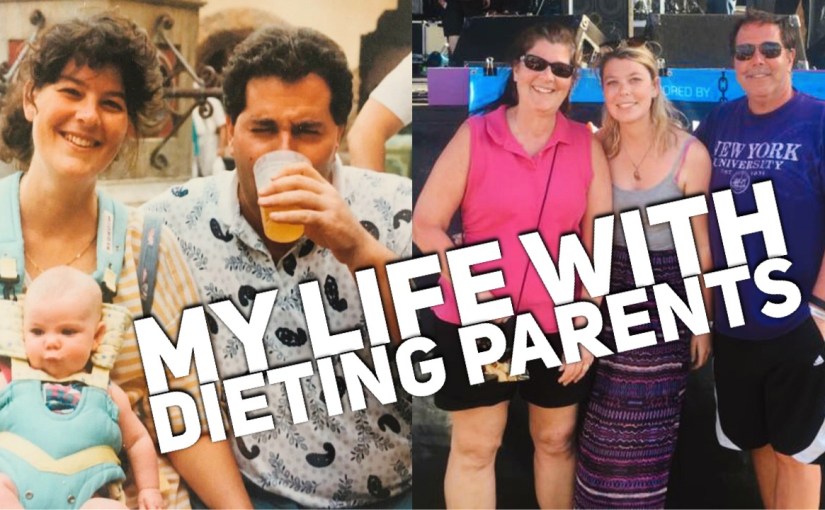
Since before I was born my parents have struggled with their weight.

I don’t know every detail of their personal story and I don’t speak for them. I am simply going to talk about this from my perspective and the impact it had on me.

289906_10150894984376693_184261401_oPictures of my parents in their teenage years show them as very beautiful, classic, 70s looking people. I know because they’ve told me that when they were in their early twenties they both started trying to lose some weight with something called the rice diet together. The rice diet is a very old low calorie fad diet that focuses on eating mainly rice and fruit. Nowadays we can look at the rice diet as just another fad diet with easy to see short term benefits but detrimental long term disadvantages. It is very clear to me that from this point on my parents became trapped in a classic yo yo dieting cycle that they stayed in for over a decade.

They would successfully lose weight with restrictive, hard to maintain diets that they eventually could not sustain in real life. The weight would come back on every time but of course with additional weight gain because their body’s metabolisms were protecting themselves for when they did it all over again. We all know here that there is always going to be an overshoot when you gain back weight from an unsustainable diet but the problem was that my parents repeated these weight loss techniques over and over again, completely messing with their natural metabolisms and ultimately always gaining more weight and being unsatisfied with themselves.

199580_5323071661_7062_n

My memories of food growing up revolve around weight watchers, Atkins, Nutrisystem, and more. I remember my mother had dozens of notebooks with every day’s food point calculations. I remember my dad getting sent boxes of pre-made meals and winning little teddy bears every time he lost weight. I remember having diet books sitting casually on the coffee table or in my dad’s bookshelf. I remember fat free yogurt, 90 calorie cookies, and diet sodas. I remember my dad buying and failing to follow through with exercise machines, DVD programs, and workout regimes. I remember my mom going to the gym so often that I was a regular at the daycare facility there. I remember weight loss goals being written in my parent’s bathroom, watching them take before pictures that never got after pictures – because despite diet culture existing in every facet of our lives, my parents never permanently lost the weight that seemed to haunt them.

I have no idea if my parents would be at the weights they were so unhappy with if they didn’t constantly force their body’s through diet after diet after diet. I often wonder now if they would be a little smaller had they never begun messing with their bodies at all. I don’t think they’d be super model thin – but who is? Certainly not anybody in my family – and we never will be, that’s just not in our genetics.

Now when it came to me, food was an entirely different story. I was able to eat whatever13151754_10153602205931662_7926056698667349285_n I want, and I wanted cookies and candy and ice cream. My parents did not food shame in front of me. Occasionally at the start of one of their new diets all of the junk food had to be thrown away, but I knew it was about them and not about me. Despite calling themselves fat they never once called me fat.  When I gained some weight in high school and complained they always assured me I was beautiful and didn’t need to change. I ate intuitively. I ate junk food and healthy food. I did not consider dieting until after I moved away from the unconditional love my parents surrounded me with.

Despite how wonderful they were, growing up with their attitudes internalized a lot of incorrect messages within my mind.

  1. It incorrectly taught me that being fat was wrong, ugly, and unhealthy.
  2. It incorrectly taught me that the only way to combat being fat was by restrictive and obsessive dieting
  3. It incorrectly taught me the only way to try and attain happiness was to lose weight quick
  4. It incorrectly taught me that junk food was bad food

I don’t blame my parents for my eating disorder. I don’t blame anybody – anorexia is a mental illness that is triggered and effected by the world around us. Media, entertainment, advertising, clothing stores, commercials for diets, fat shaming, and a general lack of respect and proper understanding of healthful nutrition are all reasons people get stuck the way I did. My ED was however, triggered by the first diet I ever attempted. Self-conscious about the weight I put on naturally in college I attempted my first diet much like my parents did in their twenties. My diet morphed in a way theirs never did though of course.

13497872_10153684094931662_4697141297950104532_oNow my parents and I have our shit way more figured out. We have all learned a lot through our own journeys about our weight and health. Set points are real and my family’s is a little bit higher than average. We cannot chase an ideal that our body’s will never be happy with because we will be chasing forever instead of enjoying where we are now. No food is scary, no food is bad. Food is food. If we eat what we love, when we love, while listening to our body instead of punishing it we will be right where we need to be. Eating full fat yogurt and fresh baked cookies won’t set our health goals back. Wherever we are in our journey is perfect because we are all good people and that is what makes us beautiful.
That’s what it was like growing up in a household with parent’s who yo-yo dieted my entire childhood. My parents are loving, hardworking, nurturing, hilarious, fun, intelligent people. That’s how I know that nobody is immune to diet culture, but that with a little bit of work – we can all fight it.

Being Bigger Than Your Boyfriend

Image result for big girl get on top if he dies he dies
Do you feel self-conscious about being with a partner that is smaller than you?

You’re not alone.

I think a lot of people feel this particular insecurity. One of the many many factors that went into me wanting to lose weight so long ago was feeling uncomfortable about weighing significantly more than my ex. That was very dumb because the weight loss and subsequent eating disorder put a way bigger strain on our relationship than my insecurity ever did.

There is this common heterosexual relationship myth that the female should be smaller than the male. But like, why? Seriously, why? I have always been attracted to people who are smaller than me in some way. I can’t help who I like. My mom is taller than my dad and they’ve been married for over 30 years.

Image may contain: 2 people
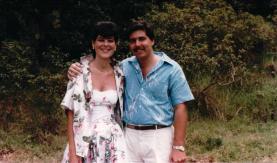
My mom and dad ~ 1984

The feeling that you need to be smaller than your partner is one of those things that’s been pounded into our head over and over from the media and our culture. It’s silly though because if we limited the people we were allowed to love by certain classifications like race, gender, or size than we would miss out on the opportunity to be with incredible people who may have the power to love, shape, and change us forever.

If you’re worried about what other people are thinking about the two of you than you’re not thinking about your relationship the right way. If you’re truly in love or on your way to being in love than who the fuck cares what others think? You only need to seek validation from yourself and your partner. But mostly yourself.

Image may contain: 3 people, people standing and indoor

Maybe you’re in a relationship with someone smaller and you are feeling a little uncomfortable or self-conscious in front of them. I get that. I have been guilty of covering my stomach, avoiding being on top, and other stupid shit like that. What I came to realize eventually is that my partner is not blind or dumb. They know what I look like and they chose to be with me NOT in spite of but likely because of it. It’s not that you’re someone’s fetish – because you are so much more than that.  Your body is unique and beautiful, and your partner chose to be with you because they love you and everything you got going on.  If you feel self conscious in front of them then to me that feels like you don’t fully trust them yet. You know what might help with that? Talking to them about it.

If you think you’re too heavy or gaining too much weight and that you’re partner won’t love you because of it – listen to me, it’s all in your head. If your partner didn’t want to be with you they wouldn’t. We’re all human we have free will. Any insecurity you feel comes from within. Take time to work on your self esteem and body positivity and realize that your partner is LUCKY to be able to touch your soft skin and beautiful body.


tumblr_mhdkafSWTC1rwsmexo1_1280.jpg
*IF A PARTNER EVER MAKES YOU FEEL SELF CONSCIOUS IN A NEGATIVE WAY OR VERBALLY ABUSES YOU ABOUT YOUR WEIGHT, LOOKS, OR ANYTHING ELSE – GTFO GIRL. Life is too damn short for that bullshit and there are plenty of other people who aren’t asshats out there for you.


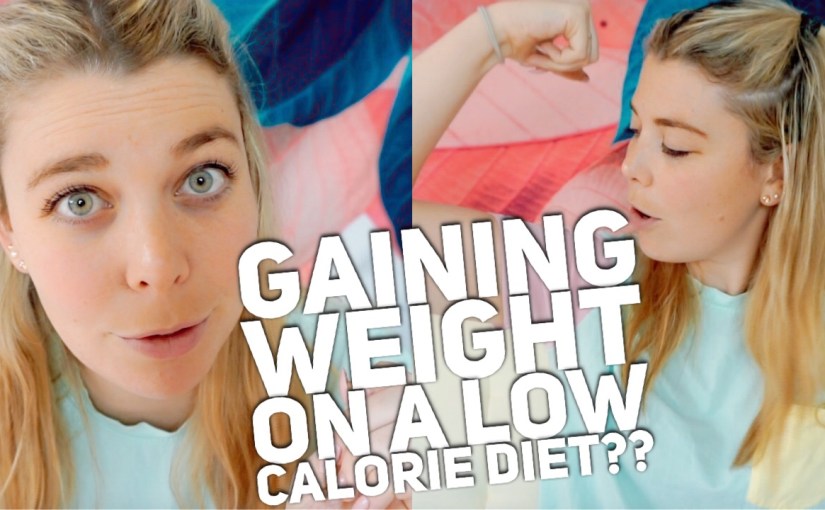
Gaining Weight on A Low Calorie Diet

So, you’ve been restricting calories to lose weight. For whatever reason, perhaps because you have an eating disorder, because you think you need to look a certain way to wear a bathing suit, or because the media and our culture have forced you to look upon yourself with distaste and wish for something better.  You’ve googled what to do and low-calorie diets and meal plans come up immediately.  “If energy in is less than energy out and the pounds will melt right off!” the articles say.

Maybe that was you 1 year ago, and you tried the diet, and it worked! But then you couldn’t maintain the restrictive lifestyle (because who could??) so the weight came back on. Then you tried again. and again. Now you’re restricting your calories under the façade of a “diet” just like you did before but this time you are noticing that you’re gaining weight!! Why the fuck is this happening??

angry look whos talking now GIF
your metabolism @you

Well let me tell you – honey, your metabolism is mad.

When you attempt to lose weight quickly with low calorie meal plans, sure you lose some fat, but you ALSO lose muscle.  Your muscle mass is the most important factor that keeps your metabolic rate high.

Let’s say before you started dieting you were able to maintain your weight easily on 2700 calories a day. (These numbers are just examples). Then you go on your first low-calorie diet and lose 10 pounds quickly. While that rapid weight loss is initially encouraging it is not as fantastic as you may think.  You see, those 10 pounds include muscle loss.  So after a few weeks when life gets in the way and the diet is no longer sustainable, the weight comes back on AND your metabolic rate has dropped from 2700 to 2300 because of the muscle loss. With each new diet your metabolic rate decreases even more until your maintenance calories are lower than your diet calories – hence why you will eventually gain weight on low calorie diets.

a32b9c392d3cb0aba830ee6399a7d444.jpg

Unfortunately, this is a common problem and one of the reasons why the diet industry is an evil multi-billion-dollar industry. You see when these low-calorie meal plans work initially, people then blame themselves when they aren’t able to sustain them.  Then they continuously attempt to recreate the results of the first time but every time you force starvation onto your body through the guise of a “diet” you are furthering metabolic damage. This is also why when the weight comes back on eventually, you gain more than you started with. It’s not your fault, it’s the lies of diet culture that “innocently” suggest unsustainable and dangerous meal plans on people desperate for a quick fix.

So, you’re in a metabolically suppressed state commonly known as “starvation mode” – what do you do? Well the first step is obviously to STOP low calorie diets.  When I was stuck in this situation the only thing that worked for me was to eat eat eat until my metabolism caught up with me. No, your metabolism is not “broken,” I promise you that is impossible. Yes, I gained he weight back to where I was before I ever attempted my first diet… but I’m so much happier loving myself in this body than I ever was torturing myself in my calorie restricted body.

“Beach” Bodies???

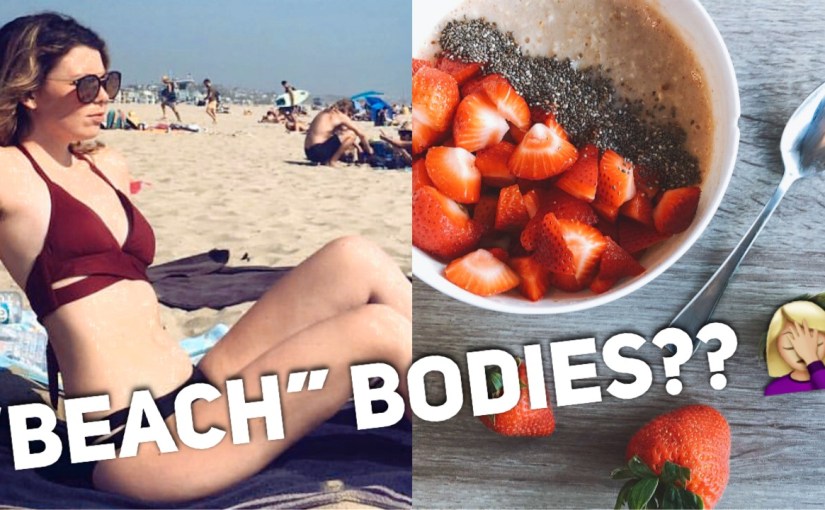
IMG_1476Bikini Body Season. What the f#@! does that mean? Typically, it refers to the months in late spring/early summer right before the weather is right for pool parties, beach days, and barbecues (aka reasons to put on a bikini).  Since diet culture attempts to make women feel like they don’t deserve to wear a swimsuit unless they have thigh gaps and visible rib cages – women spend this “season” dieting and working out in order to look good in waterproof underwear.


I know you already KNOW that I am going to say this but – The ONLY thing you need to do to achieve a “bikini” body is to put a damn bikini on your body!!

 GIF

If someone cares deeply about the way other women look in a bikini that says a lot more about the character of the person judging than it does about the person enjoying their time at the beach.

If you feel pressured in any way to achieve a certain type of body just because you may be in a bathing suit in the upcoming months remember that it is not worth stressing over because this “expectation” is simply a product of diet culture.  And may I remind you, DIET CULTURE IS BULL SHIT.

Don’t sacrifice your mental health for your physical health.  You are not an object. Though the media may have you believe that the only reason to wear a bikini is for others to scrutinize you.

The truth is the only reason to wear a bikini is:

  • Because you want to

Our bodies should be celebrated and not hated.  Every flaw or mark that separates your body from an airbrushed super model is a reminder of your journey and uniqueness. You are beautiful, and “beach body season” is bullshit.

The Minnesota Starvation Experiment

The Minnesota Starvation Experiment was a study done by Ancel Keys in the late 1940s to study the effects of famine on war torn countries in Europe post World War Two.  Besides fulfilling its intended purpose – the study also ended up shedding the first light on how dieting and food restriction effects the human body.

Here is an overview of how the experiment worked:

image

The subjects were all men.  First, they were studied under a 12-week control period in which they were fed a standard diet of 3200 calories.  During this time their psychological and physiological states were measured in order to determine each subject’s baseline condition.  At this phase each man was at their natural weight, which they all maintained on the control diet they were fed.

The next phase was the starvation period. For the following 24 weeks all of the men’s diets were cut by approximately half to 1570 calories per day.  It was during this phase that the behavior of the subjects began to change drastically.  They all began presenting symptoms that we commonly associate with chronic dieters or anorexia sufferers today.  Some of the symptoms observed included:

  • A decrease in strength and energy
  • Apathy towards everything except for food
  • A sudden and intense interest in food displayed through reading cookbooks for fun and to stare at the pictures
  • They took advantage of being allowed to chew gum by chewing packs and packs of it per day, and they guzzled coffee and water to stave off feelings of hunger
  • They became irritable around meal times
  • Many men became depressed
  • They lost weight (obviously)
  • Their heart rates decreased
  • They felt dizzy
  • They felt lethargic
  • They were constantly cold
  • Almost all subjects experienced body dysmorphic disorder and were unable to recognize how much weight they had actually lost

starvation-experiment_main


The next phase of the experiment was the recovery period.  The men were split into four subgroups and each group ate a different caloric intake to recover from the symptoms of starvation.  The first group ate 1970 calories, the second 2370 calories, the third 2770 calories, and final the fourth ate 3170 calories.  Even with the increase in calories all of the men were still left feeling hungry or starving.  These increased intakes were not helping and specifically the men in the lowest group were not feeling better AT ALL.  In light of this discovery Ancel Keys decided to add 800 calories to each groups intake.  Eventually he observed that the only factor helping these men recover was providing them way more food than he initially thought would be necessary.  He concluded that a person needs at least 4000 calories a day to recover and rebuild their strength.

After the recovery period was over the men were free to eat whatever they pleased, but Keys continued to observe a small handful of them.  He observed that most subjects continued to eat thousands and thousands of calories a day (12,000+ in some cases) for many months.  Many subjects reported to have an unending, insatiable, hunger months after the experiment ended.  As the subjects allowed themselves to re-feed through eating to their extreme hunger, their metabolisms began to heal, their strength returned, and many of the symptoms of starvation began to vanish.  Although to the layman it may appear that these men were massively “overeating” it became extremely evident that their bodies requires this seemingly inordinate amount of food to fully heal all of the damage.

On average the men regained their weight back to what it had been previously plus 10%.  You may identify this as an overshoot.  With unlimited food and unrestricted eating eventually their weight plateaued and about nine months later all of them were back to the weight they had been at the very beginning of the experiment.  This is one of the first documented and analyzed cases of a body’s “set point.”  Despite the original fear that all of this unrestrained eating would cause infinite and exponential weight gain, that proved to not be true.  This experiment demonstrated that over eating and starvation induced hunger only presented as long as a body was below its set point.

And that was the Minnesota Starvation Experiment.  It’s fascinating because just a cursory analysis of the study demonstrates how insanely harmful caloric restriction is on the human body. As you may note, all of the symptoms that the men experience in the starvation phase are eerily similar the symptoms felt by eating disorder sufferers and chronic dieters.  Sadly, most people who struggle with a disordered relationship to food today are often eating even less than the subjects of this study were.  A typical dietary recommendation for people seeking to lose weight is often a caloric total lower than the 1,580 calories the study subjects ate.  It is important to recognize that these “dietary guidelines” are dangerously low, unsustainable, and unrealistic amounts that should not be practiced.

Furthermore if you are stuck trying to recover from yo-yo dieting, binging and purging, restrictive eating, or any other disordered relationship to food this study gives you an excellent blue print for how to recover.  This was the science that I read when I decided to go all in on recovery using the Minnie Maud method.  This science validates that method of recovery (and now so does my own lived experience with it).

Please feel free to watch my video below for a synopses of the information above along with an outline of my own experience and my results from using this method to recover from anorexia.

Relationships in Eating Disorders and Recovery

in love hearts GIF by SpongeBob SquarePants

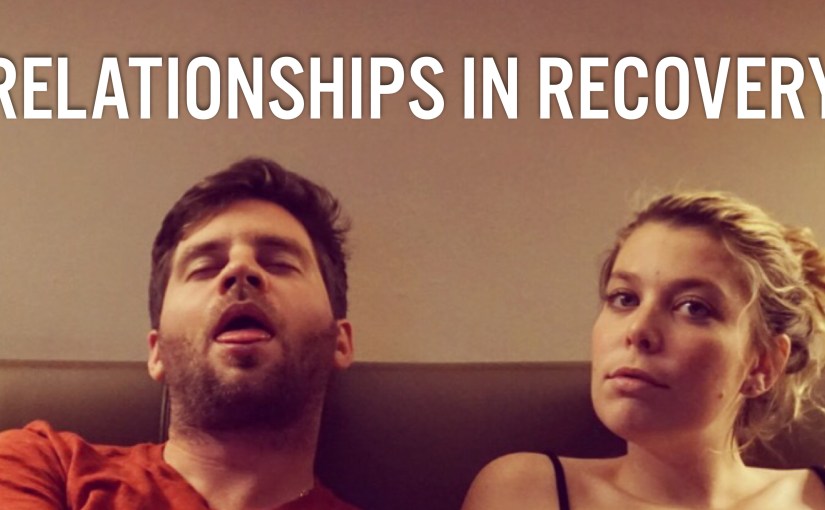
Happy Valentines Day to all of you!  I hope you have a wonderful day celebrating all of the love in your life.  Love between family, friends, pets, and romantic partners!  Being in a romantic relationship  while suffering or recovering from an eating disorder is not an easy task.  Often it is difficult for a partner to handle the stresses of the disorder by watching their loved one hurt themselves emotionally or physically.  I’ve been with people through every stage of my journey and here is what I’ve learned.

When I got sick I was dating my now ex-boyfriend.  Our relationship was long distance and he was with me when I developed anorexia, suffered from it, and made my first few attempts at recovery.  Overall, he handled it pretty well and was very supportive but over time the stress and seemingly unending pain started to wear him down and after dating for almost three years he left me.  (Whatever, I’m too good for him so it’s cool).  From that experience I learned the following tips:

  1. It’s okay to tell your partner what is going on with you and keep them included, but don’t turn them into your personal therapist. Don’t put absolutely every burden you are dealing with onto them (remember a lot of these thoughts are not your own, but originate from the disorder). A person may love you but everyone has their limits and one person cannot be responsible for handling all of your problems.
  2.  Allow them to cope however they need to.  Everyone handles stressful and difficult situations differently and there is nothing wrong with that.
  3. Don’t blame them for trying to help.  Even if the help is unwarranted or not actually helpful.  If you feel your partner trying to help you, be an effective communicator about what would be the best way for them to do that.eric cartman help GIF by South Park
  4. Make sure your partner can handle the stress of loving someone with a mental disorder.  Sometimes people just can’t, and you cannot put your entire reasons for happiness into your faith in another being.  You need to be okay relying on yourself and paid professionals.

I have been with my current partner for a little over 2 years and we are as happy as can be.  I’m writing this as I stare at the beautiful flowers he had sent to my office.  I am lucky to be recovered and to rarely ever flirt with a relapse, but nonetheless I now have the tools to be able to handle our relationship in a more mature way.

Happy valentines day everybody!  Hold your person close, they love you (even if your person is your mom or your cat).cat lady pet GIF

How To Stop Counting Calories

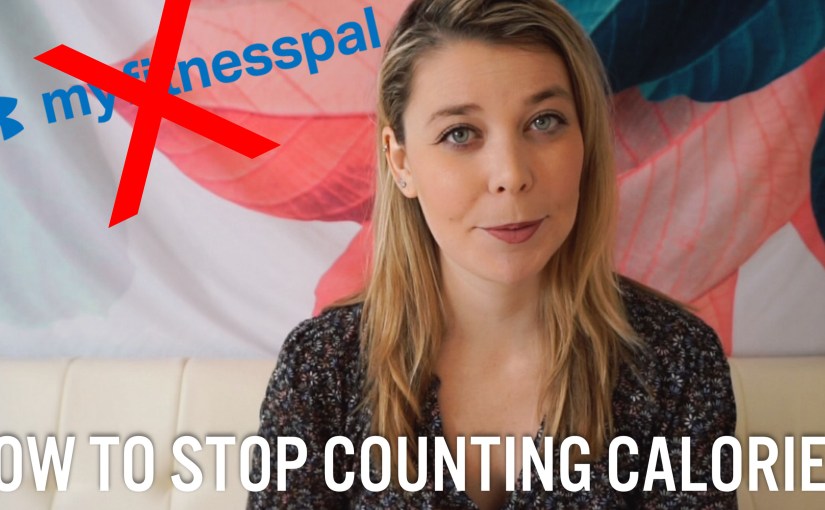
There was a point in my life where I figured I would just be stuck counting calories forever, resigned to a life of sadness and disordered behavior.  However, this proved to be untrue as I transitioned from a religious calorie counter to an intuitive eater – and you can too.

When you stop counting calories, you start enjoying and experiencing your food for its texture and flavor instead of as just a number.  Eating becomes pleasurable when you aren’t constantly measuring, calculating, tracking, and obsessing over the food on your plate.  You’ll open up space in your brain to focus on things that actually matter.  You’ll be able to start eating intuitively by creating a stronger relationship to your body’s cravings and the food you eat.  Obsession with food will fall by the wayside.

The truth is, no matter how accurate you think your calculations are using your BMI, TDEE, BMR, etc. to calculate the right amount of calories for you – there is no way to truly know as every single body is different.  More to the point, without going crazy it is completely impossible to accurately know the calories of every food you eat.  Remember, all a calorie is is a unit of energy and our bodies NEED energy to live.  So here are some tips to stop counting calories forever.

GET RID OF CALORIE TRACKERS
This is a big one. I tracked all of my calories on “My Fitness Pal” but there are many others like it.  Cronometer, Lose It, Fat Secret, etc.  These apps were built to count calories so the best first step for a life without this burden is to get rid of them!  If you aren’t using an app than get rid of whatever device you use to track the numbers.  A notebook, planner, journal, or word document.  Delete it, burn it, or have a friend drive 20 miles away and throw it in a dumpster.  Getting that out of your life is a crucial first step.

GO OUT TO EAT AT RESTAURANTS
Most restaurants are impossible to gauge to calories for because you don’t know everything that goes into the food preparation. It helps to make sure you are with a friend or family member that can keep you distracted from trying to break down and calculate the meal components.  If you are financially incapable of dining out, that’s alright – just have a friend or family member cook a meal for you without telling you what is in it.  This is essentially the same concept.  You are looking to let go of the tightly wound control you have to maintain while counting calories by letting go of the control over food prep.

BLOCK OUT NUTRITION LABELS
Take a sharpie and cover them up so that you can’t look at them obsessively. Go grocery shopping in bulk bins or for items that don’t have nutrition labels on them at local shops of farmers markets.  Pick food for flavor and not for numbers.

HAVE FAITH YOURSELF TO EAT INTUITIVELY, BUT BE PATIENT
We are all born knowing how to eat. Your body knows what it needs and it is not trying to sabotage you.  It loves you and want to keep you alive, return the favor to it.  Eating intuitively takes practice but it is completely achievable for all of us since it is the way we are supposed to eat.  Remember that it will take time as well because you are breaking a very bad habit – and habits are not broken overnight.

If any of these steps seem impossible or overwhelming than feel free to take it slow.  I know how daunting and unreasonable these may seem – but if you implement these tactics into just one meal a day at first, and then slowly increase, you will eventually get there.  Take it from a girl who used to count the calories in gum – you can do this!


Atypical Anorexia and Weight Stigmas

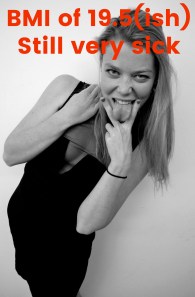
Atypical anorexia is a disorder classified by exhibiting all of the symptoms of anorexia without being underweight.  Atypical anorexia falls under OSFED or other specified feeding or eating disorders, previously known as EDNOS (eating disorders not otherwise specified).  When I was sick I did not want to seek treatment because my BMI wasn’t technically underweight and I thought my concerns wouldn’t be taken seriously. But a person can have an eating disorder regardless of their size, shape, or weight.  Also BMI is Bullshit, but I didn’t know that then.

10003836_10152036274776662_1160550971_oDue to the weight stigma surrounding anorexia a person may think, I am not sick enough to have an eating disorder, because they are a “normal” weight.  This is a grave misunderstanding that can prevent those who are struggling from seeking out the appropriate help needed for recovery.

Please remember that weight is not an essential criteria for an eating disorder.  We need to challenge the weight stigma surrounding deadly diseases so that more people feel okay speaking out about their struggles.

I fear this happens to countless people, specifically women who have disordered relationships to their bodies and food after being brainwashed by diet culture.  You can be a normal weight and still be struggling with an eating disorder.  There is no one type of way to look if you are sick.  If you have found yourself struggling with irregular eating patterns or abnormal thoughts when it comes to your body and food, be sure to talk with someone you trust.

You are not alone, you are not being dramatic, you do not need to look a certain way to be suffering, and you can recover.