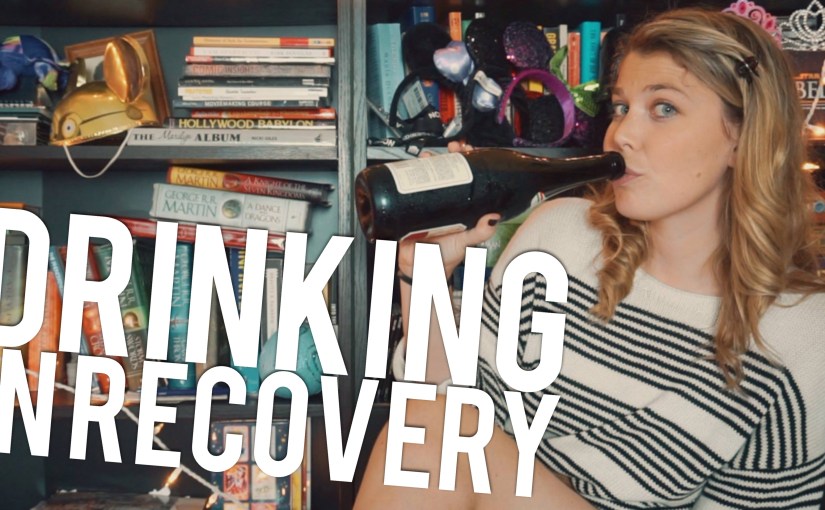
It’s popular wisdom in the eating disorder recovery community that drinking alcohol/doing drugs is bad – and there is a lot of evidence to back that statement up. There is a strong correlation between people with substance abuse issues and eating disorders. Alcohol, of course, is detrimental to your health whether you are recovering or not. People who need to re-feed can rely on alcohol for a bulk of their calories and not get the proper nutrition they need. Alcohol is just an unhealthy way to self medicate anxiety. Listen, I understand all of that.
Here’s my well thought out, scientifically backed up, and thoroughly researched counter argument though: I love vodka.
I am not here to tell you not to listen to your therapists and doctors. Every single person is different and what they need to help themselves is unique. However, drinking in recovery was absolutely essential for me and perhaps more than one of you can relate to my reasoning.
Before I was sick I drank… a lot. I was in college and in a sorority in New Orleans. It was hard to avoid, and frankly I didn’t want to avoid it. I loved going out to bars, knowing bartenders, trying new drinks, hanging out with my friends, etc. When I developed ED alcohol was one of the first things I cut out. Doing this may have seemed like a very healthy decision for myself, but looking at it from the lens of an eating disorder I think we can all understand how it really wasn’t. It was simply another excuse to restrict more calories. When I was in quasi-recovery I still refused to drink OR if I did drink I would make sure not to eat all day to compensate. That was the wrong way to approach alcohol. I was rarely drinking and I still did not enjoy it the way I used to.
When I finally committed to true recovery I began forgetting about the “empty calories” and returning to my pre-ED behavior towards drinking. Being able to have fun with my friends the way we used to was essential to me continuing to have the strength and will to re-feed. Returning to my old social life was a “Recovery Goal” of mine, and re-learning how to drink without care of calories was essential to achieving that goal.
Is this the right way to approach alcohol for every person in recovery? Certainly not. If you think that you have a real substance abuse problem than alcohol can hinder any potential progress you might make. If you drink alone often or view alcohol as a way to medicate anxiety instead of as a social lubricant
or way to connect with others than you are abusing the sauce and should not imbibe. If you are still counting calories and restrict your intake to allow you to drink alcohol than I can tell you from experience that is very wrong, dangerous, and ultimately not even fun – so just stop. However, if drinking is a part of your social life that you miss and you understand your body and your limits (and you’re of legal drinking age!) then I think that drinking during recovery is essential to reminding yourself who you can become once again.
Did you drink/are you drinking in recovery? Do you think you’re going about it the right way? Or do you avoid booze completely? Let me know in the comments, I’d love to hear other perspectives!
Let’s talk about orthorexia. Sometimes called the accidental eating disorder, orthorexia is ironically when a person becomes SO obsessed with a “healthy” diet and lifestyle that it actually becomes unhealthy. It is Human Makeover: Extreme Edition. It’s obsession under the guise of health. While someone who develops orthorexia might have started out with harmless intentions, they often end up in a very unhealthy place.
An orthorexic is often very concerned about the “purity” of their food. They are fixated by the oils used in restaurants and potential toxins in their food. They eat only a very small list of “acceptable” foods and are unable to eat food prepared by others. They will become completely fixated on the quality of food, how to eat it, and when to eat it. They will put themselves on strict eating regimens that most people could never stick to. They want to be better than others by proving their dietary superiority. If they have a slip up they will often self-punish with more exercise or less food. Ultimately their food choices are destructively restricted and their exercise routine becomes so aggressive that their health suffers.
Orthorexia is not technically an eating disorder according to the DSM-5, but let’s be clear folks, this IS an eating disorder. It was a phrase created by Dr. Steven Bratman in the late 90s. He had patients who were overly health obsessed to the point of being harmful to themselves. While it was not initially meant to be a diagnosis, over time he discovered that this term describes a very real eating disorder.
Of course there is a difference between orthorexia and a normal healthy lifestyle. The amount of stress and fixation that comes with orthorexia typifies the illness. A person leading a healthy life without obsession or fear is not sick in the same way an orthorexic is. While the line might be blurry orthorexics suffer from compulsive behaviors, preoccupations with optimal health, self-imposed anxiety, shame, and severe restrictions that escalate. Orthorexics might attempt cleanses or fasts in order to “detoxify” their bodies. While any disordered relationship with food is unhealthy, people can also suffer from nutritional deficits, self-inflicted social isolation, damaged relationships, and total loss of the ability to eat intuitively. The biggest problem of all is that orthorexia is tricky to recover from. We live in a society that idolizes healthy eating and thinness. In this environment an orthorexic may not realize that they have a problem and can stay disordered under the pretense of a healthy lifestyle.
So, if you think that any of this might apply to you… Start eating things that scare you, look at your attitude honestly, accept that you may not be the healthiest person in the world, and begin to re-learn how to love your body no matter what. Stop measuring your self-worth by your overly restrictive diet and exercise routine, and learn how to eat intuitively. Fill your body with joy and self-love and take a step back from unrealistic health goals that stop you from truly living a life worth living. A life full of strong and happy friendships and relationships, a life with junk food and salads, wine and smoothies, ice cream and vegetables, happiness and joy, and no self-hate. Orthorexia is an eating disorder to recover from – and recovery is worth it for you too.
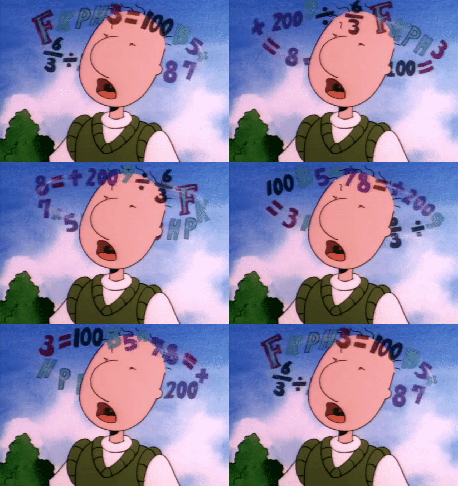
When suffering from an eating disorder numbers become a very integral part of life. Weight, calorie intake, calorie output, and every number on every nutrition label are constantly circling the brain like a 90s cartoon character trying to do math.
Of course, there is also BMI. BMI, short for Body Mass Index, is technically the measure of body fat using height and weight. It calculates whether an individual is underweight, “normal”, overweight, obese, etc. BMI is a widely used evaluation by doctors to assess a person’s health. It is also a malicious meter of lies. I was obsessed with my BMI while I was sick, before I realized that where I fell on the chart was not at all an accurate picture of my health or anyone else’s.
Pictured: actual evil wizard
First thing is first, the evil wizard who invented the BMI equation gave instructions to not use BMI the exact way we have been using it for decades. Lambert Adolphe Jacques Quetelet (ridiculous name) said himself that the formula should not be used to suggest an individual’s “fatness”. Instead the equation was meant to measure obesity throughout a population to help the government determine how to allocate resources. He’s still an evil wizard in my book though for bringing the BMI into the world in the first place.
BMI does NOT account for gender, age, waist size, bone density, or muscle mass. For instance, athletes and people with strong bones will often be classified as overweight or obese because bone and muscle are denser than fat. Some of the fittest and healthiest #bodygoals you can think of including many body building competitors are technically obese?!?! That alone should tell you how grossly inaccurate this whole concept is.
The very notion of BMI suggests there are defined groups of underweight, ideal, overweight and obese people and that these groups have borders that are separated simply by a decimal place. That is completely ridiculous. Let’s just call a spade a spade, BMI is bullshit.
Before I had an eating disorder a doctor looked me in the face and told me that I was overweight. I went home with this information and internalized it. At that time according to the BMI chart all I had to do was lose 2 pounds to be considered “normal”. 2 POUNDS! Perhaps, had I not been PMSing that day or had gone to the bathroom before my appointment the doctor would have never said that to me. But he did, and I heard it. I set my weight loss goal and got crackin’. Then, long story short I went too far and ended up with anorexia.
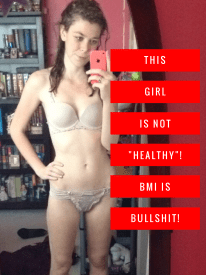
Here’s the thing about my eating disorder. For the majority of the time I was sick, I was never “technically” deemed underweight according to the BMI chart. An 18.5 or below is considered underweight and for the most part I hovered at 18.8. My ED begged me to eat less and less to stay below that arbitrary threshold. But while my hair was falling out, my bones were sticking out, my mental health was spiraling, and I was starving any doctor could have looked at me and told me that I was “ideal”! Let me tell you, I was not. Fortunately, now I don’t know my BMI and I honestly can’t even take the time to figure it out because I know that is a completely garbage number.
Let’s just all vow to never check our BMI again or let it dictate our behavior towards our bodies. If a doctor tries to give you any advice based on it slap them!*
*Do not physically assault medical professionals, the slap should be figurative.
I want to start off by saying that I am not a dietician, psychologist, or doctor of any sort. If you are experiencing serious medical concerns, please go see a doctor as soon as possible and if you are having any abnormal, anxious, depressed, or suicidal thoughts or feel like you need a trained ear to help support you please seek counseling from a professional.
For me, recovery from my eating disorder took a long time and happened in several phases. Boiling the whole process down to a series of easy-to-follow steps just isn’t realistic because this disease is complicated and different for everyone who is affected by it. This is my recovery story and though it may not be exactly the “right” method, it is the one that set me free.
TRIGGER WARNING – There are descriptions of restrictive eating in here.
The day I googled “symptoms of anorexia” I felt my stomach sink as my eyes scanned the pages identifying with all the evidence I saw. After a lot of crying and googling for more answers, I was finally ready to accept that I might have a problem. However, I sat on that knowledge without doing anything about it for a long time. I told my boyfriend and my parents and they were supportive and not surprised but I didn’t really know where to go from there. I made an appointment with a therapist, I did some more online research, but mostly I just ignored the truth for as long as I could.
I saw therapists and went to doctors but the most impactful discovery for my recovery was online communities. It all started with my Tumblr recovery page. I discovered other girls who were recovering from anorexia and what that process looked like for them. I spent hours and hours reading posts from recovering girls and the articles they found interesting. The first step of course, was to increase my intake. It happened slowly over the course of a few months. I increased to 1200 a day then 1300 than 1500 and so on until I settled on 1700 a day for many months. I stopped all workouts that weren’t yoga. I made a list of all the food that scared me and I vowed to try and eat everything on the list at least once. I started photographing my meals and posting about my days on my tumblr. I was in this state, which I refer to as “quasi-recovery” for over a year. I went through several periods of relapse where I would return to my old ED behaviors before returning to quasi. I was still an unhealthy low weight, but I wasn’t losing anymore I was maintaining. At least I was eating I thought… sure, I was still cold all the time, afraid of certain foods, isolating myself, losing my hair, not menstruating, feeling depressed and suicidal, I sprained my ankle in my sleep because my bones were so weak, and sitting down still hurt because all my bones stuck out of my body… but for some reason I still felt like I was “recovered”. Just because I wasn’t eating only 500 calories a day and the fog in my head was dissipating I thought the battle was won. The problem was that numbers still ruled my life and I was not happy. I was not recovered.
The beginning of my salvation came upon the discovery of youreatopia.com and the Minnie Maud method of recovery. In summary, it is a system of recovering in which the person eats at least 3,000 calories (some cases it is 2,500, and some it is 3,500, but for me, it was 3,000) and stays as sedentary as possible. This is all in an effort to restore one’s metabolism, while simultaneously expanding from the mental restriction of anorexia. The 3,000 calories required is the minimum, however, if one’s hunger is not satisfied at 3,000, then they are encouraged to eat until satisfied. In fact, many people who recover this way experience what is called extreme hunger and can eat upwards of 10,000 calories a day. Minnie Maud is named after the Minnesota Starvation Experiment, which is an fascinating study of starvation on the human body. I was spellbound by the study, and I encourage you to read through it too to discover the negative impact of calorie restriction. Minnie Maud is controversial because the woman behind it all doesn’t have any known credentials but many girls follow her advice with success regardless. I had known about Minnie Maud for months but never truly considered it as the right option for myself. In truth, it scared me. I think my eating disorder knew that doing this would work, so it constantly told me it was the wrong thing to do. I haunted the online forums but never truly committed. Then one day after almost 2 years of quasi-recovery, I just did it. I ate the minimums and didn’t move all day. It felt horrible, I hated myself, but also a little tiny part of me felt a little freer. I started following the guidelines every day.
The extreme hunger was very real. At the worst of it I was eating over 5,000 calories a day and I had the feeling of food being stuck in the back of my throat constantly. I worried incessantly that I was becoming a binge eater but I just kept going because I didn’t know what else to do and I wanted this to work. With the freedoms the minimums gave me I was finally able to eat foods I had avoided for years, pasta, cheese, ice cream, candy, avocados, bread, and so much more. I finally was able to stop counting calories like a maniac. One exciting day that I will never forget is the day that I was able to delete MyFitnessPal from my phone. The app had been controlling me like a mindless zombie for years and all of a sudden poof! I didn’t need it! I still had a lot of negative thoughts, the first few months on Minnie Maud were not all roses and sunshine. I had to cover all my mirrors and hide my scale. I was truly gaining weight for the first time in years and that made me more nervous than anything else. However, a big component of the Minnie Maud system is the theory of a “set point.” That you can keep eating the minimums for the rest of your life and eventually the weight gain will taper and each body will hover around the weight that is right for it. I was skeptical, but I had read success stories and knew girls who had recovered and I used the anecdotal evidence to keep myself going.
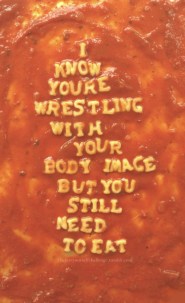
Pictures from my tumblr of me challenging myself to “fear foods”
Two months in to Minnie Maud my ex-boyfriend of almost three years broke up with me. It was so devastating for me at the time. He had been there from the beginning and had always been supportive. The problem was he bore the brunt of most of the negative thoughts. I depended on him for emotional support and it just got to be too much for him (tangent: let’s not blame that breakup on me though, he was a cheating asshole who left me for someone else and couldn’t own up to it like a man.) I thought that it would be the worst thing for my recovery, but in truth after grieving for a month I started making more progress than I ever had before. I didn’t have him as an emotional crutch and I finally had to just depend on myself to push through. The bulk of my recovery happened in the five months after he left me. Mid way through that same year I looked at myself in the mirror and knew the battle was truly over. The last hump of recovery was the hardest. In my final month of recovery I was still counting calories and weighing myself. I was eating tons of food – to the point of stomach pain every day. My body and brain were begging me to eat. and eat. and eat. I was uncomfortable, but I didn’t stop. I never stopped. I felt large, and insecure, it was not easy. Then one day without me even noticing, it was easy. One day – I didn’t count my calories. I didn’t step on the scale. I didn’t think about food unless I was eating it. My body felt fantastic. I felt fantastic, and I knew I was healed. I don’t think about numbers, I don’t care about food, and every day I love my ever expanding beautiful soul.
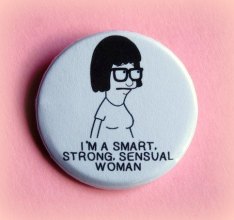
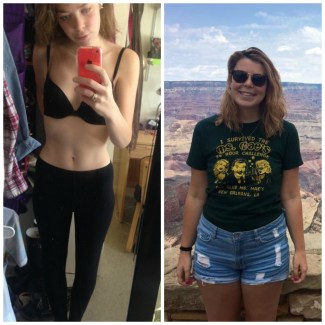
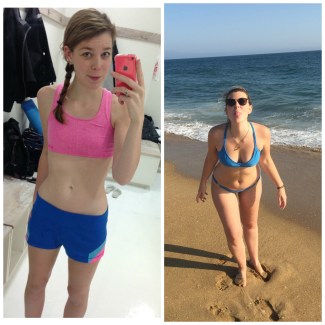
In the end, I gained 40 pounds back. I experienced painful swelling, bloating, and stretch marks but I pushed forward anyway. I ended up at a weight that I could truly love myself at without hurting myself. The best part of recovery was feeling my personality return and grow into something more exciting than it had ever been before. I did stop gaining weight eventually despite not changing my eating habits. I was the same weight I had been before I became anorexic because set point is real. I haven’t obsessively counted calories in almost a year but I have to imagine I’m still eating near the minimums every day and my weight has stayed stable give or take a pound or two since the initial weight gain. I don’t usually weigh myself, I can just tell by my clothes. I felt truly recovered from the thoughts and the actions about 7 months into Minnie Maud. Today, I eat and eat and eat – not because I think I have to but because I live in an amazing city with delicious food. I eat because I work in an industry that feeds me decadent delicious free meals. I eat because it is an important way that I connect with the people I love. I eat because food is delicious. I eat because we need food to live. I eat because I remember what it’s like not to and I will never go back to that life again. I am recovered.
This blog originally began in the summer of 2014 as my way of sharing recipes (mostly baked goods) with friends, families, and whoever else stumbled upon them. Well, two years have gone by since then and a lot has changed.
When I started writing my recipes I was newly discovering what life could be like again if I recovered from my eating disorder. I ended up abandoning the blog after a few months for bigger recovery goals like drinking, socializing, getting take out, and trying to forget about how difficult it once was to put a cookie down my throat. As I slowly recovered over the following year my fascination with food plummeted, as it should have, and maintaining a blog like this wasn’t good for my fragile newly recovered psyche.
It has been about three and a half years since I became anorexic, two and a half years since I decided to try and recover, and one and half years since fully recovering. You can read about my slow decline into the grips of ED in more detail HERE in an article I wrote for Spoon U when I was in college.
When I was sick I was brought to the hospital for complications of being underweight several times, I went to therapy, I talked to family and friends, but absolutely nothing was helping me. I knew that something was wrong but I could not accept my responsibility to do anything about it. To me, the pain was worth the price of being thin. Until one day as I was in bed wrapped up under four blankets with the heat on staring at my dorm room wall wishing I could die instead of dealing with it all, I began to realize that I was not okay. I took a look at my life and saw what a shell of a human I had become. I had isolated myself from all of my friends. I had made my family and long distance boyfriend feel helpless as they could only watch my destruction from afar. I hadn’t had a single thought that wasn’t about food, calories, weight, or exercise in over a year. I looked at myself in the mirror and I only saw failure where others saw sickness. I put gum in my mouth from my third pack of the day and decided to look online for help.
On the internet I found my salvation. It started with discovering blogs of other girls who were recovering. It was shocking to read about people who felt the same way that I did. I read tumblr accounts of people who I felt understood me and the way I was seeing the world, my body, and food. I found blogs like youreatopia and thefuckitdiet. I was seeing girls who were able to challenge themselves to a piece of pizza or bowl of ice cream, feats that I didn’t think would be possible for myself. Discovering the possibility of recovery by seeing what it could look like was the first step in the longest and most difficult journey of my life.
I continued to use the power of the internet (coupled with external support) to conquer my illness and get myself into a full and robust remission from anorexia. The process was tough and challenging, and perhaps even more difficult than being sick was because I was fighting against the voice in my head instead of succumbing to it. However, I powered through and I am so grateful for the life I get to lead today because of it.
Now it is time to give back and so I’ve returned to Ladle by Ladle, given it a small makeover, and am going to make this my new recovery blog – from the perspective of someone who has recovered from restrictive eating and all that it entails. I am going to share my own tips and method of recovery from ED with the hopes of helping someone who is where I once was. Perhaps seeing the possibility of recovery and understanding what it takes to get there can be someone else’s first step on their life changing journey. So I’m here, and my advice and stories will be peppered with some outrageously in your face body confidence and also to keep true with the original intent of the blog… some delicious recipes!
*The advice I give is not professional medical advice, merely anecdotal evidence. Please do what is best for your own body and seek help from a medical professional for official guidelines to recovery.





 Here’s the thing about my eating disorder. For the majority of the time I was sick, I was never “technically” deemed underweight according to the BMI chart. An 18.5 or below is considered underweight and for the most part I hovered at 18.8. My ED begged me to eat less and less to stay below that arbitrary threshold. But while my hair was falling out, my bones were sticking out, my mental health was spiraling, and I was starving any doctor could have looked at me and told me that I was “ideal”! Let me tell you, I was not. Fortunately, now I don’t know my BMI and I honestly can’t even take the time to figure it out because I know that is a completely garbage number.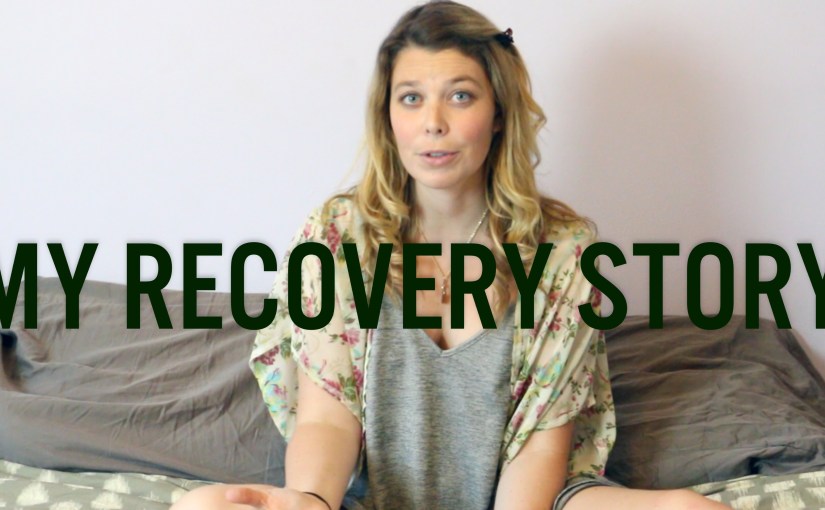
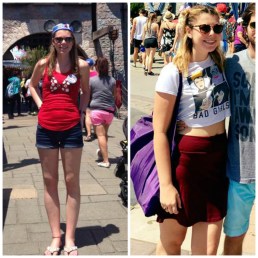 For me, recovery from my eating disorder took a long time and happened in several phases. Boiling the whole process down to a series of easy-to-follow steps just isn’t realistic because this disease is complicated and different for everyone who is affected by it. This is my recovery story and though it may not be exactly the “right” method, it is the one that set me free.
 I saw therapists and went to doctors but the most impactful discovery for my recovery was online communities. It all started with my Tumblr recovery page. I discovered other girls who were recovering from anorexia and what that process looked like for them. I spent hours and hours reading posts from recovering girls and the articles they found interesting. The first step of course, was to increase my intake. It happened slowly over the course of a few months. I increased to 1200 a day then 1300 than 1500 and so on until I settled on 1700 a day for many months. I stopped all workouts that weren’t yoga. I made a list of all the food that scared me and I vowed to try and eat everything on the list at least once. I started photographing my meals and posting about my days on my tumblr. I was in this state, which I refer to as “quasi-recovery” for over a year. I went through several periods of relapse where I would return to my old ED behaviors before returning to quasi. I was still an unhealthy low weight, but I wasn’t losing anymore I was maintaining. At least I was eating I thought… sure, I was still cold all the time, afraid of certain foods, isolating myself, losing my hair, not menstruating, feeling depressed and suicidal, I sprained my ankle in my sleep because my bones were so weak, and sitting down still hurt because all my bones stuck out of my body… but for some reason I still felt like I was “recovered”. Just because I wasn’t eating only 500 calories a day and the fog in my head was dissipating I thought the battle was won. The problem was that numbers still ruled my life and I was not happy. I was not recovered.
 The beginning of my salvation came upon the discovery of youreatopia.com and the Minnie Maud method of recovery. In summary, it is a system of recovering in which the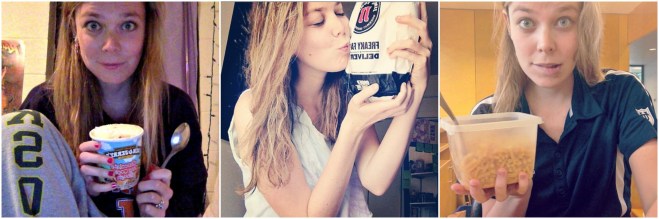
 In the end, I gained 40 pounds back. I experienced painful swelling, bloating, and stretch marks but I pushed forward anyway. I ended up at a weight that I could truly love myself at without hurting myself. The best part of recovery was feeling my personality return and grow into something more exciting than it had ever been before. I did stop gaining weight eventually despite not changing my eating habits. I was the same weight I had been before I became anorexic because set point is real. I haven’t obsessively counted calories in almost a year but I have to imagine I’m still eating near the minimums every day and my weight has stayed stable give or take a pound or two since the initial weight gain. I don’t usually weigh myself, I can just tell by my clothes. I felt truly recovered from the thoughts and the actions about 7 months into Minnie Maud. Today, I eat and eat and eat – not because I think I have to but because I live in an amazing city with delicious food. I eat because I work in an industry that feeds me decadent delicious free meals. I eat because it is an important way that I connect with the people I love. I eat because food is delicious. I eat because we need food to live. I eat because I remember what it’s like not to and I will never go back to that life again. I am recovered.
 When I started writing my recipes I was newly discovering what life could be like again if I recovered from my eating disorder. I ended up abandoning the blog after a few months for bigger recovery goals like drinking, socializing, getting take out, and trying to forget about how difficult it once was to put a cookie down my throat. As I slowly recovered over the following year my fascination with food plummeted, as it should have, and maintaining a blog like this wasn’t good for my fragile newly recovered psyche.
 I continued to use the power of the internet (coupled with external support) to conquer my illness and get myself into a full and robust remission from anorexia. The process was tough and challenging, and perhaps even more difficult than being sick was because I was fighting against the voice in my head instead of succumbing to it. However, I powered through and I am so grateful for the life I get to lead today because of it.
 ladle-by-ladle.com