Quasi-Recovery

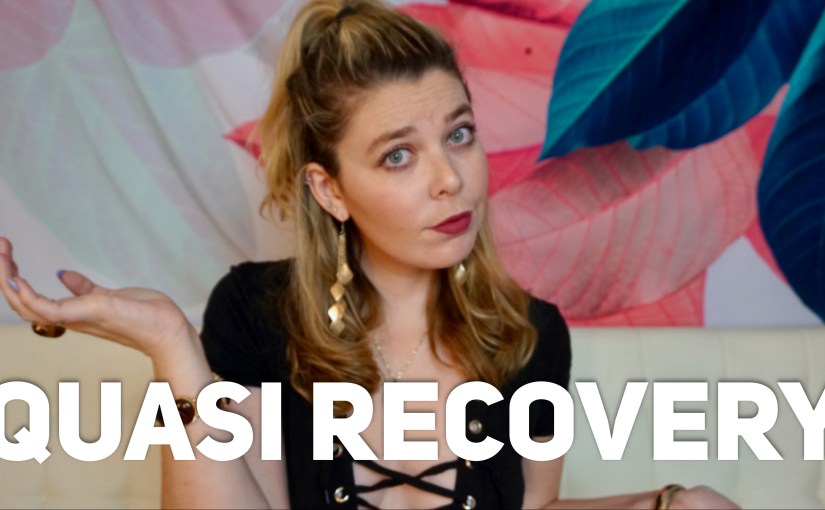
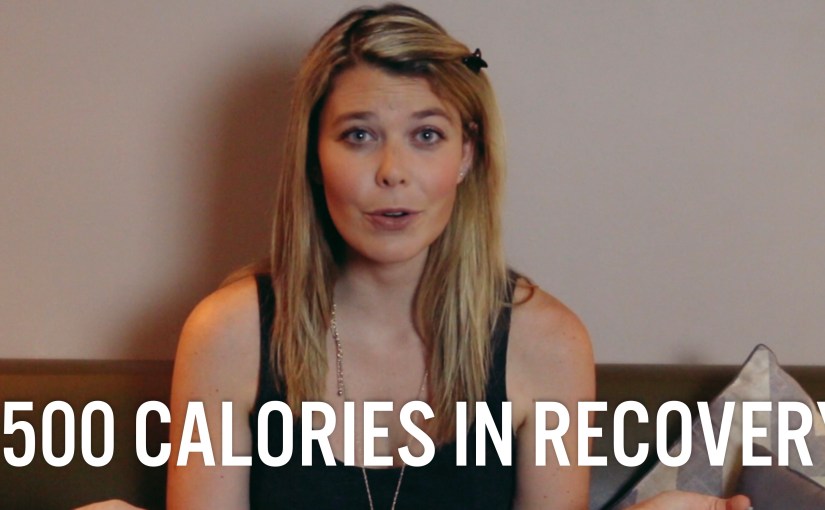
Quasi-recovery is a point in recovery where weight has been restored, but your body and mind have not been fully healed.  It is a halfway point to real recovery.  While you may be at a “healthy” weight, you may not be at the right weight for your body.  You might be in quasi-recovery if you are still fixated on calories and are still restricting (even if your restricting to higher amounts like 2000-2500 a day), if you’re exercising for the purposes of maintaining your weight, if you have not given into extreme hunger or mental hunger, if you still have a fear of gaining weight, or if the ED voices have not stopped.

DC5F2300-D471-46C8-979B-DCD96637AB0B
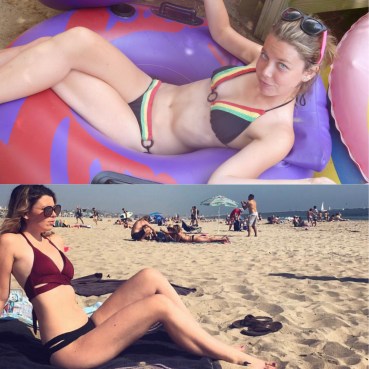
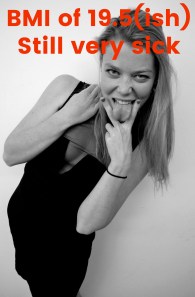
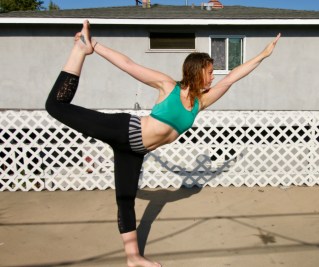
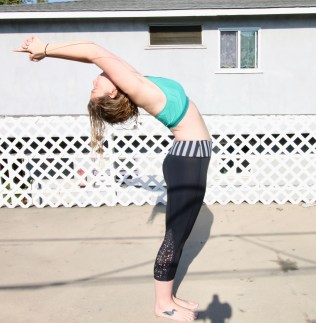
Top picture – Summer 2014, Deeply in quasi recovery, exercising to maintain my weight, counting and restricting calories, still feeling trapped by food Bottom picture – Summer 2017 in full recovery for almost 2 years, little to no exercise, unlimited calories, free of all eating disorder behavior/thoughts

I was stuck in quasi-recovery for over a year.  I was convinced I was recovered because I had gained a few pounds, could eat more calories, and wasn’t starving myself anymore.  But the truth is I was just as sick as ever, still obsessed with numbers and worried about maintaining my weight. The obsessive thoughts hadn’t stopped and that was because I had not truly let myself recover.  The most dangerous thing about being in this state is that it is very very easy to relapse because you are on the edge of letting yourself truly recover, and falling back into old habits.  I relapsed several times during my quasi-recovery. When you’re here your body still hasn’t found its homeostasis that it can happily maintain because the truth is, when you’re in quasi recovery your metabolism hasn’t healed.  Even though you’re eating more, you’re still restricting your body from what it needs to find it’s set point which is why you will gain weight on lower numbers.  The only way to stop this is to truly recover.

To truly recover means to give into the mental hunger, to stop restricting any calories by eating at least 3500 a day, to stop working out, and to let your body gain more weight than you may be initially comfortable with.  As you know if you are familiar with me, my blog, or my youtube channel I recovered this way using the minniemaud method.  The information that this approach derived its methodology from was the Minnesota starvation experiment.  This experiment was the only in-depth study on calorie restriction’s effects and how re-feeding works.  Following the logic of minniemaud is what allowed me to finally decide to truly recover and it is through my own personal experience and the experience of many other girls I met through my journey that I can confidently say it is the only way you will ever truly free yourself because if you are stuck in quasi, you are not truly free.

Will you gain weight in real recovery? Yes.
Will you overshoot your set point? You might.
Will you experience extreme hunger? Definitely, although how intense and for how long depends on how intensely and for how long you were restricting yourself.
Will you finally be set free of the control numbers and food has over your life? Yes.
Will you claim your life, soul, and energy back? 100%
Will your body eventually naturally settle at its set point? Absolutely.

Quasi recovery is a dangerous place to be.  If you are there then it is time to take your life back and take the dive into a full and honest recovery now.  The longer you stay in quasi, the longer and harder a real recovery will be.


How To Stop Counting Calories

There was a point in my life where I figured I would just be stuck counting calories forever, resigned to a life of sadness and disordered behavior.  However, this proved to be untrue as I transitioned from a religious calorie counter to an intuitive eater – and you can too.

When you stop counting calories, you start enjoying and experiencing your food for its texture and flavor instead of as just a number.  Eating becomes pleasurable when you aren’t constantly measuring, calculating, tracking, and obsessing over the food on your plate.  You’ll open up space in your brain to focus on things that actually matter.  You’ll be able to start eating intuitively by creating a stronger relationship to your body’s cravings and the food you eat.  Obsession with food will fall by the wayside.

The truth is, no matter how accurate you think your calculations are using your BMI, TDEE, BMR, etc. to calculate the right amount of calories for you – there is no way to truly know as every single body is different.  More to the point, without going crazy it is completely impossible to accurately know the calories of every food you eat.  Remember, all a calorie is is a unit of energy and our bodies NEED energy to live.  So here are some tips to stop counting calories forever.

GET RID OF CALORIE TRACKERS
This is a big one. I tracked all of my calories on “My Fitness Pal” but there are many others like it.  Cronometer, Lose It, Fat Secret, etc.  These apps were built to count calories so the best first step for a life without this burden is to get rid of them!  If you aren’t using an app than get rid of whatever device you use to track the numbers.  A notebook, planner, journal, or word document.  Delete it, burn it, or have a friend drive 20 miles away and throw it in a dumpster.  Getting that out of your life is a crucial first step.

GO OUT TO EAT AT RESTAURANTS
Most restaurants are impossible to gauge to calories for because you don’t know everything that goes into the food preparation. It helps to make sure you are with a friend or family member that can keep you distracted from trying to break down and calculate the meal components.  If you are financially incapable of dining out, that’s alright – just have a friend or family member cook a meal for you without telling you what is in it.  This is essentially the same concept.  You are looking to let go of the tightly wound control you have to maintain while counting calories by letting go of the control over food prep.

BLOCK OUT NUTRITION LABELS
Take a sharpie and cover them up so that you can’t look at them obsessively. Go grocery shopping in bulk bins or for items that don’t have nutrition labels on them at local shops of farmers markets.  Pick food for flavor and not for numbers.

HAVE FAITH YOURSELF TO EAT INTUITIVELY, BUT BE PATIENT
We are all born knowing how to eat. Your body knows what it needs and it is not trying to sabotage you.  It loves you and want to keep you alive, return the favor to it.  Eating intuitively takes practice but it is completely achievable for all of us since it is the way we are supposed to eat.  Remember that it will take time as well because you are breaking a very bad habit – and habits are not broken overnight.

If any of these steps seem impossible or overwhelming than feel free to take it slow.  I know how daunting and unreasonable these may seem – but if you implement these tactics into just one meal a day at first, and then slowly increase, you will eventually get there.  Take it from a girl who used to count the calories in gum – you can do this!


Atypical Anorexia and Weight Stigmas

Atypical anorexia is a disorder classified by exhibiting all of the symptoms of anorexia without being underweight.  Atypical anorexia falls under OSFED or other specified feeding or eating disorders, previously known as EDNOS (eating disorders not otherwise specified).  When I was sick I did not want to seek treatment because my BMI wasn’t technically underweight and I thought my concerns wouldn’t be taken seriously. But a person can have an eating disorder regardless of their size, shape, or weight.  Also BMI is Bullshit, but I didn’t know that then.

10003836_10152036274776662_1160550971_oDue to the weight stigma surrounding anorexia a person may think, I am not sick enough to have an eating disorder, because they are a “normal” weight.  This is a grave misunderstanding that can prevent those who are struggling from seeking out the appropriate help needed for recovery.

Please remember that weight is not an essential criteria for an eating disorder.  We need to challenge the weight stigma surrounding deadly diseases so that more people feel okay speaking out about their struggles.

I fear this happens to countless people, specifically women who have disordered relationships to their bodies and food after being brainwashed by diet culture.  You can be a normal weight and still be struggling with an eating disorder.  There is no one type of way to look if you are sick.  If you have found yourself struggling with irregular eating patterns or abnormal thoughts when it comes to your body and food, be sure to talk with someone you trust.

You are not alone, you are not being dramatic, you do not need to look a certain way to be suffering, and you can recover.

New Years Resolutions (That Aren’t Weight Loss)

New Years Resolutions.  Every year we see people around this time of year resolve to make a change in the next year, and unfortunately that change usually surrounds weight loss.  Thousands of people determined to shed what they consider unnecessary weight typically through methods that are dangerous manifestations of the corporate, money grubbing, health ignorant, diet culture pervasive in our society.

Instead of resolving to change your beautiful body why not focus on something else this year?  I’ve compiled a few ideas here.

Save Money
This is a great resolution because it’s easy to keep track of.  At the end of the year it’s so gratifying to check your savings account and see your success!  Plus you gain something valuable through it.

giphy

School Related
Maybe your aiming to work hard to get into college, or a graduate program.  Maybe you need to focus on getting straight A’s all year.  Achieving academic success is valuable, productive, and a good goal to execute.

the fairly oddparents dancing GIF

New Hobby
Perhaps you want to start playing an instrument, or learn how to cook, or become really skilled at makeup?  These are all great resolutions to work on!  Starting a skill you’ve always wanted to master is an excellent and worthwhile goal.

kris jenner hobby GIF

Eco Friendly
You could make the decision to switch to veganism for the earth, the animals, and yourself.  You could work on reducing your trash waste or converting to minimalism.

cat vegan GIF

Mental Health
You could practice positive self affirmations and body positivity by working to truly love and accept your body for all that it is and all that it does for you.  You could decide to seek help from a therapist, or vow to be more open about your struggles.

health GIF

Finally, if you are suffering from an eating disorder this is the year that your resolution is to truly and honestly recover.  No more quasi, no more excuses, no more reasons to wait.  Recovering from an eating disorder started with a NY resolution for me in 2015 and in that year I started Minnie Maud, gained all my weight back, graduated from college, met amazing friends, had unforgettable experiences, started my career, and met my boyfriend.  There is no greater choice than the choice to recover and get your life back.  Make your year 2018.

No matter what your 2017 was like, it’s time to look ahead – and when you pick a resolution (if you even want to) make sure you focus on the things in life that matter, your relationships, your mental health, your personal growth and development and not the things that don’t – your weight, size, or shape.

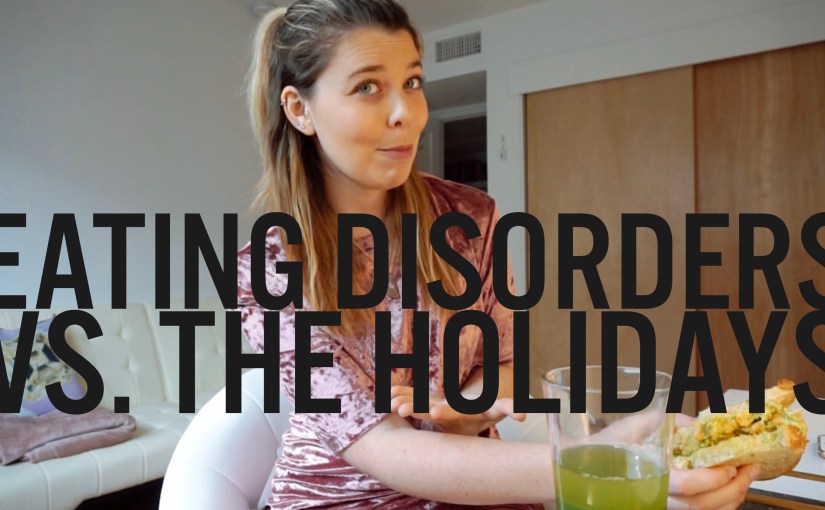
Navigating The Holidays in Recovery

This week is American Thanksgiving which means lots of food, and lots of nosy relatives asking you insensitive and intrusive questions.  If you are someone recovering from an eating disorder, any Holiday that is hallmarked by food can be difficult and triggering.  When I was sick I definitely wanted to avoid these situations.  But oftentimes you can’t and in truth you shouldn’t.  The Holidays are not only about decadent food, they are also about taking the time to reconnect with your loved ones and enjoy each others company.  It’s a shame to sacrifice that for any reason.

Here are a few tips I have for navigating this time – they can also be applied to any other time you are in a triggering or difficult food situation.

1 – Find a friend. Whether it’s a parent, cousin, sibling, or grandparent – find someone you trust who you can confide your fears to so you don’t feel isolated.  Tell them you are recovering from an eating disorder.  It is okay to let people in.  There is no shame in what you are going through.  This person can also hold you accountable and make sure that you eat – perhaps by filling their plate with the same food as you and having you both eat it together.

2 – DO NOT COMPENSATE. You don’t have to have a full on binge to have a successful Holiday, but if you do find that you eat an above average amount of food please remember that that is 100% NORMAL and you should not feel guilty, gluttonous, or sad.  Food is yummy – holiday food is really yummy – and eating a lot of it is never wrong.  That being said, do not eat less in preparation for this meal and do not eat less or nothing the next day in a compensatory way.  Doing this not only sets your metabolism out of whack but also isn’t a healthy way of thinking about food and is a behavior you should be consciously working to correct anyways.

3 – When anyone makes a comment about your weight – positive or negative, do not internalize it. I know it can be hard to hear but others do not know what you are going through.  I usually find that when someone is making comments on my weight or food choices it’s coming from a place of insecurity within themselves, which is sad but has nothing to do with you.  Just try and remember that when it happens.

4 – Finally, be kind to yourself. I know that your disordered eating voice will be screaming at you when you face big fear foods, and you are so so brave for fighting through them in order to nourish yourself and enjoy your life.  You can do this.  You are strong and beautiful.

It isn’t easy to face your fears.  It’s not silly or stupid to be afraid of a slice of pie, or helping of stuffing.  However, it is irrational and counterintuitive so working through these fears is a must as you move forward in your recovery.

Have a happy Thanksgiving I hope you find these tips helpful!  Let me know your favorite dish down in the comments!  Mine is probably mashed potatoes, but my absolute favorite thing in the world is my mom’s apple pie.

If you can, please take a moment to like and subscribe to my youtube channel – I make videos discussing intuitive eating, eating disorder recovery, body positivity, veganism, and self love!

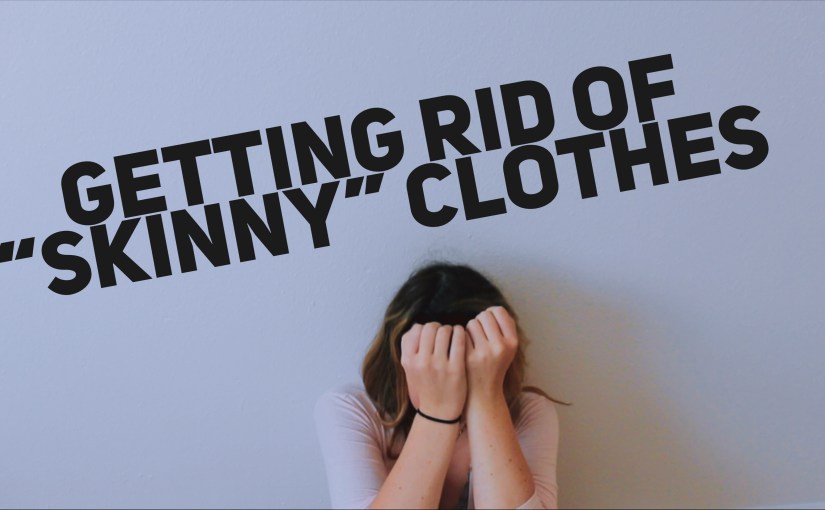
Getting Rid Of “Skinny” Clothes

https://www.youtube.com/watch?v=nIataNC8gtQ

Whether you are recovering from an eating disorder or just learning to love and accept yourself at a higher weight for your own sanity and happiness – most of us are guilty of keeping our old clothes in our closet just in case.

It’s time to stop doing that.

It’s time to get rid of everything too small for you.

I know this isn’t easy. Maybe you have nice expensive clothes or clothes with sentimental value..  I had clothes like that, they also reminded me how thin I once was.  I didn’t want to let go of because a small part of me thought one day I might go back to that weight.

One day I tried to put all of the small clothes back on and cried uncontrollably in my closet when I realized how much weight I had gained.  Even though I had known it and accepted it already – facing that fact again in such a visual way was extraordinarily difficult.  What I ended up doing instead was putting them all in a bag and putting them in a storage closet far away from where I could see them every day.  After a few months, I found the bag and realized I had never missed the clothes or wanted to wear them after all.  So in that one moment of bravery I donated everything.

I realized that just having their presence in my closet was a trigger to my old behavior. It was a signal to myself that one day I may give up on the recovery I worked so hard for and the happiness I earned just to fit into a size 2 again.  But once the clothes were gone for a while I noticed that I stopped having those thoughts while I was getting dressed every day.  I had given up the final reminder of my illness and that allowed me to move forward and on with my life.

A few other awesome things happened too, I got to shop for new clothes in the correct size and I lost the emotional attachment that I once had to clothes.  Now, while clothes are still important to me and a fun way to express my personality and style – I don’t assign emotional value to them like I used to and can prune and curate a more conscious wardrobe for myself.

So here I am to tell you that instead of keeping the clothes you can’t fit in around just get them out of your house as fast as possible.  Once you stop fixating on possibly losing weight again, and let go of the notion that you might ever return to the unhealthy behaviors that made you that thin in the first place you might be surprised to find a brighter, happier, more authentic version of yourself. It’s time to stop fighting to fit into a size 0 and use that space in your brain for more important things.  Don’t worry about losing the weight – just lose the clothes!

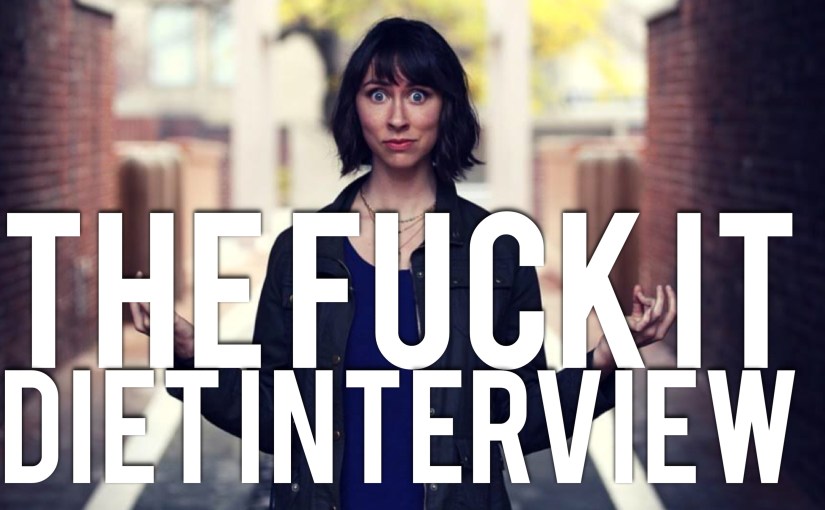
Interview With Caroline Dooner – Creator of The Fuck It Diet

Untitled-design-12Recently I had the absolute pleasure of connecting with Caroline Dooner.  Caroline is the creator of The Fuck It Diet, which teaches radical normal eating to chronic dieters. She also teaches intuition and advocates hardcore for #rest. You can follow her on instagram, and get her free intro course, “Eating Should Be Easy” over on The Fuck It Diet.

When I was going through my own recovery I stumbled upon her website and it felt as if her words were speaking directly to me.  Caroline has been through the ringer of diet culture and found a way out that I strived to emulate.  Her writing and philosophies on making eating simple were such powerful sources of inspiration for me and many others trapped in diet culture.  Today she continues to help people through her blog, podcasts, and e-books.  She believes that eating should be easy because, fuck it, it’s just food right?

I was delighted when she agreed to answer some of my burning questions and it was wonderful to be able to get her seasoned perspective.

RR: Why the name “The Fuck It Diet”?

CD: It’s how I felt when I finally realized that dieting was backfiring and doing the opposite of what I have always hoped it would. It’s how I felt after being on diet after diet, hoping that the next one would finally heal my food addiction. It is the true exasperation of realizing it’s never going to work.

RR: What was the life event that inspired you to start the site?

CD: I had been dieting obsessively for 10 years. You could call it an eating disorder, or you could just call it obsessive dieting, there is a big overlap for lots of people anyway. But I was Paleo, and bingeing on all the paleo treats I could get my hands on, and finally started hearing whispers in the Paleo community, that not eating enough carbs will hurt your metabolism, and wreck your hormones, and make you more insulin resistant, which had been the thing I was trying to heal.

But the event/moment that spawned it, was my 24th birthday. I binged on squash pancakes and low sugar almond flour cupcakes, and had a legitimate epiphany. I can’t do this anymore. This is going to keep happening over and over and over, until I step out of this cycle, learn to eat normally, and heal my relationship to weight.

 I had tried to heal my eating many times before, going on stints of intuitive eating, or something similar. But it was never truly the cure, because I was still trying to eat the smallest amount possible, and still petrified of gaining weight. The Fuck It Diet was different.

RR: How long did it take for you to heal your relationship with food? 

CD: It was a process that evolved over the first few years of my no-holds-barred eating, and my work on deeper and deeper body acceptance. But I would say that between 6 months to a year is where I noticed a big shift.

Even still, just over the course of eating a certain food for a week would change my relationship with that certain food. So there were small victories, and then bigger shifts that happened over time.

RR: In your opinion, what you think the most negative impact of diet culture is?

CD: It’s really hard to choose just one, but diet culture puts you at odds with your body. The way you trust it, and your appetite, and your weight. It makes you totally out of touch with your own wisdom, intuition, cravings. And ruins your health and self-esteem.

RR: Do you think that diet culture is responsible for the rising rate of eating disorders?

CD: Hell to the yes.

RR: Your blog and podcast focuses a lot on spiritual healing – do you think it’s harder to recover if you aren’t spiritual?

CD: Ah yes, it’s such a good question. I have always been seeking guidance, or peace, or help, or knowledge on a spiritual level. And I know that is why and how TFID revealed itself to me. But there are some pretty basic facts and truths, like the biological and metabolic reaction to restriction. Even energetic principals aren’t necessarily “spiritual”. And I am expressly anti-dogma of any kind, diet dogma, spiritual dogma, or otherwise.

Trust in a bigger picture, and a bigger purpose than just being tiny and beautiful will certainly be a big help, but short answer: no. You don’t have to be spiritual to recover.

(pssst. she has a great podcast about this topic here)

RR: What would you say to girls who are afraid of this mindset because of their fear of getting “fat”?

CD: That this is what those businesses want you to fear. That that is just this heartbreaking thing that we have been perpetuating, and it’s so destructive and toxic. And I understand, I was the same way for years. Fat was the last thing I would ever accept being. It’s also because we have so many beliefs about what being fat means. But it’s just so misguided. What’s that JK Rowling quote? “is ‘fat’ really the worst thing a human being can be? Is ‘fat’ worse than ‘vindictive’, ‘jealous’, ‘shallow’, ‘vain’, ‘boring’ or ‘cruel’?”

RR: What is your most important tip to successfully practice intuitive eating?

CD: Do not get caught in the trap of believing you need to be eating the smallest amount possible. That’s a diet. We need to actually feed ourselves.

RR: What has been the most inspiring recovery story you’ve witnessed/had a hand in?

CD: It’s honestly too hard to choose, but in general, my favorite kind of story, and this happens again and again, is that healing from food and weight obsession, opens up a confidence and creative spark that allows people to really trust their own genius, go against the grain, choose a life that people might not understand. It let’s people really listen to their true desires.

RR: What is your number one piece of advice to someone struggling to recover/normalize their relationship with food?

CD: Do not discount how interconnected our relationship with weight is with our relationship with food. You cannot heal the one without the other.

RR: And finally, just for fun – what’s your favorite food?

CD: My favorite food is cheese. No contest.

giphy

Huge thanks to Caroline for giving me the opportunity to pick her brain.  It meant a lot for me to be able to have this opportunity considering how incredibly helpful I found The Fuck It Diet and everything she put into it while I was struggling to recover.  If you’ve never heard of The Fuck It Diet – it’s about time you checked it out!

New to Ladle by Ladle?

Check out my Youtube channel where I make new videos about recovery, recipes, and intuitive eating: Ladle By Ladle

SOCIAL:
Instagram – @ladlebyladle
Facebook – facebook.com/ladlebyladle
Why 3500 Calories?

Before I begin this article/website is where I learned it all.

I’ve had a few people reach out to me asking how to eat 3500 calories a day when the mere idea seems impossible.  I’ve also been asked why is this number the minimum.  These are questions I once remember having and are echoed a lot throughout this community since coming from a place of restriction can make this number seem overwhelming.

First, why 3500 calories? 3500 is the number laid out in MinnieMaud recovery guidelines (now referred to as the homeodynamic recovery method).  The logic on that website is sound but let me break down my interpretation of it.

An average human being needs anywhere from 1700-2700 calories a day just to maintain their weight while living their normal every day life.  This is affected by how much you move around all day like if you have kids (or cats) or walk around a lot for work or school.  It’s also affected by your natural metabolism which is different for everyone.  Like, my boyfriend could pound this many calories and literally have 0 fluctuation in his weight whereas other people (like me) aren’t so lucky.  When weight restoring obviously you want to put on weight by eating above your maintenance number and 3500 is that magic number.

But Rachel, you say, I am weight restored to a healthy weight already!  I did it on 1800 or 2200 or X number of calories, so obviously this minimum doesn’t apply to me, right? WRONG.  Here is the thing… you only were able to gain weight on those numbers because you’re metabolism was so suppressed – and I’m speaking from experience here.  A big part of the minimums is that it also aids in repairing the suppressed metabolisms that people who restrict give themselves.

It is very easy to get stuck in quasi recovery instead of eating enough because the natural inclination is to assume that if you are weight restored back to a normal weight then you are recovered and need to start restricting calories again to avoid getting huge.  That’s an ED fueled thought process my friends. When you eat at least the minimums every day you won’t get stuck in the quasi-recovered state that usually leads to relapse and instead you will find your optimal weight set point.

When recovering there is a backlog of caloric deficit that needs to be replenished.  This was studied in one of the most fascination studies of starvation of the human body, the Minnesota Starvation Experiment.  The minimums were designed to help replenish the months (or years, or decades) of caloric deficit that has accumulated and reverse all of the negative physical effects like losing your period, feeling cold, hair falling out, compromised organs, etc, etc.

Once you hit your body’s optimal weight set point (not just “weight restored” according to the bullshit BMI) then the metabolism is normalized and that means that the extra energy you were taking in for weight gain and repair now goes to the usual day-to-day functions that were not happening at all from the moment you first restricted calories.

Now that we’re clear hopefully on WHY 3500 – let’s focus on HOW.

Three words: Calorie. Dense. Foods.

Try to incorporate avocadoes, cheese, ice cream, nut butters, coconut milk, dates, olive oil, nuts, dried fruit, pasta

Now I know that a lot of these foods might be “fear foods” for a lot of you – they certainly were for me.  It may not easy to face these foods head on – but this is recovery and if not now, then when?  Try one a day, see how it makes you feel.  Focus on the positives and load on up.  It’s easier if you just rip the bandaid and do it.

Here’s a few more tips:

Nuts, seeds, and dried fruit make a great addition to salads, rices dishes,pasta dishes, etc…

Add olive oil and butter to as many foods as possible. I.E.: rice, sandwiches, salads..

Increase portion sizes – Create larger meals of calorie dense foods like rice, mashed potatoes, and pasta.

Drinks are an easy way to intake calories.  Drink juice, soy milk, smoothies, shakes, and other healthy high calorie beverages.

Example meal plan (with rough estimates):

B: oatmeal with milk, nut butter, dried fruit, banana, nuts = 730
S: avocado toast = 450
L: double layer sandwich with hummus, protein, oil soaked veggies, cheese = 670
S: mixed nuts and chips = 300-500
D: pasta, veggies, protein, tomato sauce, olive oil – 600-700
S: after dinner shake with bananas, soy milk, nut butter, sweetener – 450 chocolate – 100

3500+ BOOM


Relapsing in Recovery

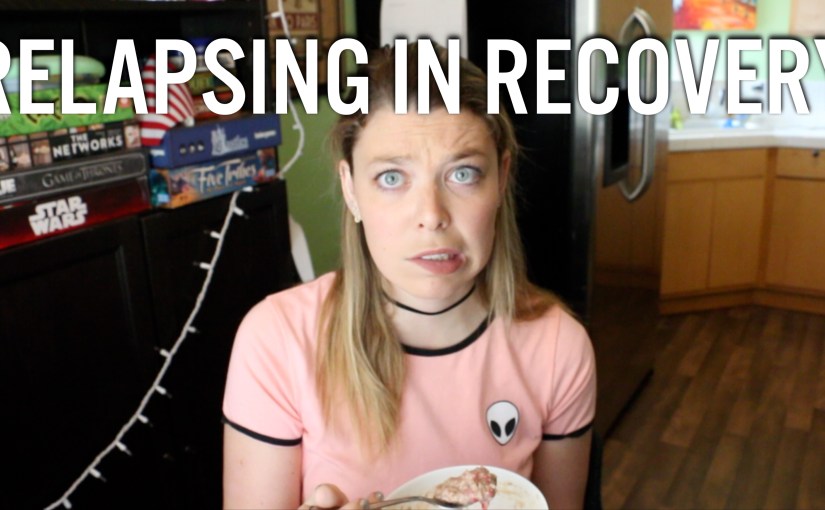
If you don’t feel like watching a video of me ramble about my struggles with relapsing in recovery while speed eating oatmeal then here is an overview:

Relapsing in recovery for me is much more nuanced than the obvious physical manifestations. Clearly if there is a retreat back to classic ED behaviors than a relapse has already happened. The initial thoughts of wanting to lose weight or control your diet are the beginning of a relapse. If you can recognize these negative thoughts the moment they start entering your headspace than a relapse can be prevented. I personally struggled with relapses often in quasi recovery and also at the beginning of Minnie Maud. Once I fully committed to recovery a relapse didn’t happen again until I had been weight restored for several months. In the past 6 months I have had the initial thoughts enter my mind quite a few times. I’ve tried counting my calories, controlling the number, weighing myself, setting up weight loss goals. All of these actions are the first steps towards a relapse. Fortunately I have become an expert at recognizing these behaviors in myself. After a few days I can pull myself back by reminding myself how cute I am or reading some of my old diary posts from when I was sick and remembering how awful that period of my life was. Recovery is not perfect and even when we’ve achieved the best version of ourselves it doesn’t mean we never think about going back. However, it does mean we have the strength to persevere ❤

To Exercise Or Not To Exercise?

That is the question… Should you exercise in recovery?  The short answer is no.

For those recovering from disordered relationships to their bodies and food, exercise is a bad idea.  Exercise burns calories and the goal of eating disorder recovery is weight restoration, so doing any exercise to slow or impede this process goes directly against any recovery efforts.  Another goal of recovery is to regain or discover a healthier mentality about your body and food.  Trying to burn calories in this process can keep you stuck in a mindset that isn’t beneficial.  It is true that there is more to exercising than just burning calories such as becoming stronger with weight training or more centered with yoga, however those benefits will still be there and can be reaped AFTER recovery has been achieved and maintained.

giphy-2

In my recovery, I went through a few phases of “quasi-recovery” before I fully committed to a robust recovery plan which you can read about in this post.  In my “quasi-recovery” state I continued to exercise.  I was exercising less than when I was sick but the mentality behind my exercise was still dangerous.  I was still counting calories and aiming for a deficit.  I was still trying to stall the weight gain.  I was using exercise as a crutch to keep me from truly letting my body heal and find its set point.  When I finally made the very difficult and complicated decision to truly recover and eat without any restrictions I made the equally difficult decision to stop exercising completely as well.

At first it was challenging, I found myself doing pushups and squats absentmindedly in my bedroom to compensate for the guilt I felt not working out.  Eventually I stopped even that and truly let my body rest for the first time in a long time.  As the weight came back on and my body changed, my mindset began to change too.  I slowly but surely learned that exercise was just a way I was punishing my body for what I ate.  I learned to love myself and enjoy all of the things that recovery brought back into my life.  I needed that time of complete rest to truly understand how exercise was not good for my recovery.

IMG_0745

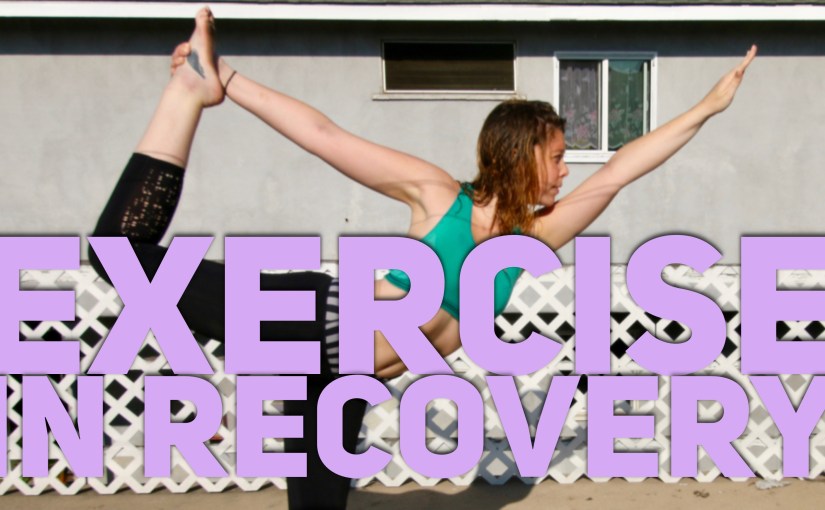
It wasn’t until I was fully weight restored to my set point and mentally recovered for an entire year that I began to wonder about exercising again. This time however, I noticed a very important difference in my mindset.  I didn’t want to punish myself, burn off all of my fat, or create any kind of deficit.  I wanted to move my body with love and celebrate what it could do.  I began doing yoga again.  I have been doing yoga for a few months now and not once have I felt “too fat” or “not good enough.”  Not once has weight loss been my ultimate goal.  I can feel myself getting stronger and more flexible and I look at myself in the mirror as a powerful warrior who has won the battle.

However, despite all of my progress I can never forget that I have a history with eating disorders.  As great and body positive and happy as the workouts make me now, I know that there is always a chance the anorexic voice can creep back in.  If I ever feel like I need to shed the weight, if I ever force myself to a class I really don’t want to do just out of guilt, and if I ever start to abuse exercise again I know I need to completely stop.

Exercise can be wonderful if done safely and as a celebration of movement and strength, but for those attempting to recover from an eating disorder none of those benefits are pertinent.  The key to recovery is to eat without restriction, stop all exercise, and learn to be okay with yourself without making any changes to who you naturally are.

IMG_0739

Namaste