Why 3500 Calories?

Before I begin this article/website is where I learned it all.

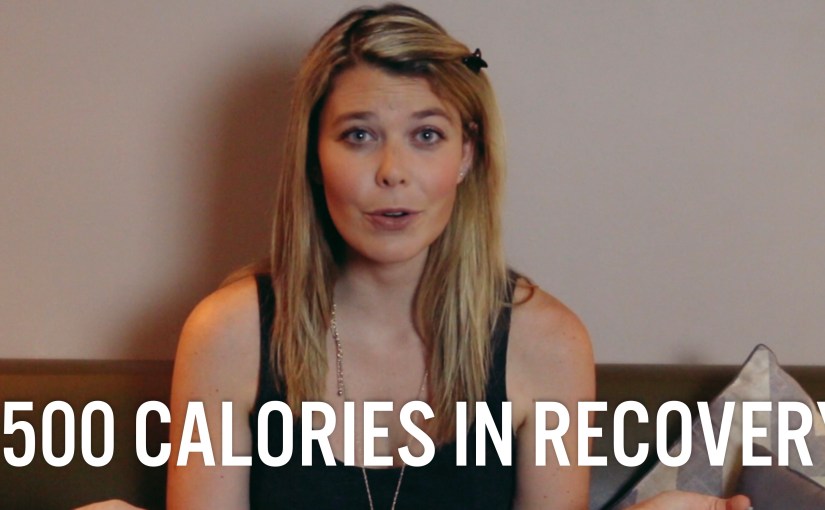
I’ve had a few people reach out to me asking how to eat 3500 calories a day when the mere idea seems impossible.  I’ve also been asked why is this number the minimum.  These are questions I once remember having and are echoed a lot throughout this community since coming from a place of restriction can make this number seem overwhelming.

First, why 3500 calories? 3500 is the number laid out in MinnieMaud recovery guidelines (now referred to as the homeodynamic recovery method).  The logic on that website is sound but let me break down my interpretation of it.

An average human being needs anywhere from 1700-2700 calories a day just to maintain their weight while living their normal every day life.  This is affected by how much you move around all day like if you have kids (or cats) or walk around a lot for work or school.  It’s also affected by your natural metabolism which is different for everyone.  Like, my boyfriend could pound this many calories and literally have 0 fluctuation in his weight whereas other people (like me) aren’t so lucky.  When weight restoring obviously you want to put on weight by eating above your maintenance number and 3500 is that magic number.

But Rachel, you say, I am weight restored to a healthy weight already!  I did it on 1800 or 2200 or X number of calories, so obviously this minimum doesn’t apply to me, right? WRONG.  Here is the thing… you only were able to gain weight on those numbers because you’re metabolism was so suppressed – and I’m speaking from experience here.  A big part of the minimums is that it also aids in repairing the suppressed metabolisms that people who restrict give themselves.

It is very easy to get stuck in quasi recovery instead of eating enough because the natural inclination is to assume that if you are weight restored back to a normal weight then you are recovered and need to start restricting calories again to avoid getting huge.  That’s an ED fueled thought process my friends. When you eat at least the minimums every day you won’t get stuck in the quasi-recovered state that usually leads to relapse and instead you will find your optimal weight set point.

When recovering there is a backlog of caloric deficit that needs to be replenished.  This was studied in one of the most fascination studies of starvation of the human body, the Minnesota Starvation Experiment.  The minimums were designed to help replenish the months (or years, or decades) of caloric deficit that has accumulated and reverse all of the negative physical effects like losing your period, feeling cold, hair falling out, compromised organs, etc, etc.

Once you hit your body’s optimal weight set point (not just “weight restored” according to the bullshit BMI) then the metabolism is normalized and that means that the extra energy you were taking in for weight gain and repair now goes to the usual day-to-day functions that were not happening at all from the moment you first restricted calories.

Now that we’re clear hopefully on WHY 3500 – let’s focus on HOW.

Three words: Calorie. Dense. Foods.

Try to incorporate avocadoes, cheese, ice cream, nut butters, coconut milk, dates, olive oil, nuts, dried fruit, pasta

Now I know that a lot of these foods might be “fear foods” for a lot of you – they certainly were for me.  It may not easy to face these foods head on – but this is recovery and if not now, then when?  Try one a day, see how it makes you feel.  Focus on the positives and load on up.  It’s easier if you just rip the bandaid and do it.

Here’s a few more tips:

Nuts, seeds, and dried fruit make a great addition to salads, rices dishes,pasta dishes, etc…

Add olive oil and butter to as many foods as possible. I.E.: rice, sandwiches, salads..

Increase portion sizes – Create larger meals of calorie dense foods like rice, mashed potatoes, and pasta.

Drinks are an easy way to intake calories.  Drink juice, soy milk, smoothies, shakes, and other healthy high calorie beverages.

Example meal plan (with rough estimates):

B: oatmeal with milk, nut butter, dried fruit, banana, nuts = 730
S: avocado toast = 450
L: double layer sandwich with hummus, protein, oil soaked veggies, cheese = 670
S: mixed nuts and chips = 300-500
D: pasta, veggies, protein, tomato sauce, olive oil – 600-700
S: after dinner shake with bananas, soy milk, nut butter, sweetener – 450 chocolate – 100

3500+ BOOM
 

Relapsing in Recovery

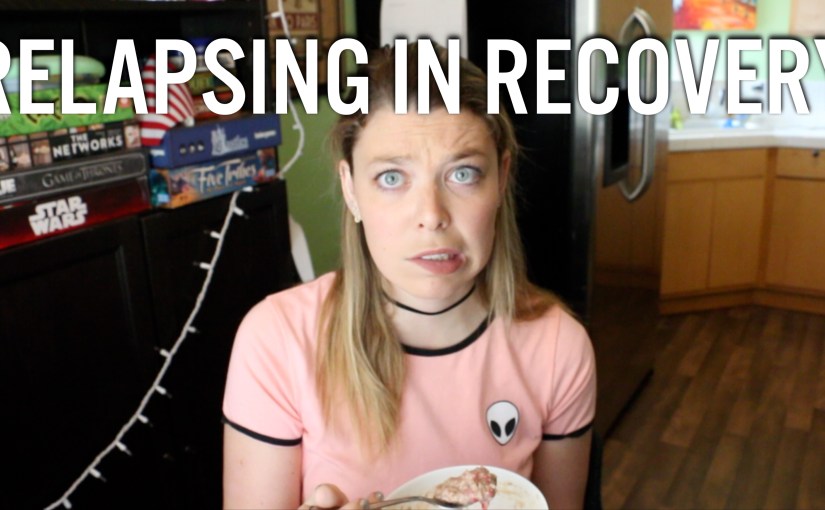
If you don’t feel like watching a video of me ramble about my struggles with relapsing in recovery while speed eating oatmeal then here is an overview:

Relapsing in recovery for me is much more nuanced than the obvious physical manifestations. Clearly if there is a retreat back to classic ED behaviors than a relapse has already happened. The initial thoughts of wanting to lose weight or control your diet are the beginning of a relapse. If you can recognize these negative thoughts the moment they start entering your headspace than a relapse can be prevented. I personally struggled with relapses often in quasi recovery and also at the beginning of Minnie Maud. Once I fully committed to recovery a relapse didn’t happen again until I had been weight restored for several months. In the past 6 months I have had the initial thoughts enter my mind quite a few times. I’ve tried counting my calories, controlling the number, weighing myself, setting up weight loss goals. All of these actions are the first steps towards a relapse. Fortunately I have become an expert at recognizing these behaviors in myself. After a few days I can pull myself back by reminding myself how cute I am or reading some of my old diary posts from when I was sick and remembering how awful that period of my life was. Recovery is not perfect and even when we’ve achieved the best version of ourselves it doesn’t mean we never think about going back. However, it does mean we have the strength to persevere ❤

To Exercise Or Not To Exercise?

That is the question… Should you exercise in recovery?  The short answer is no.

For those recovering from disordered relationships to their bodies and food, exercise is a bad idea.  Exercise burns calories and the goal of eating disorder recovery is weight restoration, so doing any exercise to slow or impede this process goes directly against any recovery efforts.  Another goal of recovery is to regain or discover a healthier mentality about your body and food.  Trying to burn calories in this process can keep you stuck in a mindset that isn’t beneficial.  It is true that there is more to exercising than just burning calories such as becoming stronger with weight training or more centered with yoga, however those benefits will still be there and can be reaped AFTER recovery has been achieved and maintained.

giphy-2

In my recovery, I went through a few phases of “quasi-recovery” before I fully committed to a robust recovery plan which you can read about in this post.  In my “quasi-recovery” state I continued to exercise.  I was exercising less than when I was sick but the mentality behind my exercise was still dangerous.  I was still counting calories and aiming for a deficit.  I was still trying to stall the weight gain.  I was using exercise as a crutch to keep me from truly letting my body heal and find its set point.  When I finally made the very difficult and complicated decision to truly recover and eat without any restrictions I made the equally difficult decision to stop exercising completely as well.

At first it was challenging, I found myself doing pushups and squats absentmindedly in my bedroom to compensate for the guilt I felt not working out.  Eventually I stopped even that and truly let my body rest for the first time in a long time.  As the weight came back on and my body changed, my mindset began to change too.  I slowly but surely learned that exercise was just a way I was punishing my body for what I ate.  I learned to love myself and enjoy all of the things that recovery brought back into my life.  I needed that time of complete rest to truly understand how exercise was not good for my recovery.

IMG_0745

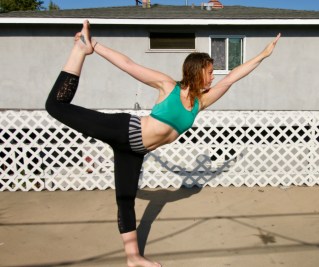
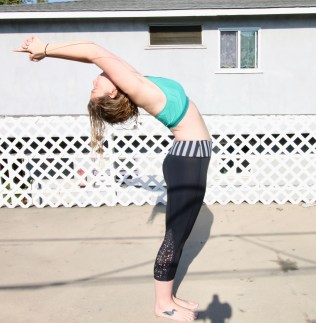
It wasn’t until I was fully weight restored to my set point and mentally recovered for an entire year that I began to wonder about exercising again. This time however, I noticed a very important difference in my mindset.  I didn’t want to punish myself, burn off all of my fat, or create any kind of deficit.  I wanted to move my body with love and celebrate what it could do.  I began doing yoga again.  I have been doing yoga for a few months now and not once have I felt “too fat” or “not good enough.”  Not once has weight loss been my ultimate goal.  I can feel myself getting stronger and more flexible and I look at myself in the mirror as a powerful warrior who has won the battle.

However, despite all of my progress I can never forget that I have a history with eating disorders.  As great and body positive and happy as the workouts make me now, I know that there is always a chance the anorexic voice can creep back in.  If I ever feel like I need to shed the weight, if I ever force myself to a class I really don’t want to do just out of guilt, and if I ever start to abuse exercise again I know I need to completely stop.

Exercise can be wonderful if done safely and as a celebration of movement and strength, but for those attempting to recover from an eating disorder none of those benefits are pertinent.  The key to recovery is to eat without restriction, stop all exercise, and learn to be okay with yourself without making any changes to who you naturally are.

IMG_0739

Namaste

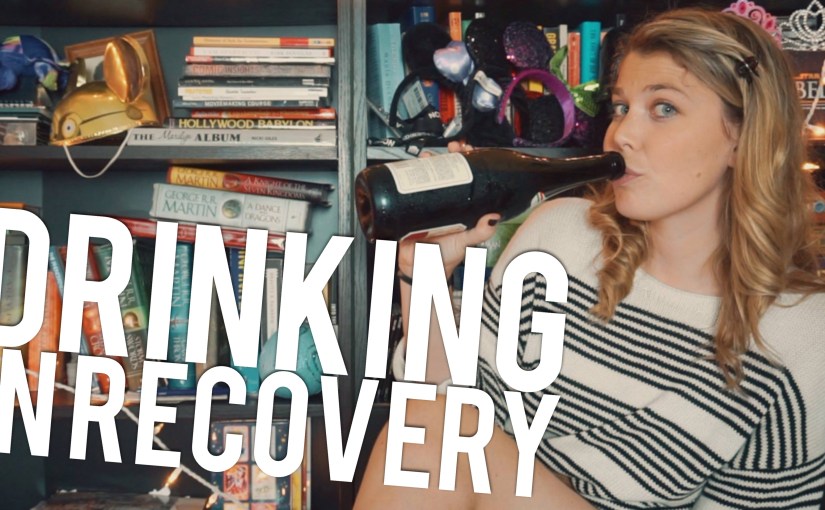
Drinking Alcohol in Recovery

It’s popular wisdom in the eating disorder recovery community that drinking alcohol/doing drugs is bad – and there is a lot of evidence to back that statement up. There is a strong correlation between people with substance abuse issues and eating disorders. Alcohol, of course, is detrimental to your health whether you are recovering or not. People who need to re-feed can rely on alcohol for a bulk of their calories and not get the proper nutrition they need. Alcohol is just an unhealthy way to self medicate anxiety. Listen, I understand all of that.

Here’s my well thought out, scientifically backed up, and thoroughly researched counter argument though: I love vodka.

giphy

I am not here to tell you not to listen to your therapists and doctors. Every single person is different and what they need to help themselves is unique. However, drinking in recovery was absolutely essential for me and perhaps more than one of you can relate to my reasoning.

Before I was sick I drank… a lot. I was in college and in a sorority in New Orleans. It was hard to avoid, and frankly I didn’t want to avoid it. I loved going out to bars, knowing bartenders, trying new drinks, hanging out with my friends, etc. When I developed ED alcohol was one of the first things I cut out. Doing this may have seemed like a very healthy decision for myself, but looking at it from the lens of an eating disorder I think we can all understand how it really wasn’t. It was simply another excuse to restrict more calories. When I was in quasi-recovery I still refused to drink OR if I did drink I would make sure not to eat all day to compensate. That was the wrong way to approach alcohol. I was rarely drinking and I still did not enjoy it the way I used to.
IMG_0181
When I finally committed to true recovery I began forgetting about the “empty calories” and returning to my pre-ED behavior towards drinking. Being able to have fun with my friends the way we used to was essential to me continuing to have the strength and will to re-feed. Returning to my old social life was a “Recovery Goal” of mine, and re-learning how to drink without care of calories was essential to achieving that goal.

Is this the right way to approach alcohol for every person in recovery? Certainly not. If you think that you have a real substance abuse problem than alcohol can hinder any potential progress you might make. If you drink alone often or view alcohol as a way to medicate anxiety instead of as a social lubricant

IMG_1476

or way to connect with others than you are abusing the sauce and should not imbibe. If you are still counting calories and restrict your intake to allow you to drink alcohol than I can tell you from experience that is very wrong, dangerous, and ultimately not even fun – so just stop. However, if drinking is a part of your social life that you miss and you understand your body and your limits (and you’re of legal drinking age!) then I think that drinking during recovery is essential to reminding yourself who you can become once again.

Did you drink/are you drinking in recovery?  Do you think you’re going about it the right way?  Or do you avoid booze completely?  Let me know in the comments, I’d love to hear other perspectives!


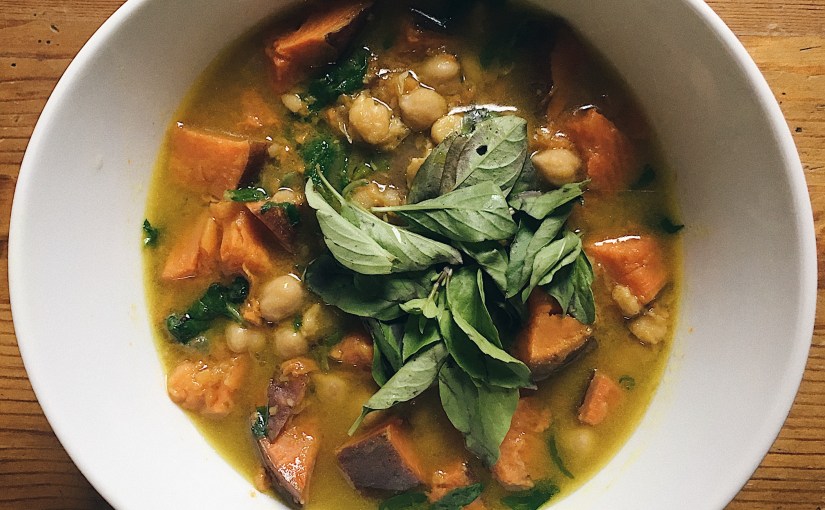
Sweet Potato Thai Green Curry – Recipe Video

Today I’d like to share the first of what I hope are many recipes to come.  I filmed this on Monday night after I came home from work.  This is one of my many simple and quick dinners that I make after a long day.  While I typically pre-make most of my meals, one or two nights out of the week I feel inspired to play around in the kitchen a bit.

One of the best parts of recovering from an eating disorder is the freedom that I have in the kitchen.  When I was sick I would have had to weigh the sweet potato, and measure out exactly how much coconut milk, olive oil, and chickpeas I used.  To be honest, I probably wouldn’t even cook with some of these ingredients because they are too calorically dense.  After recovery, all of that fear is just a distant memory.  Now I can experiment, estimate, make mistakes, and I know everything will be okay.  This has allowed me to become a better amateur chef and a happier person.

I hope you enjoy this meal as much as I did!  I think I actually preferred it heated up the next day.  It is super filling, nutritious, and it is vegan!  (I am not vegan – but this is!)

Bon Appetit!

Hey, if you liked this post (or any of my other ones!) try liking the Ladle By Ladle page on Facebook!  It’s a good way to stay up to date on the latest posts.

//pagead2.googlesyndication.com/pagead/js/adsbygoogle.js

(adsbygoogle = window.adsbygoogle || []).push({});

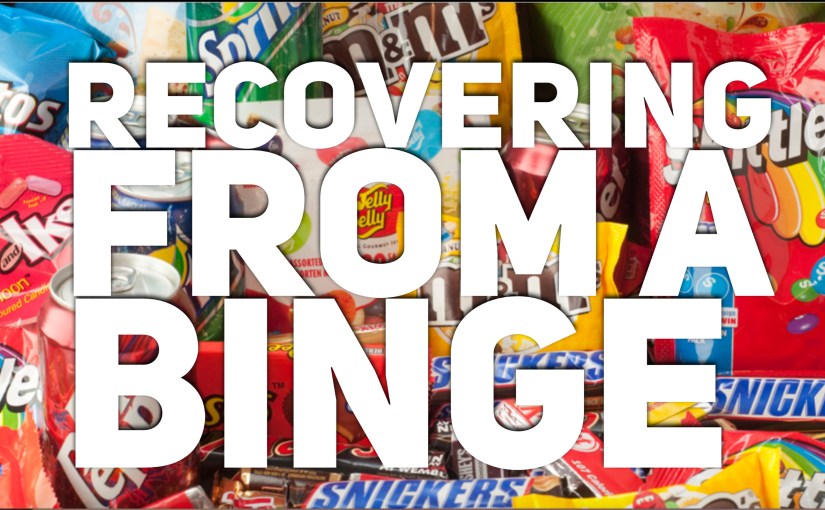
Recovering From a Binge

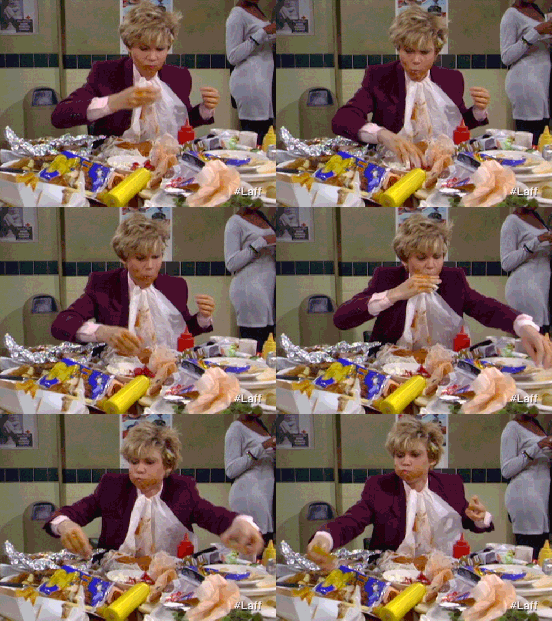
Binge eating, the uncontrollable impulse to eat mass quantities of food despite any feelings of hunger or fullness.  Most people entrenched in diet culture can empathize with the terrible feeling that comes in the aftermath of a binge.  Whether they are suffering from BED, bulimia, or are just experiencing the effects of fad/yo-yo dieting, a binge is one of the most common disordered relationships with food.  Binge eating typically stems from an emotional attachment to food as a source of comfort followed shortly by feelings of guilt.  Many people who have binge eating episodes engage in dangerous purging behaviors such as throwing up or laxative abuse to regain an “empty” feeling.  These binge/purge cycles often seen in bulimic individuals are physically dangerous.

Personally, when recovering from anorexia I had several binge eating episodes.  The only way I can describe my own experience is that it was like my brain turned off and all I could focus on was the food.  I was in a blind effort to eat as much food as I could find and fit inside of me.  After consuming thousands of calories in just 20 minutes I would then cry and feel terrible and guilty.  While I was supposed to be eating a lot for my recovery, the binges were still not the normal relationship with food I actually needed.

giphy

Here is my quick guide for recovering immediately after a binge eating episode.  This process is what eventually allowed me to begin overcoming binge eating:

  1. Do not be hard on yourself about the binge – One of the worst parts of any binge is the abrupt feelings of overwhelming guilt that bubble up. These feelings are what lead to the continuation of dangerous behaviors such as purging.  The purging then eventually leads to more binging and the cycle is continuously perpetuated.  After you have a binge, recognize your feelings of shame or disappointment as temporary.  Remind yourself that what happened has happened and the best thing you can do for yourself is be kind and forgive yourself for the binge.  Regularly practicing this internal dialog will help stop binges from happening again.  Remind yourself over and over again that you have worth, that this misstep does not define you, that you are going to be completely fine. They key is to identify and replace the feelings of guilt with feelings of forgiveness.
  2. Distract yourself – After quickly having a loving reconciliation with yourself, quickly distract yourself before you can backtrack on the positive internal dialog. Put on a movie, go for a walk, paint your nails, take a shower, call a friend, do anything that takes your mind off of the binge that just happened.  The more time you take to separate yourself from the episode, the better you will begin to feel.  My go to way to distract myself was to brush my teeth and call a relative (almost always my dad) to catch up.  If you decide to exercise to distract yourself remember to take it easy.  Do not use exercise as a way to punish yourself.  Keep it simple with a light walk or calming yoga.
  3. Do not restrict your food – This might be the most important tip here. After your binge, when you have hopefully successfully identified and replaced the negative emotions, forgiven yourself, and then distracted yourself for a while to keep your mind off of it, CONTINUE TO EAT NORMALLY FOR THE REST OF THE DAY.  You may be less hungry naturally, but if you binge mid day you still need to eat dinner and if you binge at midnight you still need breakfast!  Restricting your intake to compensate for the binge will only put you back in a cycle where another binge becomes possible.
    tumblr_mv06gngkXJ1rca9l9o1_500

Binge eating is complicated, the reasons behind a binge are multifaceted and unique to everyone.  Often therapy can help with BED, bulimia, or just mending a very bad relationship with food.  However, there are a few things to remember to do to help yourself outside of seeking professional treatment.  Binges can be physiological and/or emotional.  The best ways to prevent them is by protecting yourself from both.

The first step is practicing consistent self care.  Treating yourself with love and respect will nurture a positive connection between yourself and your body which is an important step in repairing a damaged relationship with food.  Keeping a daily journal to write down feelings of gratitude and affirmations is a good first step.  It can often feel silly and awkward at first but eventually you will begin to notice the permanent changes it brings to your overall mindset.  While recovering, I wrote all over every mirror of my room positive quotes and self esteem boosting mottos.  Make sure you look upon yourself with love, and treat yourself to nice things whether it’s manicures, bike rides, or long colorful bubble baths.  Remind yourself that your body is merely a vessel for the beautiful soul underneath.

The next step is stop dieting.  Stop restricting.  Diets don’t work, they encourage an abundance/scarcity mentality which upsets your brain and your metabolism.  Practice eating intuitively.  There are many resources available that teach this way of thinking.  The way I achieved it was by eating my minimum 3500 calories to gain weight, reset my metabolism, and shift my perspective on restriction.  Eventually, when the mentality of restriction began fading away the urge to binge left too.

Binge eating is not a solitary experience, many people go through it every day.   You are not alone.  With a determination to make a change and by practicing self love and no restrictions, binge eating is something you can recover from.

Resources used:
https://www.recoverywarriors.com/ten-tips-recover-binge-emotional-eating/

http://www.webmd.com/mental-health/eating-disorders/binge-eating-disorder/binge-eating-disorder-medref#1

https://www.nationaleatingdisorders.org/binge-eating-disorder


Unpacking Thin Privilege

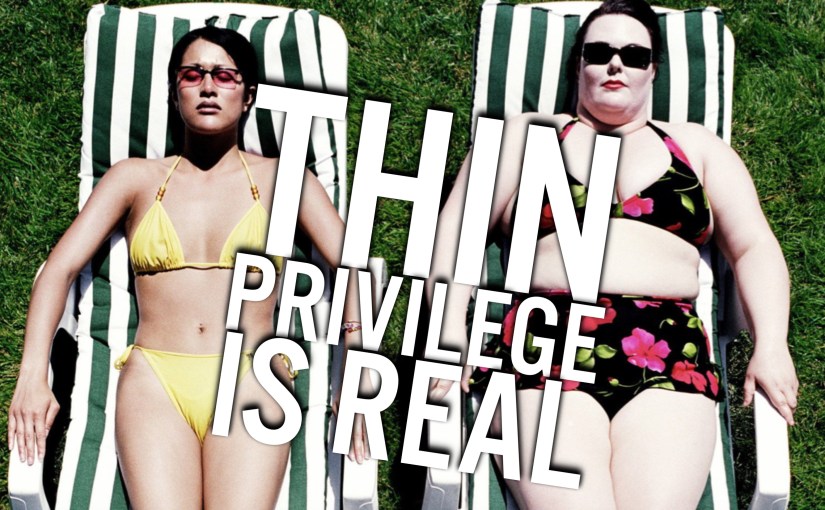
I want to talk about the existence of thin privilege, the special rights and advantages that are made available specifically to thin people.  To start, I do not speak for all heavy people.   I am aware I am writing this from a position of privilege and I hope to not offend anyone.

o-BD4692003-facebook
via everdayfeminist.com

Let me start out by outlining my personal bias.  Most of my life I have been average sized.  I was never subjected to fat-shaming even at my heaviest because average is still considered to be “normal.”  When I dropped from a size 10 to a size 2, however, I felt the world change around me.  I had no idea the level of comfort and generosity that a thin person receives every day until I experienced it firsthand.  Strangers were much nicer to me; Not just the creepy dudes at bars who wanted my number, even visitors to the university information desk where I worked were far less snarky to me.  While my relationship with food was admittedly fucked up, when I was recovering and indulging in ice cream, pad thai, and whole pizzas I didn’t have any fear of other people commenting on my diet as if it were there place to police my personal choices.  I could go to the boutique stores that only sold “one size fits all” and know that everything would fit me.  I didn’t have to cherry pick my outfits for flattering cuts and angles or worry that nothing would fit me.

I’m outlining my experiences only to say that, until I lived as a thin person (and was ironically in the worst health of my life), I never fully understood the privilege because it is easy to miss and take for granted.  Now that I’m back to average a lot of these perks have gone away, but I’m still lucky and privileged not to face most of the oppression that an overweight person does.

The reality is that we live in a thin-centric world and fatphobia is built into the foundation of our society.  Airplanes, sports stadiums, roller coasters, subway cars and other public spaces were designed for thin people and often do not accommodate bigger bodies.  Unless you are thin you are expected to pay more, be physically uncomfortable, or are flat out not welcome into these spaces.

Clothing stores do not always carry plus size clothing.  A fat person has limited options that are more expensive and harder to find.  They are told by society that only certain patterns and styles look okay on them which is only a way to minimize their identity.  Often times plus size options are positioned in an entirely different section causing not-thin people to feel ostracized, or they don’t exist in stores at all.

There is less representation of heavy people in television and movies, and when they are present they are often portrayed as something broken to be fixed or in a negative way.  Fat people are denied fertility treatments and lifesaving surgeries unless they promise to change themselves first because of a bias in the medical industry.  Fat people are heckled with insults about how they are lazy, immoral, or unhealthy on a daily basis.  There is an employment and promotion bias against overweight people.  They exist in a world in which it has become a normal narrative to have conversations and campaigns about getting rid of people like them.

d9aedd886802d9cbb9f51ce72230e922
Via everydayfeminist.com

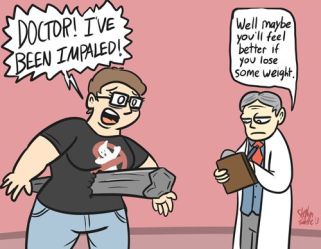
Now, a lot of people justify all of this fatphobic bullshit by saying that fat people are unhealthy and shouldn’t have their bodies catered to or glorified.  This argument is based solely in the fat=unhealthy argument, which has been proven to be untrue.  Weight is an inaccurate measure of health despite what you may have been told by doctors (the same ones who are making this judgement based off the inaccurate BMI).  There are actually many studies of overweight and obese people having a lower mortality rate and being better able to survive cardiac arrest.  Despite what you may think, correlation is not causation – so while people who are overweight have cardiac issues and diabetes, their fat is not the direct cause of the illness, and thin people have these problems too.  Thin people however, are not judged the same way.  Being fat is not always unhealthy and without fully knowing a human being it is impossible to tell their specific conditions behind their weight.  When people thought I was at my “fittest” I was literally dying, so I know these people aren’t really concerned about health – they are just fatphobic.  It’s not anyone’s place to pass judgement on another person because of their appearance.  What is more, you simply cannot judge someone’s health simply by looking at them – that is a gross misconception.  However, because of that misconception blatant fatphobia continues to be rooted into the everyday workings of our life.

To be fat in this society is to be oppressed and that is exactly why thin privilege exists.  Not to say that all thin people have amazing and easy lives, but thin people do have the social supremacy.  To those of privilege who don’t like hearing about their privilege I am not trying to invalidate your struggles.  Skinny-shaming is definitely a problem and something that happens regularly.  It’s never okay for any woman to hear that their body isn’t good enough.  If you read this blog about eating disorder recovery I hope it is clear that I am not invalidating the struggles of thin people at all.  However, although a thin person might have negative body issues, they still get to enjoy the advantages that have been constructed into our civilization.  Fat people have been disenfranchised by a world that seeks to minimize and villainize them.

So, thin privilege exists.  Like with any privilege you may be blessed to live with take this knowledge and make sure that as you navigate life you view all people with the same amount of respect and empathy that you expect for yourself.  This was one of the biggest lessons that shook me during recovery.  Despite what culture may try and dictate, every person no matter their size, color, ability, or nationality deserves understanding.  Check your privilege before making assumptions and be kind to one another

Orthorexia: The “Healthy Eating” Disorder

Let’s talk about orthorexia.  Sometimes called the accidental eating disorder, orthorexia is ironically when a person becomes SO obsessed with a “healthy” diet and lifestyle that it actually becomes unhealthy.  It is Human Makeover: Extreme Edition.  It’s obsession under the guise of health.  While someone who develops orthorexia might have started out with harmless intentions, they often end up in a very unhealthy place.

giphy-1

An orthorexic is often very concerned about the “purity” of their food.  They are fixated by the oils used in restaurants and potential toxins in their food.  They eat only a very small list of “acceptable” foods and are unable to eat food prepared by others.  They will become completely fixated on the quality of food, how to eat it, and when to eat it.  They will put themselves on strict eating regimens that most people could never stick to.  They want to be better than others by proving their dietary superiority.  If they have a slip up they will often self-punish with more exercise or less food.  Ultimately their food choices are destructively restricted and their exercise routine becomes so aggressive that their health suffers.

Orthorexia is not technically an eating disorder according to the DSM-5, but let’s be clear folks, this IS an eating disorder.  It was a phrase created by Dr. Steven Bratman in the late 90s.  He had patients who were overly health obsessed to the point of being harmful to themselves.  While it was not initially meant to be a diagnosis, over time he discovered that this term describes a very real eating disorder.

tumblr_mjqwmcm5x51riawrco1_500

Of course there is a difference between orthorexia and a normal healthy lifestyle.   The amount of stress and fixation that comes with orthorexia typifies the illness.  A person leading a healthy life without obsession or fear is not sick in the same way an orthorexic is.  While the line might be blurry orthorexics suffer from compulsive behaviors, preoccupations with optimal health, self-imposed anxiety, shame, and severe restrictions that escalate.  Orthorexics might attempt cleanses or fasts in order to “detoxify” their bodies.  While any disordered relationship with food is unhealthy, people can also suffer from nutritional deficits, self-inflicted social isolation, damaged relationships, and total loss of the ability to eat intuitively.  The biggest problem of all is that orthorexia is tricky to recover from.  We live in a society that idolizes healthy eating and thinness.  In this environment an orthorexic may not realize that they have a problem and can stay disordered under the pretense of a healthy lifestyle.

tumblr_inline_o3jfozI6ja1qg972v_540

So, if you think that any of this might apply to you… Start eating things that scare you, look at your attitude honestly, accept that you may not be the healthiest person in the world, and begin to re-learn how to love your body no matter what.  Stop measuring your self-worth by your overly restrictive diet and exercise routine, and learn how to eat intuitively.  Fill your body with joy and self-love and take a step back from unrealistic health goals that stop you from truly living a life worth living.  A life full of strong and happy friendships and relationships, a life with junk food and salads, wine and smoothies, ice cream and vegetables, happiness and joy, and no self-hate.  Orthorexia is an eating disorder to recover from – and recovery is worth it for you too.

Body Mass Index: The Meter of Lies

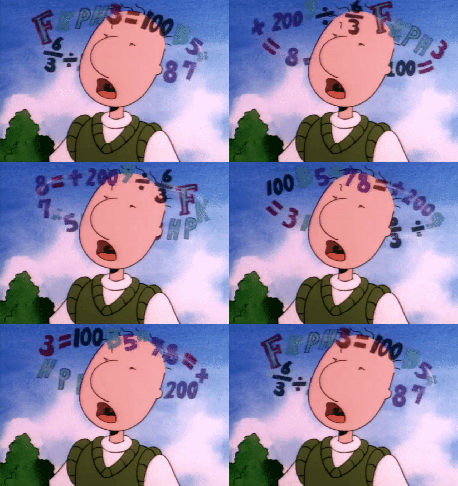
When suffering from an eating disorder numbers become a very integral part of life.  Weight, calorie intake, calorie output, and every number on every nutrition label are constantly circling the brain like a 90s cartoon character trying to do math.

giphy

Of course, there is also BMI.  BMI, short for Body Mass Index, is technically the measure of body fat using height and weight.  It calculates whether an individual is underweight, “normal”, overweight, obese, etc.  BMI is a widely used evaluation by doctors to assess a person’s health.  It is also a malicious meter of lies.  I was obsessed with my BMI while I was sick, before I realized that where I fell on the chart was not at all an accurate picture of my health or anyone else’s.

quetelet_adolphe
Pictured: actual evil wizard

First thing is first, the evil wizard who invented the BMI equation gave instructions to not use BMI the exact way we have been using it for decades.  Lambert Adolphe Jacques Quetelet (ridiculous name) said himself that the formula should not be used to suggest an individual’s “fatness”.  Instead the equation was meant to measure obesity throughout a population to help the government determine how to allocate resources.  He’s still an evil wizard in my book though for bringing the BMI into the world in the first place.

BMI does NOT account for gender, age, waist size, bone density, or muscle mass.  For instance, athletes and people with strong bones will often be classified as overweight or obese because bone and muscle are denser than fat.  Some of the fittest and healthiest #bodygoals you can think of including many body building competitors are technically obese?!?! That alone should tell you how grossly inaccurate this whole concept is.

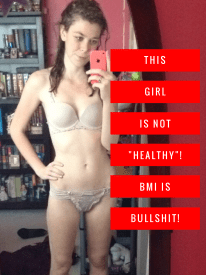
The very notion of BMI suggests there are defined groups of underweight, ideal, overweight and obese people and that these groups have borders that are separated simply by a decimal place.  That is completely ridiculous.  Let’s just call a spade a spade,  BMI is bullshit.

Before I had an eating disorder a doctor looked me in the face and told me that I was overweight.  I went home with this information and internalized it.  At that time according to the BMI chart all I had to do was lose 2 pounds to be considered “normal”.  2 POUNDS! Perhaps, had I not been PMSing that day or had gone to the bathroom before my appointment the doctor would have never said that to me.  But he did, and I heard it.  I set my weight loss goal and got crackin’.  Then, long story short I went too far and ended up with anorexia.

IMG_3328.PNGHere’s the thing about my eating disorder.  For the majority of the time I was sick, I was never “technically” deemed underweight according to the BMI chart.  An 18.5 or below is considered underweight and for the most part I hovered at 18.8.  My ED begged me to eat less and less to stay below that arbitrary threshold.  But while my hair was falling out, my bones were sticking out, my mental health was spiraling, and I was starving any doctor could have looked at me and told me that I was “ideal”!  Let me tell you, I was not.  Fortunately, now I don’t know my BMI and I honestly can’t even take the time to figure it out because I know that is a completely garbage number.
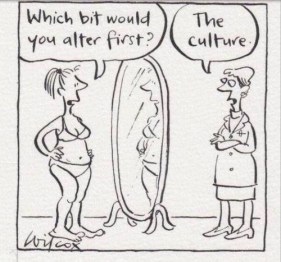
Let’s just all vow to never check our BMI again or let it dictate our behavior towards our bodies.  If a doctor tries to give you any advice based on it slap them!*

*Do not physically assault medical professionals, the slap should be figurative.


Hey, if you liked this post (or any of my other ones!) try liking the Ladle By Ladle page on Facebook!  It’s a good way to stay up to date on the latest posts.

F*ck The Patriarchy

“I may not be happy but at least I’m thin”

Have you ever thought that?  I have.  I’ve even said it out loud multiple times, to my therapist, my ex-boyfriend, my dad, my journal, my friends.  It seems so crazy now but I truly believed that my own sanity and mental health was worth sacrificing for a smaller waist.  How are we driven to think like this?  Well I know it is not our fault that we were pushed to this point.

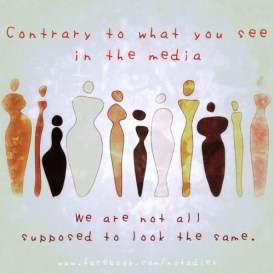
img_2829So many people (myself included) have/had been conditioned by modern culture to believe in one ideal body type for women.  It has been subconsciously taught to us females that we should have the rail thin bodies like the ones that walk down the runways, grace the covers of magazines, and sell sexualized womanhood on billboards and television ads.  But why are all women overwhelmingly represented in fashion and media by just one type of figure?  It doesn’t make much sense when you consider that the average American woman is a size 12/14 while the average model is a size 00/0.  Nevertheless when beautiful pictures of celebrities and models are being glorified it easy to see how making yourself fit into the small box of “thin, white, super model” becomes the subconsciously ingrained creed.  When women and girls are served up articles and television shows teaching them how to fix their appearance as if that is their most valuable asset, one can begin to see how such a toxic environment for subtle misogyny begins to form.    So women of color hurt themselves trying to get lighter skin  and a young girl starts to teach herself how to eat a little less every day until she takes up no space at all.
tumblr_n901o13eez1rwsmexo1_500

It really is all rooted in the patriarchy when it comes right down to it; The system of
society in which primarily men dictate the norms, create the ads, determine the “look”, and set up the environment that has killed young women all over the world.  The representation of women in classic television, films, and advertisements is one that is produced by oppressive forces that seek to minimize the presence of strong females and typify the few women with leading roles as weak and unable to function without help from the male heroes.  So when women are trained by the man-made culture they grow up in to only be valued based on the stereotypes forced upon our gender and the approval of our appearance by “society” AKA THE PATRIARCHY we start to understand a little more how the rate of eating disorders can be so incredibly sky high.

This all circles back to the young girl staring at herself in the mirror seeing only failure at her ability to achieve this ideal.  Driven mad by starvation and deceived by the image she sees in front of her.  Crying because she’s hungry and depressed and lonely and scared but goddammit at least she’s thin, right?  WRONG.  This is why the body positivity movement is so powerful, this is why women coming in to positions of influence is important.  Women have dealt with a system that has worked against them for centuries but now we are in a place to fight back.  I will proudly stand tall as another feminist killjoy in line to bring down the patriarchy if it means one less girl will see herself as lesser because she can’t live up to a false ideal.

b9235c5de33ad361b6f15c9b403d107e

Since recovering and having my eyes opened so widely to the lies, hypocrisy, and injustice of the world around me, the fire within me has been burning to try to DO something about it.  If someone like me, who comes from a place of such immense privilege, can still be brought down we must realize that as women none of us are immune.  It’s hard to pick one thing to be mad at these days, but for this issue I will try my best to be a role model and continue to share body positive, food positive, anti-shaming, and feminist stories, images, and posts to break down the cultural expectations of beauty and be on the forefront of the new wave of female representation.

The blame for what has happened cannot be placed with the individual who has fallen ill with an eating disorder.  She did not create this air brushed diet culture we all live in, she was simply born into it.  Now it’s all of our roles as women to help destroy it until it never hurts another innocent life again.  What will you do?