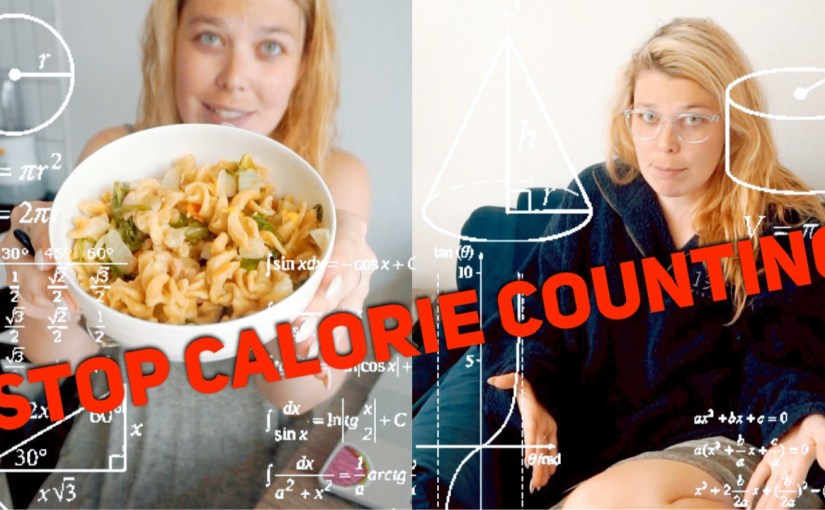
If you’re here, then you know that here at Ladle by Ladle we (and by we I mean me) are pretty anti-diet. One weight loss method above all is something that needs to be looked at under a bigger microscope. Calorie counting.
There is a dogma that exists in diet culture that claims, “less calories in, more calories out = weight loss!” I’m not here to say that isn’t true. Technically it is… but the bigger picture is so much more nuanced and problematic than that one catchy slogan would lead you to believe.
Let’s begin with the biggest problems with weight loss via calorie counting:
You lose track of natural hunger cues – when you abandon listening to your body’s needs in exchange for eating to numbers, you begin to lose all sense of what your body craves naturally. Soon enough, you lose the connection altogether.
It makes you obsess about food – constantly calculating how much you’ve eaten, how much you still can eat, how many calories are in a specific food or dish. It’s WAY too much focus on food in an unnatural way and not enough focusing on things that actually matter.
It’s not sustainable – like any fad diet or lose weight quick scheme, unless you develop an eating disorder, you will yo-yo up and down with your weight on this method just like any other method out there.
It treats your body and your food like a math equation – too many times I’ve done this, “If my BMR is X and my activity level is Y then I need Z calories to lose weight because one pound is 3500 calories and if I cut that many out over a week then I’ll lose a pound!” Right? Wrong. Your body does not run on math equations, your body is a living breathing biological set of systems that doesn’t adhere to these arbitrary numbers. Your body works to attempt to keep you at your set point. The metabolism which controls your BMR is not something you can calculate based on height and weight because there are so many other unique variables in the equation such as hormones, genetics, and digestion. The math will always be fuzzy so while you can equate your caloric needs over and over again nothing will be able to account for the actual physiology of your body and its unique needs.
Now, you might snap back at me with, “I dieted by counting calories and I DID lose weight!” Girl, same. Let me guess, you then either you got caught in an obsessive and continuously restrictive lifestyle or eating disorder, or you gained it all back, or you eventually stopped losing weight and started gaining weight despite not stopping the counting! I know it’s crazy, you can read more about that last one here.
Your metabolism works on a sliding scale to keep you at your set point weight. So if you“overeat” from your bodies signals your metabolism will rev up to compensate and vice versa if you under eat. However, if you happen to get the drive to overpower your body’s attempts to keep you at a stable weight, then you will be met by a lowered metabolism and be hungrier and hungrier and more and more miserable until you just eat!
Then there’s me. I counted calories like it was my damn job for years and years and years. I was so good at it, but it also completely controlled my life. As I counted my way into an eating disorder I knew that counting was not the answer. Eventually I decided to recover and ate thousands and thousands of calories a day. Yes, I gained weight – but I didn’t gain weight forever. Eventually my body plateaued right where it wanted me without me changing my caloric intake at all (with a little overshoot, because my body did not trust me). My hunger cues evened out so that now I can sit comfortably at my set point without counting calories or dieting or stressing and just living instead.
You think you’re controlling your food with calorie counting but really, it’s your food that is controlling you. Take back your life and wake up to the fact that calorie counting is just another diet culture lie, and we know better than that now.
There was a point in my life where I figured I would just be stuck counting calories forever, resigned to a life of sadness and disordered behavior. However, this proved to be untrue as I transitioned from a religious calorie counter to an intuitive eater – and you can too.
When you stop counting calories, you start enjoying and experiencing your food for its texture and flavor instead of as just a number. Eating becomes pleasurable when you aren’t constantly measuring, calculating, tracking, and obsessing over the food on your plate. You’ll open up space in your brain to focus on things that actually matter. You’ll be able to start eating intuitively by creating a stronger relationship to your body’s cravings and the food you eat. Obsession with food will fall by the wayside.
The truth is, no matter how accurate you think your calculations are using your BMI, TDEE, BMR, etc. to calculate the right amount of calories for you – there is no way to truly know as every single body is different. More to the point, without going crazy it is completely impossible to accurately know the calories of every food you eat. Remember, all a calorie is is a unit of energy and our bodies NEED energy to live. So here are some tips to stop counting calories forever.
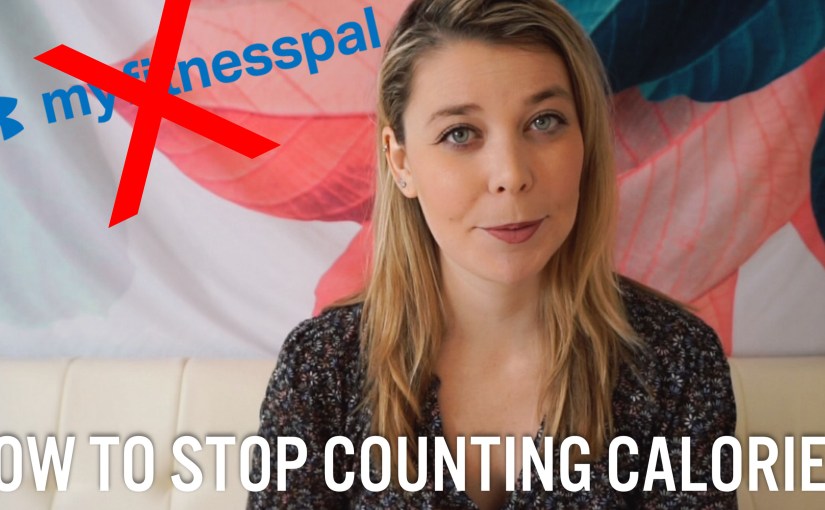
GET RID OF CALORIE TRACKERS This is a big one. I tracked all of my calories on “My Fitness Pal” but there are many others like it. Cronometer, Lose It, Fat Secret, etc. These apps were built to count calories so the best first step for a life without this burden is to get rid of them! If you aren’t using an app than get rid of whatever device you use to track the numbers. A notebook, planner, journal, or word document. Delete it, burn it, or have a friend drive 20 miles away and throw it in a dumpster. Getting that out of your life is a crucial first step.
GO OUT TO EAT AT RESTAURANTS Most restaurants are impossible to gauge to calories for because you don’t know everything that goes into the food preparation. It helps to make sure you are with a friend or family member that can keep you distracted from trying to break down and calculate the meal components. If you are financially incapable of dining out, that’s alright – just have a friend or family member cook a meal for you without telling you what is in it. This is essentially the same concept. You are looking to let go of the tightly wound control you have to maintain while counting calories by letting go of the control over food prep.
BLOCK OUT NUTRITION LABELS Take a sharpie and cover them up so that you can’t look at them obsessively. Go grocery shopping in bulk bins or for items that don’t have nutrition labels on them at local shops of farmers markets. Pick food for flavor and not for numbers.
HAVE FAITH YOURSELF TO EAT INTUITIVELY, BUT BE PATIENT
We are all born knowing how to eat. Your body knows what it needs and it is not trying to sabotage you. It loves you and want to keep you alive, return the favor to it. Eating intuitively takes practice but it is completely achievable for all of us since it is the way we are supposed to eat. Remember that it will take time as well because you are breaking a very bad habit – and habits are not broken overnight.
If any of these steps seem impossible or overwhelming than feel free to take it slow. I know how daunting and unreasonable these may seem – but if you implement these tactics into just one meal a day at first, and then slowly increase, you will eventually get there. Take it from a girl who used to count the calories in gum – you can do this!
I want to start off by saying that I am not a dietician, psychologist, or doctor of any sort. If you are experiencing serious medical concerns, please go see a doctor as soon as possible and if you are having any abnormal, anxious, depressed, or suicidal thoughts or feel like you need a trained ear to help support you please seek counseling from a professional.
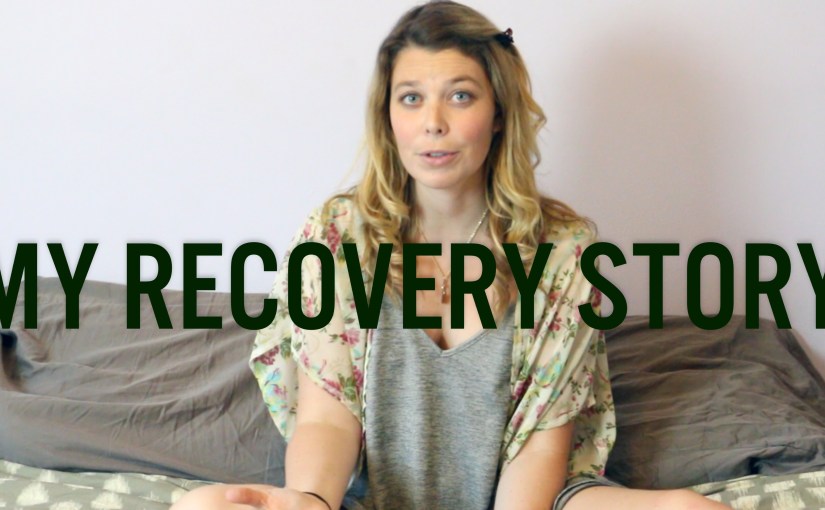
For me, recovery from my eating disorder took a long time and happened in several phases. Boiling the whole process down to a series of easy-to-follow steps just isn’t realistic because this disease is complicated and different for everyone who is affected by it. This is my recovery story and though it may not be exactly the “right” method, it is the one that set me free.
TRIGGER WARNING – There are descriptions of restrictive eating in here.
The day I googled “symptoms of anorexia” I felt my stomach sink as my eyes scanned the pages identifying with all the evidence I saw. After a lot of crying and googling for more answers, I was finally ready to accept that I might have a problem. However, I sat on that knowledge without doing anything about it for a long time. I told my boyfriend and my parents and they were supportive and not surprised but I didn’t really know where to go from there. I made an appointment with a therapist, I did some more online research, but mostly I just ignored the truth for as long as I could.
I saw therapists and went to doctors but the most impactful discovery for my recovery was online communities. It all started with my Tumblr recovery page. I discovered other girls who were recovering from anorexia and what that process looked like for them. I spent hours and hours reading posts from recovering girls and the articles they found interesting. The first step of course, was to increase my intake. It happened slowly over the course of a few months. I increased to 1200 a day then 1300 than 1500 and so on until I settled on 1700 a day for many months. I stopped all workouts that weren’t yoga. I made a list of all the food that scared me and I vowed to try and eat everything on the list at least once. I started photographing my meals and posting about my days on my tumblr. I was in this state, which I refer to as “quasi-recovery” for over a year. I went through several periods of relapse where I would return to my old ED behaviors before returning to quasi. I was still an unhealthy low weight, but I wasn’t losing anymore I was maintaining. At least I was eating I thought… sure, I was still cold all the time, afraid of certain foods, isolating myself, losing my hair, not menstruating, feeling depressed and suicidal, I sprained my ankle in my sleep because my bones were so weak, and sitting down still hurt because all my bones stuck out of my body… but for some reason I still felt like I was “recovered”. Just because I wasn’t eating only 500 calories a day and the fog in my head was dissipating I thought the battle was won. The problem was that numbers still ruled my life and I was not happy. I was not recovered.
The beginning of my salvation came upon the discovery of youreatopia.com and the Minnie Maud method of recovery. In summary, it is a system of recovering in which the person eats at least 3,000 calories (some cases it is 2,500, and some it is 3,500, but for me, it was 3,000) and stays as sedentary as possible. This is all in an effort to restore one’s metabolism, while simultaneously expanding from the mental restriction of anorexia. The 3,000 calories required is the minimum, however, if one’s hunger is not satisfied at 3,000, then they are encouraged to eat until satisfied. In fact, many people who recover this way experience what is called extreme hunger and can eat upwards of 10,000 calories a day. Minnie Maud is named after the Minnesota Starvation Experiment, which is an fascinating study of starvation on the human body. I was spellbound by the study, and I encourage you to read through it too to discover the negative impact of calorie restriction. Minnie Maud is controversial because the woman behind it all doesn’t have any known credentials but many girls follow her advice with success regardless. I had known about Minnie Maud for months but never truly considered it as the right option for myself. In truth, it scared me. I think my eating disorder knew that doing this would work, so it constantly told me it was the wrong thing to do. I haunted the online forums but never truly committed. Then one day after almost 2 years of quasi-recovery, I just did it. I ate the minimums and didn’t move all day. It felt horrible, I hated myself, but also a little tiny part of me felt a little freer. I started following the guidelines every day.
The extreme hunger was very real. At the worst of it I was eating over 5,000 calories a day and I had the feeling of food being stuck in the back of my throat constantly. I worried incessantly that I was becoming a binge eater but I just kept going because I didn’t know what else to do and I wanted this to work. With the freedoms the minimums gave me I was finally able to eat foods I had avoided for years, pasta, cheese, ice cream, candy, avocados, bread, and so much more. I finally was able to stop counting calories like a maniac. One exciting day that I will never forget is the day that I was able to delete MyFitnessPal from my phone. The app had been controlling me like a mindless zombie for years and all of a sudden poof! I didn’t need it! I still had a lot of negative thoughts, the first few months on Minnie Maud were not all roses and sunshine. I had to cover all my mirrors and hide my scale. I was truly gaining weight for the first time in years and that made me more nervous than anything else. However, a big component of the Minnie Maud system is the theory of a “set point.” That you can keep eating the minimums for the rest of your life and eventually the weight gain will taper and each body will hover around the weight that is right for it. I was skeptical, but I had read success stories and knew girls who had recovered and I used the anecdotal evidence to keep myself going.
Pictures from my tumblr of me challenging myself to “fear foods”
Two months in to Minnie Maud my ex-boyfriend of almost three years broke up with me. It was so devastating for me at the time. He had been there from the beginning and had always been supportive. The problem was he bore the brunt of most of the negative thoughts. I depended on him for emotional support and it just got to be too much for him (tangent: let’s not blame that breakup on me though, he was a cheating asshole who left me for someone else and couldn’t own up to it like a man.) I thought that it would be the worst thing for my recovery, but in truth after grieving for a month I started making more progress than I ever had before. I didn’t have him as an emotional crutch and I finally had to just depend on myself to push through. The bulk of my recovery happened in the five months after he left me. Mid way through that same year I looked at myself in the mirror and knew the battle was truly over. The last hump of recovery was the hardest. In my final month of recovery I was still counting calories and weighing myself. I was eating tons of food – to the point of stomach pain every day. My body and brain were begging me to eat. and eat. and eat. I was uncomfortable, but I didn’t stop. I never stopped. I felt large, and insecure, it was not easy. Then one day without me even noticing, it was easy. One day – I didn’t count my calories. I didn’t step on the scale. I didn’t think about food unless I was eating it. My body felt fantastic. I felt fantastic, and I knew I was healed. I don’t think about numbers, I don’t care about food, and every day I love my ever expanding beautiful soul.
In the end, I gained 40 pounds back. I experienced painful swelling, bloating, and stretch marks but I pushed forward anyway. I ended up at a weight that I could truly love myself at without hurting myself. The best part of recovery was feeling my personality return and grow into something more exciting than it had ever been before. I did stop gaining weight eventually despite not changing my eating habits. I was the same weight I had been before I became anorexic because set point is real. I haven’t obsessively counted calories in almost a year but I have to imagine I’m still eating near the minimums every day and my weight has stayed stable give or take a pound or two since the initial weight gain. I don’t usually weigh myself, I can just tell by my clothes. I felt truly recovered from the thoughts and the actions about 7 months into Minnie Maud. Today, I eat and eat and eat – not because I think I have to but because I live in an amazing city with delicious food. I eat because I work in an industry that feeds me decadent delicious free meals. I eat because it is an important way that I connect with the people I love. I eat because food is delicious. I eat because we need food to live. I eat because I remember what it’s like not to and I will never go back to that life again. I am recovered.


 For me, recovery from my eating disorder took a long time and happened in several phases. Boiling the whole process down to a series of easy-to-follow steps just isn’t realistic because this disease is complicated and different for everyone who is affected by it. This is my recovery story and though it may not be exactly the “right” method, it is the one that set me free.
 I saw therapists and went to doctors but the most impactful discovery for my recovery was online communities. It all started with my Tumblr recovery page. I discovered other girls who were recovering from anorexia and what that process looked like for them. I spent hours and hours reading posts from recovering girls and the articles they found interesting. The first step of course, was to increase my intake. It happened slowly over the course of a few months. I increased to 1200 a day then 1300 than 1500 and so on until I settled on 1700 a day for many months. I stopped all workouts that weren’t yoga. I made a list of all the food that scared me and I vowed to try and eat everything on the list at least once. I started photographing my meals and posting about my days on my tumblr. I was in this state, which I refer to as “quasi-recovery” for over a year. I went through several periods of relapse where I would return to my old ED behaviors before returning to quasi. I was still an unhealthy low weight, but I wasn’t losing anymore I was maintaining. At least I was eating I thought… sure, I was still cold all the time, afraid of certain foods, isolating myself, losing my hair, not menstruating, feeling depressed and suicidal, I sprained my ankle in my sleep because my bones were so weak, and sitting down still hurt because all my bones stuck out of my body… but for some reason I still felt like I was “recovered”. Just because I wasn’t eating only 500 calories a day and the fog in my head was dissipating I thought the battle was won. The problem was that numbers still ruled my life and I was not happy. I was not recovered.
 The beginning of my salvation came upon the discovery of youreatopia.com and the Minnie Maud method of recovery. In summary, it is a system of recovering in which the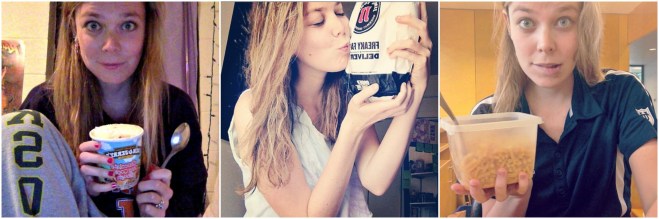
 In the end, I gained 40 pounds back. I experienced painful swelling, bloating, and stretch marks but I pushed forward anyway. I ended up at a weight that I could truly love myself at without hurting myself. The best part of recovery was feeling my personality return and grow into something more exciting than it had ever been before. I did stop gaining weight eventually despite not changing my eating habits. I was the same weight I had been before I became anorexic because set point is real. I haven’t obsessively counted calories in almost a year but I have to imagine I’m still eating near the minimums every day and my weight has stayed stable give or take a pound or two since the initial weight gain. I don’t usually weigh myself, I can just tell by my clothes. I felt truly recovered from the thoughts and the actions about 7 months into Minnie Maud. Today, I eat and eat and eat – not because I think I have to but because I live in an amazing city with delicious food. I eat because I work in an industry that feeds me decadent delicious free meals. I eat because it is an important way that I connect with the people I love. I eat because food is delicious. I eat because we need food to live. I eat because I remember what it’s like not to and I will never go back to that life again. I am recovered.
 ladle-by-ladle.com