Have You Developed Binge Eating Disorder? (+Giveaway!)

“I’m in recovery and I’ve been eating a lot more than usual. I think I’m developing binge eating disorder. I feel like I’m losing control around food. HELP!”

I can empathize with this feeling, I felt this way at the beginning of recovery as well.  During the beginning when the extreme hunger was at its peak I didn’t know how to process what I was doing. I was scared, and it was emotional, and I all but completely convinced myself that this was binge eating disorder.
tumblr_msf7y5SeRs1qf1498o1_500.jpg

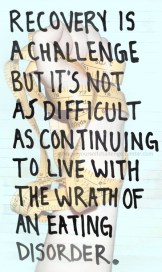
When you are recovering from an eating disorder or restrictive eating or chronic dieting, your body needs to replenish the backlog of caloric deficit that you have built up over the years.  Even if you have been in quasi recovery for a long time.  Your body still has not had the chance to metabolically restore itself to its set point.  You will continue to get these strong urges to eat large amounts of food until your body has had its chance to properly heal. Until you are energy balanced and your metabolism is back to functioning optimally your body will continuously call out for more food.  This desire to eat (and eat and eat and eat) is perfectly natural when you are recovering from disordered or restrictive eating.  Your body heals itself through calories and eating what seems like a lot or a “binge-able amount” isn’t actually a binge but a natural bodily response to starvation (and/or restriction).
tumblr_mg346oaUm31qf1498o1_500.jpg

Eating disorders gain their power from control and often in recovery the hardest part is feeling the loss of that control. It’s a scary and difficult time to navigate, but just because it FEELS like you are going off the rails by eating a ton doesn’t mean you are developing a new psychopathy.  Binge eating disorder is a very serious mental health disorder with many other symptoms and aspects other than just “eating a lot” and “feeling out of control”.  When you are a person who is recovering from restrictive eating in any way, anorexia, orthorexia, EDNOS, or are in quasi recovery, responding to the extreme hunger that your body feels in recovery is not the same thing as having binge eating disorder.

The thought process that the unrestricted eating in recovery is actually BED is unbelievably common.  Most people have a certain picture of what their recovery will look like and when it goes off the rails and outside the lines of the plan the reactions can be extreme.  Recovery is about letting go of structure, numbers, and plans around food and just letting your body have what it truly needs. This is scary, but it’s a sign you are on the right path.  Learning to become comfortable with the discomfort is a huge and important step forward. Your body knows what it wants and needs, and you should honor that to get yourself better.

ALSO – I’m having a giveaway over on my Instagram. The company Levoit has agreed to send one of my followers their super dope yoga kit.  I’m super duper thriled because I have been looking for a way to thank you all for getting me to 1,000 subscribers on my Youtube channel!! If you are interested in entering the giveaway all of the details are on my instagram.  Giveaway ends on 5/2/18.

Processed with VSCO with t1 preset

Recovering From a Binge

Binge eating, the uncontrollable impulse to eat mass quantities of food despite any feelings of hunger or fullness.  Most people entrenched in diet culture can empathize with the terrible feeling that comes in the aftermath of a binge.  Whether they are suffering from BED, bulimia, or are just experiencing the effects of fad/yo-yo dieting, a binge is one of the most common disordered relationships with food.  Binge eating typically stems from an emotional attachment to food as a source of comfort followed shortly by feelings of guilt.  Many people who have binge eating episodes engage in dangerous purging behaviors such as throwing up or laxative abuse to regain an “empty” feeling.  These binge/purge cycles often seen in bulimic individuals are physically dangerous.

Personally, when recovering from anorexia I had several binge eating episodes.  The only way I can describe my own experience is that it was like my brain turned off and all I could focus on was the food.  I was in a blind effort to eat as much food as I could find and fit inside of me.  After consuming thousands of calories in just 20 minutes I would then cry and feel terrible and guilty.  While I was supposed to be eating a lot for my recovery, the binges were still not the normal relationship with food I actually needed.

giphy

Here is my quick guide for recovering immediately after a binge eating episode.  This process is what eventually allowed me to begin overcoming binge eating:

  1. Do not be hard on yourself about the binge – One of the worst parts of any binge is the abrupt feelings of overwhelming guilt that bubble up. These feelings are what lead to the continuation of dangerous behaviors such as purging.  The purging then eventually leads to more binging and the cycle is continuously perpetuated.  After you have a binge, recognize your feelings of shame or disappointment as temporary.  Remind yourself that what happened has happened and the best thing you can do for yourself is be kind and forgive yourself for the binge.  Regularly practicing this internal dialog will help stop binges from happening again.  Remind yourself over and over again that you have worth, that this misstep does not define you, that you are going to be completely fine. They key is to identify and replace the feelings of guilt with feelings of forgiveness.
  2. Distract yourself – After quickly having a loving reconciliation with yourself, quickly distract yourself before you can backtrack on the positive internal dialog. Put on a movie, go for a walk, paint your nails, take a shower, call a friend, do anything that takes your mind off of the binge that just happened.  The more time you take to separate yourself from the episode, the better you will begin to feel.  My go to way to distract myself was to brush my teeth and call a relative (almost always my dad) to catch up.  If you decide to exercise to distract yourself remember to take it easy.  Do not use exercise as a way to punish yourself.  Keep it simple with a light walk or calming yoga.
  3. Do not restrict your food – This might be the most important tip here. After your binge, when you have hopefully successfully identified and replaced the negative emotions, forgiven yourself, and then distracted yourself for a while to keep your mind off of it, CONTINUE TO EAT NORMALLY FOR THE REST OF THE DAY.  You may be less hungry naturally, but if you binge mid day you still need to eat dinner and if you binge at midnight you still need breakfast!  Restricting your intake to compensate for the binge will only put you back in a cycle where another binge becomes possible.
    tumblr_mv06gngkXJ1rca9l9o1_500

Binge eating is complicated, the reasons behind a binge are multifaceted and unique to everyone.  Often therapy can help with BED, bulimia, or just mending a very bad relationship with food.  However, there are a few things to remember to do to help yourself outside of seeking professional treatment.  Binges can be physiological and/or emotional.  The best ways to prevent them is by protecting yourself from both.

The first step is practicing consistent self care.  Treating yourself with love and respect will nurture a positive connection between yourself and your body which is an important step in repairing a damaged relationship with food.  Keeping a daily journal to write down feelings of gratitude and affirmations is a good first step.  It can often feel silly and awkward at first but eventually you will begin to notice the permanent changes it brings to your overall mindset.  While recovering, I wrote all over every mirror of my room positive quotes and self esteem boosting mottos.  Make sure you look upon yourself with love, and treat yourself to nice things whether it’s manicures, bike rides, or long colorful bubble baths.  Remind yourself that your body is merely a vessel for the beautiful soul underneath.

The next step is stop dieting.  Stop restricting.  Diets don’t work, they encourage an abundance/scarcity mentality which upsets your brain and your metabolism.  Practice eating intuitively.  There are many resources available that teach this way of thinking.  The way I achieved it was by eating my minimum 3500 calories to gain weight, reset my metabolism, and shift my perspective on restriction.  Eventually, when the mentality of restriction began fading away the urge to binge left too.

Binge eating is not a solitary experience, many people go through it every day.   You are not alone.  With a determination to make a change and by practicing self love and no restrictions, binge eating is something you can recover from.

Resources used:
https://www.recoverywarriors.com/ten-tips-recover-binge-emotional-eating/

http://www.webmd.com/mental-health/eating-disorders/binge-eating-disorder/binge-eating-disorder-medref#1

https://www.nationaleatingdisorders.org/binge-eating-disorder