Food & Guilt

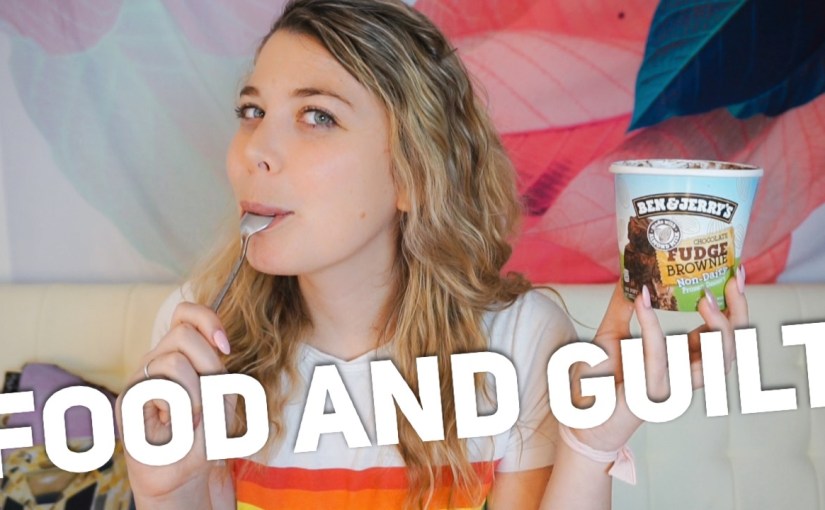
Food and guilt, two concepts we often conflate when we shouldn’t.  How does this happen? and how can we change our perception of food so that guilt never comes into the equation again?

icecream

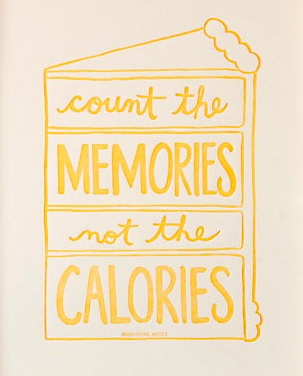
The truth is food is food – it is not innately good or bad. Whether or not someone has an eating disorder has nothing to do with the food itself and everything to do with the person’s perception of the food. Eating disorders are not food disorders they are mental disorders that impact the way we perceive food.
tumblr_maky8h0Lm51rbyzo6o1_400.jpg

More than just people with eating disorders experience food guilt though.  It’s the common problem of feeling bad for the simple and necessary act of eating.  So, why does this happen?  Here’s my take: our thin-centric, body obsessive, over advertised, and hyper aware culture has pounded the idea into all of us that some foods are “bad” while some are “good.”  This categorization is based off of someone else’s interpretation of nutritional science and it is how the diet industry continues to thrive.  Some nutritionists say eating mostly fat is best, some say the key is to cut out all carbs, some say cooked food is wrong, some say juice is the only right thing.  There are so many diets and opinions out there they can’t all be right.  Maybe none of them are.  Maybe the truth is, “health” means something different for everyone and food is just food, whatever and however you want to eat it is just fine. But the more society and culture dictate that some foods are bad while others are good all of us are left scrambling to figure out how to navigate eating amongst the messages.


Often we tell ourselves we can’t have a certain food because of ~reasons~ so gosh darnit our mammalian brain NEEDS it like a toddler who was told they can’t have something.  When you deprive yourself of something your body begins to crave it more, which means that once you eventually eat the damn “bad” food you react with feelings of guilt due to your “lack of self control”. music video eating GIF by Weezer
So, food guilt.  How do you stop it?

The first step, like with any problem is to acknowledge it and recognize it as silly and unimportant.  There are better things that can be taking up space in your brain. Just recognizing the phenomenon can be enough to take away its power.

The second step is to honor your hunger. Eat when your body tells you too and more importantly eat what you are craving honestly.

Finally, remove your judgement from your cravings. If your body wants a cookie then give it a cookie.  There is nothing wrong with it, and eating it will not hurt you.

Once you finally begin to eat what you want without feelings of guilt or shame you will find that you won’t crave them overwhelmingly. When you do, you will feel free to eat them without the shame or guilt! It takes practice but it can be done.


Minnie Maud Recovery

Minnie Maud is an eating disorder recovery method developed by Gwyneth Olwyn.  It has since been rebranded as the Homeodynamic Recovery Method.  The website with all of the pertinent information can be found here. What follows is my own analysis of the method and a brief overview of my successes with it.

MinnieMaud Guidelines are the guidelines for recovery from restrictive eating disorders such as anorexia, binging/purging, bulimia, orthorexia and any EDNOS involving food restriction that I followed in recovery. The “Minnie” refers to the Minnesota Starvation Experiment and the “Maud” refers to the anorexia family based treatment program, the Maudsley protocol.

The guideline’s food amounts are what energy-balanced, non-eating-disordered people normally eat to maintain their health and weight. Meaning your minimum intake guidelines are what you can expect to eat during AND after recovery. However, you can expect to eat far more than minimum intake during the energy-restoration part recovery. (AKA extreme hunger).

The way to successfully follow the MinnieMaud program is to:

  1. Eat the minimum intake every single day. It is a minimum intake and you are both encouraged and expected to eat more. Never restrict food intake. Your minimum intake is between 2500-3500 depending on your age, height, and gender and can be found on her website.
  2. No weighing yourself or measuring yourself. This is the easiest way to relapse, so just avoid it completely. While I was gaining weight, I covered mirrors, threw away my scales, and bought loose flowing dresses that would fit me even when I was bloated or heavier. All of these things were crucial to me being okay with the weight gain and getting through the hardest part.
  3. No exercise.  At all.

The MinnieMaud guidelines believe that restrictive eating disorders are neurobiological conditions. The condition can be either active or in remission, but it is never completely cured.  Part of remission is addressing the anxiety and guilt you associate with food head on with a therapist to avoid repeating inappropriate response behaviors to eating such as over exercising or restricting food.

So, the three steps to recovery are:

  1. Weight restoration – to your SET POINT.
  2. Repairing and reversing physical and metabolic damage.
  3. Developing new non-restrictive neural patterns in response to usual anxiety triggers.

These steps can all be achieved through following the program.

your-eatopiaI discovered Minnie Maud over a year before I finally committed to it.  The one predicament about this method is that you have to want recovery for yourself in order to successfully go through with it.  When I found the program, it was still available on the original Youreatopia site.  I haunted the site and forums for months as I unsuccessfully attempted to recover through quasi recovery.  When I finally found a therapist who supported Minnie Maud and I committed at the beginning of 2015. My whole world began to change and by the end of that year I was finally in remission.

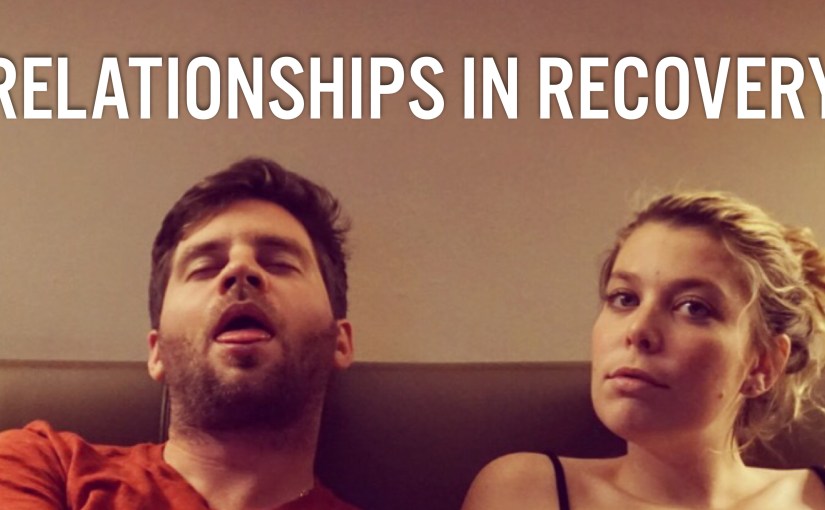

 

Clearly MinnieMaud worked for me.  I still consider myself in remission to this day.  After I started eating the minimums within a few weeks extreme hunger hit me and for the next month and a half to two months I was eating between 5000-10000 calories a day, sometimes more.  It was like I had a hunger deep inside me that could never be satisfied.  Then that eventually calmed down and I kept eating to the minimums. I love the concept of a minimum intake because it completely flipped the script from what I had been implementing for years.  Instead of being afraid of going over a certain number, I now had absolutely no limit!  It is a freeing feeling.  I felt the healing relationship to food.  I felt the physical transformation.  I felt the eating disorder disappear into the furthest, darkest corner of my brain.

2015
Left: Jan 2015, just deciding to do MM. Sad, thin, empty, confused, miserable. Right: Sep 2015, VERY happily enjoying my summer 9 months into MM and 4 dress sizes bigger. Happy, social, free.

If you are considering this method of recovery I cannot recommend it highly enough.  If you are still not sold, do the research on it yourself.  That’s what I did and it was more than enough to convince me.  People can say what they want about Minnie Maud but they cannot argue with a success story like mine and the many others out there.  The best way to fight food restriction is with food.  Food is medicine, it keeps us alive, and none of us are born with issues about it. MinnieMaud finally allowed me to remember what it was like to have a normal relationship with food and my body, it taught me so much about being a kinder compassionate human both to myself and to others.  It allowed me to find myself again after years of hiding being an eating disorder and for that I am eternally grateful.

Relationships in Eating Disorders and Recovery

in love hearts GIF by SpongeBob SquarePants

Happy Valentines Day to all of you!  I hope you have a wonderful day celebrating all of the love in your life.  Love between family, friends, pets, and romantic partners!  Being in a romantic relationship  while suffering or recovering from an eating disorder is not an easy task.  Often it is difficult for a partner to handle the stresses of the disorder by watching their loved one hurt themselves emotionally or physically.  I’ve been with people through every stage of my journey and here is what I’ve learned.

When I got sick I was dating my now ex-boyfriend.  Our relationship was long distance and he was with me when I developed anorexia, suffered from it, and made my first few attempts at recovery.  Overall, he handled it pretty well and was very supportive but over time the stress and seemingly unending pain started to wear him down and after dating for almost three years he left me.  (Whatever, I’m too good for him so it’s cool).  From that experience I learned the following tips:

  1. It’s okay to tell your partner what is going on with you and keep them included, but don’t turn them into your personal therapist. Don’t put absolutely every burden you are dealing with onto them (remember a lot of these thoughts are not your own, but originate from the disorder). A person may love you but everyone has their limits and one person cannot be responsible for handling all of your problems.
  2.  Allow them to cope however they need to.  Everyone handles stressful and difficult situations differently and there is nothing wrong with that.
  3. Don’t blame them for trying to help.  Even if the help is unwarranted or not actually helpful.  If you feel your partner trying to help you, be an effective communicator about what would be the best way for them to do that.eric cartman help GIF by South Park
  4. Make sure your partner can handle the stress of loving someone with a mental disorder.  Sometimes people just can’t, and you cannot put your entire reasons for happiness into your faith in another being.  You need to be okay relying on yourself and paid professionals.

I have been with my current partner for a little over 2 years and we are as happy as can be.  I’m writing this as I stare at the beautiful flowers he had sent to my office.  I am lucky to be recovered and to rarely ever flirt with a relapse, but nonetheless I now have the tools to be able to handle our relationship in a more mature way.

Happy valentines day everybody!  Hold your person close, they love you (even if your person is your mom or your cat).cat lady pet GIF

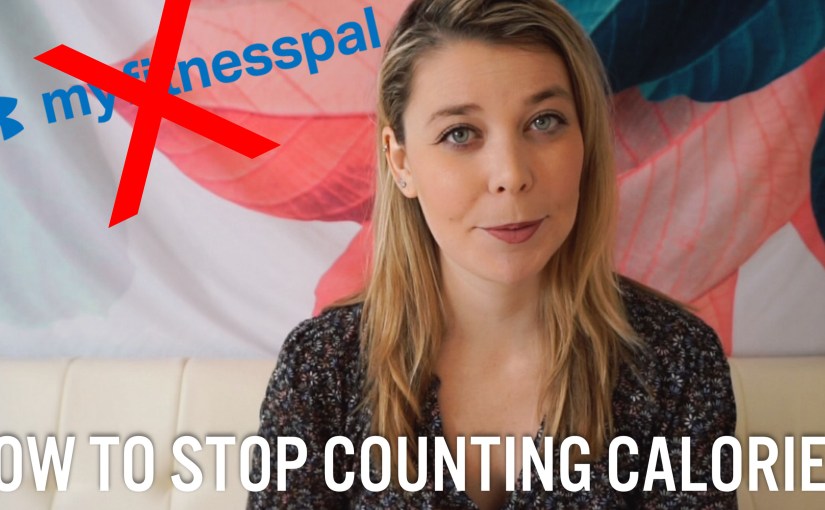
How To Stop Counting Calories

There was a point in my life where I figured I would just be stuck counting calories forever, resigned to a life of sadness and disordered behavior.  However, this proved to be untrue as I transitioned from a religious calorie counter to an intuitive eater – and you can too.

When you stop counting calories, you start enjoying and experiencing your food for its texture and flavor instead of as just a number.  Eating becomes pleasurable when you aren’t constantly measuring, calculating, tracking, and obsessing over the food on your plate.  You’ll open up space in your brain to focus on things that actually matter.  You’ll be able to start eating intuitively by creating a stronger relationship to your body’s cravings and the food you eat.  Obsession with food will fall by the wayside.

The truth is, no matter how accurate you think your calculations are using your BMI, TDEE, BMR, etc. to calculate the right amount of calories for you – there is no way to truly know as every single body is different.  More to the point, without going crazy it is completely impossible to accurately know the calories of every food you eat.  Remember, all a calorie is is a unit of energy and our bodies NEED energy to live.  So here are some tips to stop counting calories forever.

GET RID OF CALORIE TRACKERS
This is a big one. I tracked all of my calories on “My Fitness Pal” but there are many others like it.  Cronometer, Lose It, Fat Secret, etc.  These apps were built to count calories so the best first step for a life without this burden is to get rid of them!  If you aren’t using an app than get rid of whatever device you use to track the numbers.  A notebook, planner, journal, or word document.  Delete it, burn it, or have a friend drive 20 miles away and throw it in a dumpster.  Getting that out of your life is a crucial first step.

GO OUT TO EAT AT RESTAURANTS
Most restaurants are impossible to gauge to calories for because you don’t know everything that goes into the food preparation. It helps to make sure you are with a friend or family member that can keep you distracted from trying to break down and calculate the meal components.  If you are financially incapable of dining out, that’s alright – just have a friend or family member cook a meal for you without telling you what is in it.  This is essentially the same concept.  You are looking to let go of the tightly wound control you have to maintain while counting calories by letting go of the control over food prep.

BLOCK OUT NUTRITION LABELS
Take a sharpie and cover them up so that you can’t look at them obsessively. Go grocery shopping in bulk bins or for items that don’t have nutrition labels on them at local shops of farmers markets.  Pick food for flavor and not for numbers.

HAVE FAITH YOURSELF TO EAT INTUITIVELY, BUT BE PATIENT
We are all born knowing how to eat. Your body knows what it needs and it is not trying to sabotage you.  It loves you and want to keep you alive, return the favor to it.  Eating intuitively takes practice but it is completely achievable for all of us since it is the way we are supposed to eat.  Remember that it will take time as well because you are breaking a very bad habit – and habits are not broken overnight.

If any of these steps seem impossible or overwhelming than feel free to take it slow.  I know how daunting and unreasonable these may seem – but if you implement these tactics into just one meal a day at first, and then slowly increase, you will eventually get there.  Take it from a girl who used to count the calories in gum – you can do this!


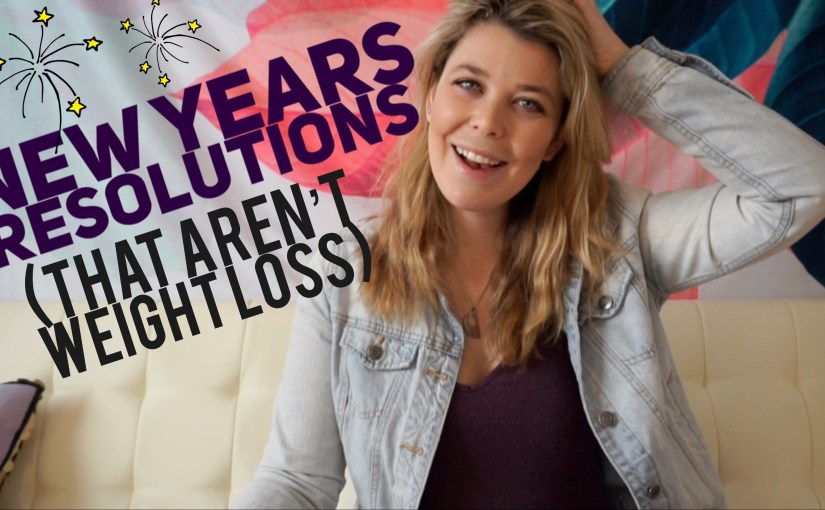
New Years Resolutions (That Aren’t Weight Loss)

New Years Resolutions.  Every year we see people around this time of year resolve to make a change in the next year, and unfortunately that change usually surrounds weight loss.  Thousands of people determined to shed what they consider unnecessary weight typically through methods that are dangerous manifestations of the corporate, money grubbing, health ignorant, diet culture pervasive in our society.

Instead of resolving to change your beautiful body why not focus on something else this year?  I’ve compiled a few ideas here.

Save Money
This is a great resolution because it’s easy to keep track of.  At the end of the year it’s so gratifying to check your savings account and see your success!  Plus you gain something valuable through it.

giphy

School Related
Maybe your aiming to work hard to get into college, or a graduate program.  Maybe you need to focus on getting straight A’s all year.  Achieving academic success is valuable, productive, and a good goal to execute.

the fairly oddparents dancing GIF

New Hobby
Perhaps you want to start playing an instrument, or learn how to cook, or become really skilled at makeup?  These are all great resolutions to work on!  Starting a skill you’ve always wanted to master is an excellent and worthwhile goal.

kris jenner hobby GIF

Eco Friendly
You could make the decision to switch to veganism for the earth, the animals, and yourself.  You could work on reducing your trash waste or converting to minimalism.

cat vegan GIF

Mental Health
You could practice positive self affirmations and body positivity by working to truly love and accept your body for all that it is and all that it does for you.  You could decide to seek help from a therapist, or vow to be more open about your struggles.

health GIF

Finally, if you are suffering from an eating disorder this is the year that your resolution is to truly and honestly recover.  No more quasi, no more excuses, no more reasons to wait.  Recovering from an eating disorder started with a NY resolution for me in 2015 and in that year I started Minnie Maud, gained all my weight back, graduated from college, met amazing friends, had unforgettable experiences, started my career, and met my boyfriend.  There is no greater choice than the choice to recover and get your life back.  Make your year 2018.

No matter what your 2017 was like, it’s time to look ahead – and when you pick a resolution (if you even want to) make sure you focus on the things in life that matter, your relationships, your mental health, your personal growth and development and not the things that don’t – your weight, size, or shape.

Navigating The Holidays in Recovery

This week is American Thanksgiving which means lots of food, and lots of nosy relatives asking you insensitive and intrusive questions.  If you are someone recovering from an eating disorder, any Holiday that is hallmarked by food can be difficult and triggering.  When I was sick I definitely wanted to avoid these situations.  But oftentimes you can’t and in truth you shouldn’t.  The Holidays are not only about decadent food, they are also about taking the time to reconnect with your loved ones and enjoy each others company.  It’s a shame to sacrifice that for any reason.

Here are a few tips I have for navigating this time – they can also be applied to any other time you are in a triggering or difficult food situation.

1 – Find a friend. Whether it’s a parent, cousin, sibling, or grandparent – find someone you trust who you can confide your fears to so you don’t feel isolated.  Tell them you are recovering from an eating disorder.  It is okay to let people in.  There is no shame in what you are going through.  This person can also hold you accountable and make sure that you eat – perhaps by filling their plate with the same food as you and having you both eat it together.

2 – DO NOT COMPENSATE. You don’t have to have a full on binge to have a successful Holiday, but if you do find that you eat an above average amount of food please remember that that is 100% NORMAL and you should not feel guilty, gluttonous, or sad.  Food is yummy – holiday food is really yummy – and eating a lot of it is never wrong.  That being said, do not eat less in preparation for this meal and do not eat less or nothing the next day in a compensatory way.  Doing this not only sets your metabolism out of whack but also isn’t a healthy way of thinking about food and is a behavior you should be consciously working to correct anyways.

3 – When anyone makes a comment about your weight – positive or negative, do not internalize it. I know it can be hard to hear but others do not know what you are going through.  I usually find that when someone is making comments on my weight or food choices it’s coming from a place of insecurity within themselves, which is sad but has nothing to do with you.  Just try and remember that when it happens.

4 – Finally, be kind to yourself. I know that your disordered eating voice will be screaming at you when you face big fear foods, and you are so so brave for fighting through them in order to nourish yourself and enjoy your life.  You can do this.  You are strong and beautiful.

It isn’t easy to face your fears.  It’s not silly or stupid to be afraid of a slice of pie, or helping of stuffing.  However, it is irrational and counterintuitive so working through these fears is a must as you move forward in your recovery.

Have a happy Thanksgiving I hope you find these tips helpful!  Let me know your favorite dish down in the comments!  Mine is probably mashed potatoes, but my absolute favorite thing in the world is my mom’s apple pie.

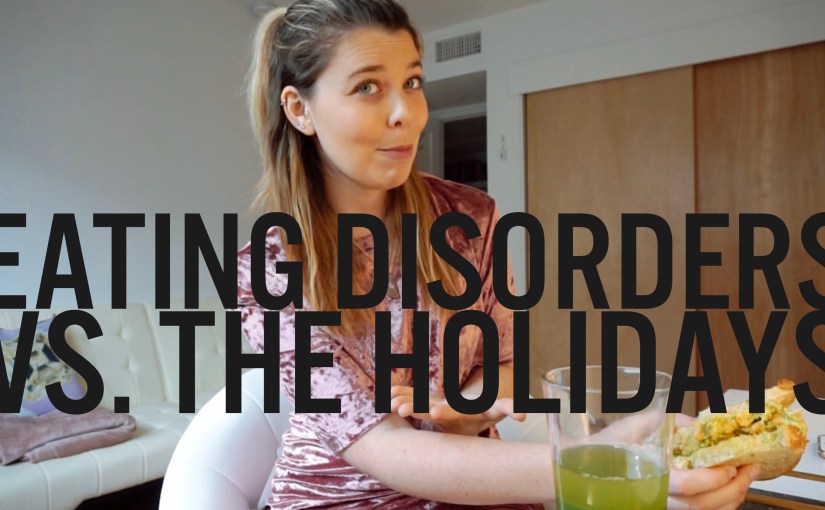
If you can, please take a moment to like and subscribe to my youtube channel – I make videos discussing intuitive eating, eating disorder recovery, body positivity, veganism, and self love!