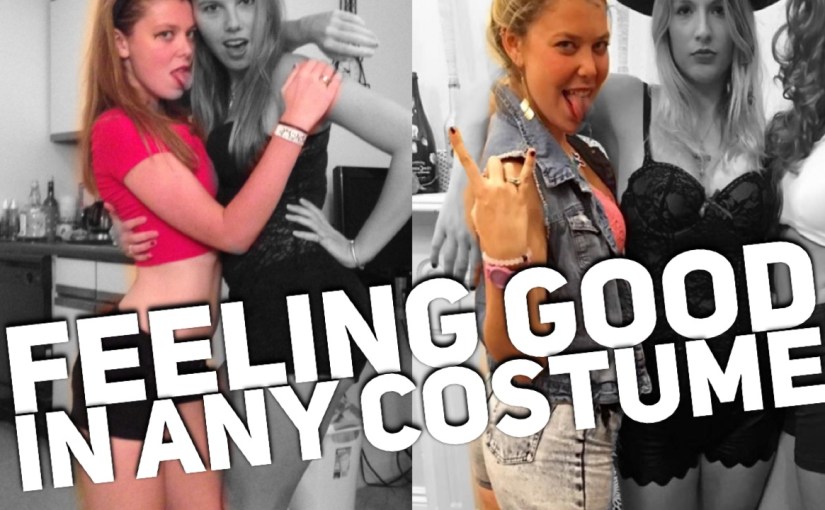
Body Confidence Tips for Halloween

Halloween is just around the corner and you know what that means! …It’s the one time a year that it’s socially acceptable for adults to play dress up!

Pumpkin Dance Dancing GIF

Wearing Halloween costumes is honestly one of my favorite activities in the entire world! I love planning what I’m going to be and forcing my friends or boyfriend to join me in my theming. However – sometimes the idea of Halloween costumes can be intimidating or challenging. After all, there’s an unspoken rule that as young women, we’re supposed to dress slutty and revealing. But what if you don’t feel confident in your body enough to handle that type of outfit?mean girls im a mouse duh GIF

Well first it must be said that that “unspoken rule” is bullsh*t. Halloween is a time of year where you can be literally anything you want. If that’s a sexy witch then welcome to the club, but if it’s a very conservative far more realistic portrayal of a witch then Hell Yeah! If being in a scantily clad or even slightly revealing costume just isn’t your thing then for goodness sake, don’t make yourself do anything you aren’t comfortable with! You don’t owe anyone anything.

However, if the reason you’re avoiding a certain ~lewk~ has less to do with your personal aesthetic and more to do with your lack of body confidence then let’s talk… because that really breaks my heart, but I also totally get it. The year I gained back all of the weight from recovery I was simultaneously highly anticipating and quietly dreading Halloween. Halloween is my favorite holiday, dressing up is my favorite activity, and this was the first year I did not feel super great about dressing in my typical costumes.

Well spoiler alert: I ended up doing it and having one of the most fun Halloweens I’ve ever had. So how did I get past it? Well here are a few tips and tricks for you to rock whatever costume you’d like to this Halloween.

  1. Don’t be a b*tch to yourself – treat yourself like you would treat your own best friend. Instead of looking at yourself in your costume and noticing the things you hate and fixating on them, look at yourself as a whole, the way someone else would see you and realize that overall you are sexy as hell!
    Beautiful Hocus Pocus GIF

  2. Don’t be a b*tch to others –  The minute you start to criticize others is the minute you become a part of the problem that is also plaguing you. If you can find the best in others and think that everyone is beautiful you’ll have a lot easier time believing it about yourself too. Don’t harbor any negative energy and it won’t have an easy time coming back around to you.
    Angry Linus Van Pelt GIF by Peanuts

  3. Remember that your size is just one very small part of who you are as a person it does not reflect who you are or what you are worth. In fact all it does is perhaps help you fill out a costume just that much better.
    Sad Black And White GIF

  4. When your friends tell you you look awesome believe them.

    Halloween Costume GIF by Cheezburger

  5. Don’t compare yourself to others. Yes, we all look different and subjectively you may feel that others are better than you but the truth is we are all fierce in our own ways. Comparison is the thief of joy and what might make you insecure about yourself is probably the thing that makes other people envious of you! Just live your life for yourself and you’ll be a lot happier.
    Halloween Booty GIF by 6ixySkeleton

  6. Don’t compare yourself to yourself. Your body changes over time and that’s normal and a good thing. If you’re bummed you don’t look the way you did when you were 15 or 18 or 25, you need to get over that. Our bodies change with age and you need to let go of what was and focus on how incredible you look NOW.

Okay those are all my tips for staying body positive this Halloween! Now go forth and be spooky ❤
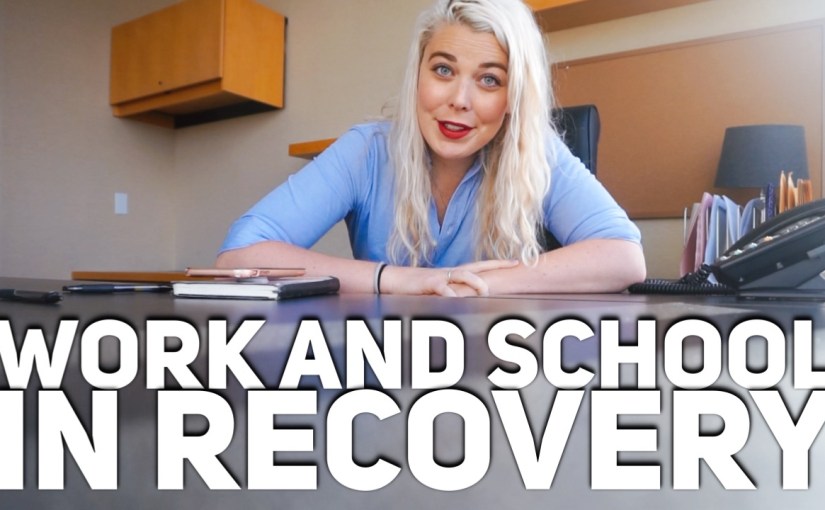
Work and School in Recovery

It’s no secret that once you finally feed yourself and let yourself rest in recovery, the exhaustion and extreme hunger can be overwhelming. The physical and mental symptoms are enough to keep you on the couch for weeks (and there’s nothing wrong with that if you have the ability to do so, in fact – that’s the best way to ride out recovery.) For most of us though, we realistically can’t just sit on a couch for weeks. We have school or work that we need to attend to keep our lives moving forward. So how can we do both?

Let’s start with school.

magic school bus wink GIF

First you have to decide, is school right for me and my mental and physical health right now? Can I afford to take some time off to work on myself? Has being in school stopped me from fully recovering in the past? Is school triggering for me right now? It is not wrong or shameful to take the time to take care of yourself. This is your life and you know what you can handle and what is right for you.

Eating and resting in recovery is a full-time job. If you don’t feel as if you’ve been hit by freight train of exhaustion at the beginning, then chances are you’re not really in full recovery. This is why taking time off if you can is a valid choice. Besides, you may not be able to put forth as much effort into school if you’re more focused on recovery – so taking time away could be actually better for your academic career.

If you do want to remain in school while recovering, then you will want to develop a very detailed plan of what you will do this time that is different from how you might have tried to balance school and recovery in the past. For example, when I was in school I planned to go see an on campus mental health professional, be honest with my family and friends, and prioritize recovery. If school got in the way of full recovery I chose my health first. I lightened my coursework, cut out toxic friends, and spent my mental energy fighting for myself. I was sick with my ED for most of my time at school and only had one semester to go when I finally committed to full recovery. I was very close to graduating so I went part time that last semester to be able to accomplish what I needed to for myself and my education.

Having a plan is very important. Being convinced that THIS time you are ultra-committed, and you are really, really tired of your ED will get you only a few weeks into full recovery before the anxiety will start to mount and get the best of you if you don’t have support in place. Without a therapist or counselor to help teach you how to keep approaching and eating food even as the anxiety mounts, you are likely headed to a relapse. So make sure you think honestly about what is best for your life and how to move forward productively.

Okay now let’s talk about work.

funny cat GIF

Work is a little bit different than school because you are working to make money to support yourself, keep a roof over your head, provide food and necessities for you and your family. Since you can’t stop working, instead I have a few tips for how to handle recovery in the workplace.

  • Block out time in your work calendar for meals and snacks, treat these times like priority meetings that you must attend.
  • If you have a very physical job or one where you are on your feet all day, consider finding ways that you can be more sedentary. Is there a job you can go for that requires sitting at a desk? Can you work a register instead of walking around a store? Can you hostess instead of waiting tables? Try and find ways in your own workplace that give you more time to rest.

It might ultimately be necessary to find a different job if the one you are currently in is toxic, triggering, or not helping you achieve your personal health goals. This is something only you can be honest with yourself about and decide.

Check out my video on this topic here:


Vacation and Post-Vacation in Recovery


42824060_10155860706361662_3840365687985930240_o

I just took a little 2-day trip to New Orleans for a friend’s birthday and while my brain and body slowly phase out of vacation mode and being drunk for 48 straight hours I thought it would be a great idea to write about how to handle vacations while in recovery from an eating disorder.

Vacation is of course meant to be a fun and relaxing or inspiring time spent away enjoying a new place with yourself or friends or family. However, I know that for people still struggling with their disorder or in recovery from it, vacation can be a lot more complicated than that.

When I was sick I would flat out opt out of fun trips just because of my food and exercise anxiety. When I was in quasi recovery I would go on trips but there would be days and weeks of research and stress beforehand. Each meal was a challenge, every day of rest was torture, and looking back I remember more tumblr_maky8h0lm51rbyzo6o1_400mental stress than any enjoyment from those trips. After each trip there would be a few weeks of lowering my intake and upping my exercise to “make up” for some of my more indulgent meals. When I went into full recovery life became so much easier. Yes I was eating extreme amounts of food, gaining weight rapidly, and feeling constantly bloated and uncomfortable – but these temporary stresses and feelings allowed me to be able to eat whatever I wanted with no minimum or judgement. Therefor I was actually able to go places and have fun and focus on the trip itself because there was no need to overthink food or exercise.
So for those of you who are still working through some things, here are a few tips for you on vacation:

  • NO COMPARISON:  You don’t want to ruin your trip by making comparisons that will only serve to make your eating disorder stronger. If you are feeling awkward, remember that people don’t really care what you are doing. They are more interested in what they are doing. We’re all narcissists and the only person who is judging you is yourself. So stop that.

tumblr_mhdkafSWTC1rwsmexo1_1280

  • Keep Your Food Expectations Realistic:   The food is gonna be different than you’re used to. It’s gonna give you a “fear food” kind of reaction most likely. Most trips include eating out a lot and if you’re me, drinking a ton. Your eating won’t be perfect. It’s not supposed to be. There is literally no such thing as perfect eating anyway. Go into the trip knowing that you can’t control everything and be openminded.
  • Change Your Exercise Expectations:  You shouldn’t be exercising anyway but if you’re going on a trip that involves a lot of walking (around museums or whatever) just realize that you are going to be a lot hungrier as a result of the extra calories you’ll naturally burn. Be ready for it and allow yourself to eat yummy delicious local food!

Okay… now let’s talk about getting home after vacation. Typically people with active EDs will feel strong urges to engage in compensatory behaviors. Compensatory behaviors are simply activities done in an attempt to make up for having been “indulgent”. They are an attempt to erase shame, anxiety, guilt or other “bad” feelings about the food eaten. This is of course very silly and unnecessary because there is nothing guilty or shameful about enjoying food and having fun. You do not need to reverse any “damage” because that’s not how your body works, It will regulate itself without you getting involved and f*cking sh*t up.

Some common behaviors are the misuse of laxatives, compulsive exercise, doing cleanses, fasting, or restricting calories for a period of time.

Here’s the thing – in ED recovery and then afterwards in life, you should begin to realize that your life is not a constant never ending game of calories in and out and that your body will be happiest when you’re just enjoying yourself. Going on vacation and perhaps overindulging is not “bad”, it is not shameful, it does not give you permission to starve yourself, hurt yourself, or be mean to yourself. It does you no good to make yourself feel bad about enjoying your life. By compensating after vacations you’re reinforcing the idea that your waistline is more important than your happiness. NO. Recovery means giving up that control, and loving yourself without judgement.42895112_10155860706991662_2101684977203675136_o

Listen, I just ate a ton greasy, yummy, fried and smothered southern food. I guzzled alcohol like a machine. I spent most of my trip sitting or lying down. Did I freak out the second I got home? Fuck no I went to Subway and got a bag of potato chips and a sub and put off packing in favor of binge watching Netflix in my bed. The next day life went on. I’m home. No weirdness, no guilt. Just great memories. As it should be.


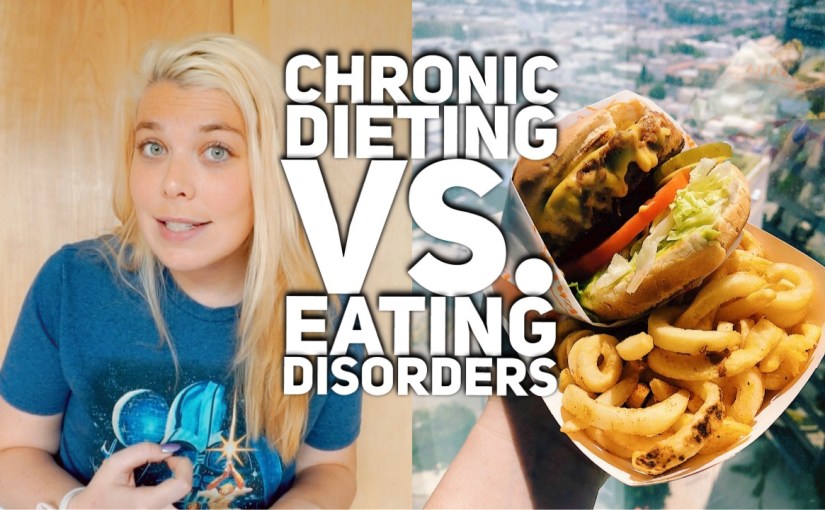
Chronic Dieting vs. Eating Disorders

A question I am asked somewhat regularly is: what is the difference between chronic dieting and having a full-blown eating disorder? Or more accurately, eating disordered vs disordered eating.

I consider dieting disordered eating because it often comes with disordered red flags: Feeling that your Self-worth is related to the size of your body, body dysmorphia, exercise addiction, obsessive calorie counting, anxiety around food or specific food groups, inflexible meal times, refusal to eat in restaurants or outside of one’s own home, food restriction, and feelings of guilt or failure. In my opinion, the only difference really between the disordered eating patterns of a chronic dieter and a person with a full-blown ED is the degree to which these abnormal behaviors are taken. But even if the severity is lower in chronic dieters, it is still a major problem. It is still disordered. More dangerously, a chronic dieter is at a very high risk for developing a full-blown eating disorder. They also can experience symptoms of metabolic damage like gaining weight on restricted calories, osteoporosis, insomnia, and feeling weak and tired.

So, in my opinion there is a very small difference between chronic dieting and eating disordered people. Both issues can and should be recovered from. They can both be physically recovered from by eating to repair the metabolism and find your body’s set point. Fortunately, chronic dieters often won’t have as deep of a mental connection to the control of food restriction. While they may be anxious or depressed, the difference between a chronic dieter and a person with an eating disorder is that their anxiety and depression won’t be as inextricably linked to their body issues and need to control food so physical and mental recovery should come much easier. Having dieted for years and years and having an eating disorder are different, but not by as much as you think. Whether you fit into one category or the other you deserve recovery.

It’s hard to unlearn dieting behaviors especially when they are constantly reinforced by society around us every day, but it is possible. Getting out and recovery for a chronic dieter involves eating without any judgement or restriction and allowing your body anything it calls out for. Sweets, processed foods, fried food, a lot of food, food at weird times – whatever it needs to repair the damage that’s been done to your metabolism. Just like in any recovery weight gain will happen, but eventually as you continue to eat freely your hunger cues will normalize again and you will feel a connection to your hunger and satiety (a connection that is completely lost during a diet.)

Eliminate all categories and judgments such as “good” and “bad” when it comes to food. Allow yourself to eat all foods with the awareness that food is meant to be a positive, nourishing experience. It’s a long process – but it is so wonderful to have freedom and love within yourself once you’ve escaped.

Calorie Counting is Dumb

If you’re here, then you know that here at Ladle by Ladle we (and by we I mean me) are pretty anti-diet.  One weight loss method above all is something that needs to be looked at under a bigger microscope. Calorie counting.

There is a dogma that exists in diet culture that claims, “less calories in, more calories out = weight loss!” I’m not here to say that isn’t true. Technically it is… but the bigger picture is so much more nuanced and problematic than that one catchy slogan would lead you to believe.

Let’s begin with the biggest problems with weight loss via calorie counting:tumblr_maky8h0Lm51rbyzo6o1_400.jpg

  1. You lose track of natural hunger cues – when you abandon listening to your body’s needs in exchange for eating to numbers, you begin to lose all sense of what your body craves naturally. Soon enough, you lose the connection altogether.
  2. It makes you obsess about food – constantly calculating how much you’ve eaten, how much you still can eat, how many calories are in a specific food or dish. It’s WAY too much focus on food in an unnatural way and not enough focusing on things that actually matter.
  3. It’s not sustainable – like any fad diet or lose weight quick scheme, unless you develop an eating disorder, you will yo-yo up and down with your weight on this method just like any other method out there.
  4. It treats your body and your food like a math equation – too many times I’ve done this, “If my BMR is X and my activity level is Y then I need Z calories to lose weight because one pound is 3500 calories and if I cut that many out over a week then I’ll lose a pound!” Right? Wrong. Your body does not run on math equations, your body is a living breathing biological set of systems that doesn’t adhere to these arbitrary numbers. Your body works to attempt to keep you at your set point. The metabolism which controls your BMR is not something you can calculate based on height and weight because there are so many other unique variables in the equation such as hormones, genetics, and digestion. The math will always be fuzzy so while you can equate your caloric needs over and over again nothing will be able to account for the actual physiology of your body and its unique needs.

Now, you might snap back at me with, “I dieted by counting calories and I DID lose weight!” Girl, same. Let me guess, you then either you got caught in an obsessive and continuously restrictive lifestyle or eating disorder, or you gained it all back, or you eventually stopped losing weight and started gaining weight despite not stopping the counting! I know it’s crazy, you can read more about that last one here.

tumblr_msf7y5SeRs1qf1498o1_500.jpg

Your metabolism works on a sliding scale to keep you at your set point weight. So if you“overeat” from your bodies signals your metabolism will rev up to compensate and vice versa if you under eat. However, if you happen to get the drive to overpower your body’s attempts to keep you at a stable weight, then you will be met by a lowered metabolism and be hungrier and hungrier and more and more miserable until you just eat!

Then there’s me. I counted calories like it was my damn job for years and years and years. I was so good at it, but it also completely controlled my life. As I counted my way into an eating disorder I knew that counting was not the answer. Eventually I decided to recover and ate thousands and thousands of calories a day. Yes, I gained weight – but I didn’t gain weight forever. Eventually my body plateaued right where it wanted me without me changing my caloric intake at all (with a little overshoot, because my body did not trust me). My hunger cues evened out so that now I can sit comfortably at my set point without counting calories or dieting or stressing and just living instead.tumblr_mviamjOVu71sdxwyno1_500.jpg

You think you’re controlling your food with calorie counting but really, it’s your food that is controlling you. Take back your life and wake up to the fact that calorie counting is just another diet culture lie, and we know better than that now.

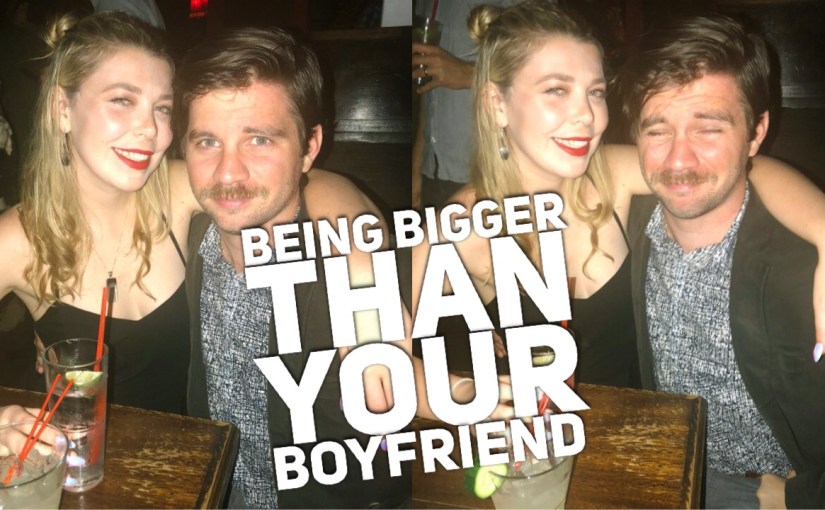
Being Bigger Than Your Boyfriend

Image result for big girl get on top if he dies he dies
Do you feel self-conscious about being with a partner that is smaller than you?

You’re not alone.

I think a lot of people feel this particular insecurity. One of the many many factors that went into me wanting to lose weight so long ago was feeling uncomfortable about weighing significantly more than my ex. That was very dumb because the weight loss and subsequent eating disorder put a way bigger strain on our relationship than my insecurity ever did.

There is this common heterosexual relationship myth that the female should be smaller than the male. But like, why? Seriously, why? I have always been attracted to people who are smaller than me in some way. I can’t help who I like. My mom is taller than my dad and they’ve been married for over 30 years.

Image may contain: 2 people
My mom and dad ~ 1984

The feeling that you need to be smaller than your partner is one of those things that’s been pounded into our head over and over from the media and our culture. It’s silly though because if we limited the people we were allowed to love by certain classifications like race, gender, or size than we would miss out on the opportunity to be with incredible people who may have the power to love, shape, and change us forever.

If you’re worried about what other people are thinking about the two of you than you’re not thinking about your relationship the right way. If you’re truly in love or on your way to being in love than who the fuck cares what others think? You only need to seek validation from yourself and your partner. But mostly yourself.

Image may contain: 3 people, people standing and indoor

Maybe you’re in a relationship with someone smaller and you are feeling a little uncomfortable or self-conscious in front of them. I get that. I have been guilty of covering my stomach, avoiding being on top, and other stupid shit like that. What I came to realize eventually is that my partner is not blind or dumb. They know what I look like and they chose to be with me NOT in spite of but likely because of it. It’s not that you’re someone’s fetish – because you are so much more than that.  Your body is unique and beautiful, and your partner chose to be with you because they love you and everything you got going on.  If you feel self conscious in front of them then to me that feels like you don’t fully trust them yet. You know what might help with that? Talking to them about it.

If you think you’re too heavy or gaining too much weight and that you’re partner won’t love you because of it – listen to me, it’s all in your head. If your partner didn’t want to be with you they wouldn’t. We’re all human we have free will. Any insecurity you feel comes from within. Take time to work on your self esteem and body positivity and realize that your partner is LUCKY to be able to touch your soft skin and beautiful body.


tumblr_mhdkafSWTC1rwsmexo1_1280.jpg
*IF A PARTNER EVER MAKES YOU FEEL SELF CONSCIOUS IN A NEGATIVE WAY OR VERBALLY ABUSES YOU ABOUT YOUR WEIGHT, LOOKS, OR ANYTHING ELSE – GTFO GIRL. Life is too damn short for that bullshit and there are plenty of other people who aren’t asshats out there for you.


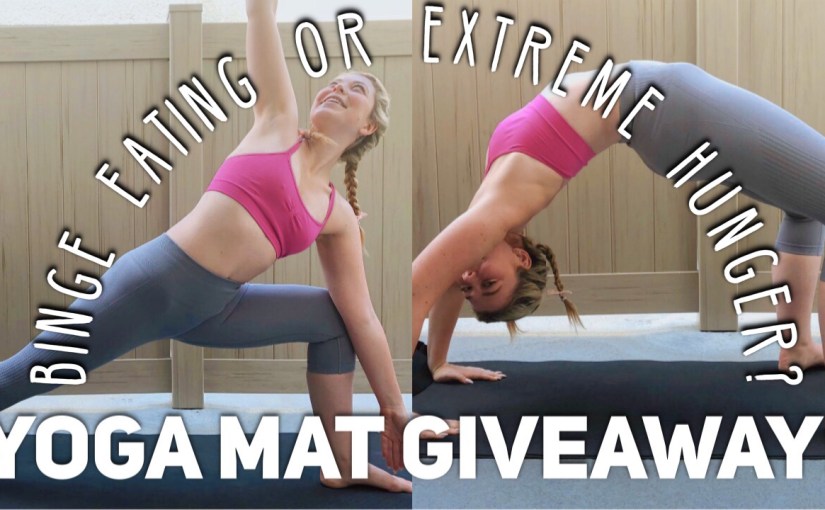
Have You Developed Binge Eating Disorder? (+Giveaway!)

“I’m in recovery and I’ve been eating a lot more than usual. I think I’m developing binge eating disorder. I feel like I’m losing control around food. HELP!”

I can empathize with this feeling, I felt this way at the beginning of recovery as well.  During the beginning when the extreme hunger was at its peak I didn’t know how to process what I was doing. I was scared, and it was emotional, and I all but completely convinced myself that this was binge eating disorder.

tumblr_msf7y5SeRs1qf1498o1_500.jpg

When you are recovering from an eating disorder or restrictive eating or chronic dieting, your body needs to replenish the backlog of caloric deficit that you have built up over the years.  Even if you have been in quasi recovery for a long time.  Your body still has not had the chance to metabolically restore itself to its set point.  You will continue to get these strong urges to eat large amounts of food until your body has had its chance to properly heal. Until you are energy balanced and your metabolism is back to functioning optimally your body will continuously call out for more food.  This desire to eat (and eat and eat and eat) is perfectly natural when you are recovering from disordered or restrictive eating.  Your body heals itself through calories and eating what seems like a lot or a “binge-able amount” isn’t actually a binge but a natural bodily response to starvation (and/or restriction).

tumblr_mg346oaUm31qf1498o1_500.jpg

Eating disorders gain their power from control and often in recovery the hardest part is feeling the loss of that control. It’s a scary and difficult time to navigate, but just because it FEELS like you are going off the rails by eating a ton doesn’t mean you are developing a new psychopathy.  Binge eating disorder is a very serious mental health disorder with many other symptoms and aspects other than just “eating a lot” and “feeling out of control”.  When you are a person who is recovering from restrictive eating in any way, anorexia, orthorexia, EDNOS, or are in quasi recovery, responding to the extreme hunger that your body feels in recovery is not the same thing as having binge eating disorder.

The thought process that the unrestricted eating in recovery is actually BED is unbelievably common.  Most people have a certain picture of what their recovery will look like and when it goes off the rails and outside the lines of the plan the reactions can be extreme.  Recovery is about letting go of structure, numbers, and plans around food and just letting your body have what it truly needs. This is scary, but it’s a sign you are on the right path.  Learning to become comfortable with the discomfort is a huge and important step forward. Your body knows what it wants and needs, and you should honor that to get yourself better.

ALSO – I’m having a giveaway over on my Instagram. The company Levoit has agreed to send one of my followers their super dope yoga kit.  I’m super duper thriled because I have been looking for a way to thank you all for getting me to 1,000 subscribers on my Youtube channel!! If you are interested in entering the giveaway all of the details are on my instagram.  Giveaway ends on 5/2/18.

Processed with VSCO with t1 preset

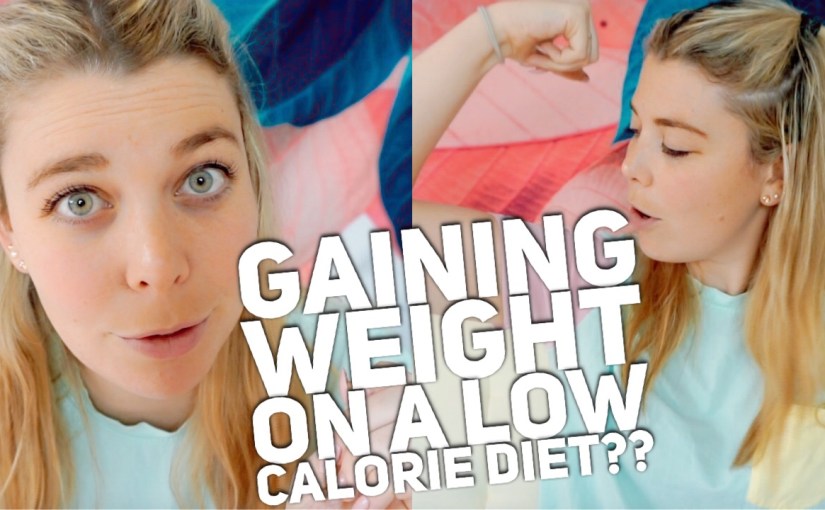
Gaining Weight on A Low Calorie Diet

So, you’ve been restricting calories to lose weight. For whatever reason, perhaps because you have an eating disorder, because you think you need to look a certain way to wear a bathing suit, or because the media and our culture have forced you to look upon yourself with distaste and wish for something better.  You’ve googled what to do and low-calorie diets and meal plans come up immediately.  “If energy in is less than energy out and the pounds will melt right off!” the articles say.

Maybe that was you 1 year ago, and you tried the diet, and it worked! But then you couldn’t maintain the restrictive lifestyle (because who could??) so the weight came back on. Then you tried again. and again. Now you’re restricting your calories under the façade of a “diet” just like you did before but this time you are noticing that you’re gaining weight!! Why the fuck is this happening??

angry look whos talking now GIF
your metabolism @you

Well let me tell you – honey, your metabolism is mad.

When you attempt to lose weight quickly with low calorie meal plans, sure you lose some fat, but you ALSO lose muscle.  Your muscle mass is the most important factor that keeps your metabolic rate high.

Let’s say before you started dieting you were able to maintain your weight easily on 2700 calories a day. (These numbers are just examples). Then you go on your first low-calorie diet and lose 10 pounds quickly. While that rapid weight loss is initially encouraging it is not as fantastic as you may think.  You see, those 10 pounds include muscle loss.  So after a few weeks when life gets in the way and the diet is no longer sustainable, the weight comes back on AND your metabolic rate has dropped from 2700 to 2300 because of the muscle loss. With each new diet your metabolic rate decreases even more until your maintenance calories are lower than your diet calories – hence why you will eventually gain weight on low calorie diets.

a32b9c392d3cb0aba830ee6399a7d444.jpg

Unfortunately, this is a common problem and one of the reasons why the diet industry is an evil multi-billion-dollar industry. You see when these low-calorie meal plans work initially, people then blame themselves when they aren’t able to sustain them.  Then they continuously attempt to recreate the results of the first time but every time you force starvation onto your body through the guise of a “diet” you are furthering metabolic damage. This is also why when the weight comes back on eventually, you gain more than you started with. It’s not your fault, it’s the lies of diet culture that “innocently” suggest unsustainable and dangerous meal plans on people desperate for a quick fix.

So, you’re in a metabolically suppressed state commonly known as “starvation mode” – what do you do? Well the first step is obviously to STOP low calorie diets.  When I was stuck in this situation the only thing that worked for me was to eat eat eat until my metabolism caught up with me. No, your metabolism is not “broken,” I promise you that is impossible. Yes, I gained he weight back to where I was before I ever attempted my first diet… but I’m so much happier loving myself in this body than I ever was torturing myself in my calorie restricted body.

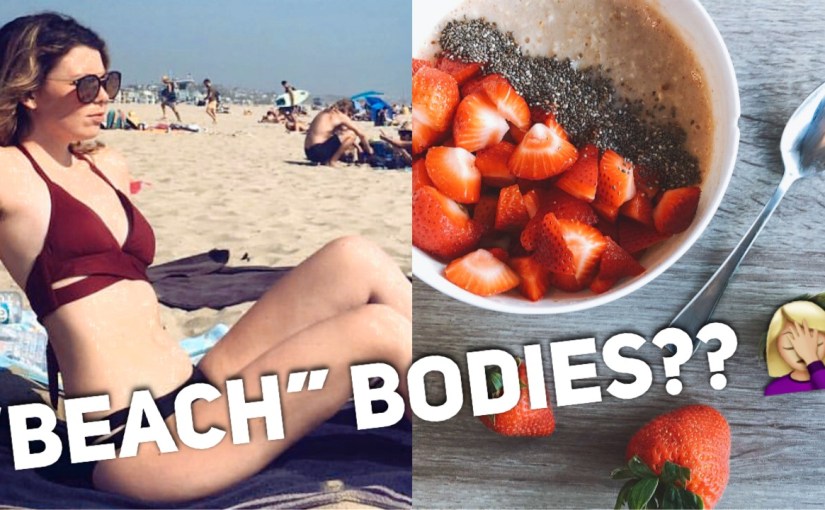
“Beach” Bodies???

IMG_1476Bikini Body Season. What the f#@! does that mean? Typically, it refers to the months in late spring/early summer right before the weather is right for pool parties, beach days, and barbecues (aka reasons to put on a bikini).  Since diet culture attempts to make women feel like they don’t deserve to wear a swimsuit unless they have thigh gaps and visible rib cages – women spend this “season” dieting and working out in order to look good in waterproof underwear.
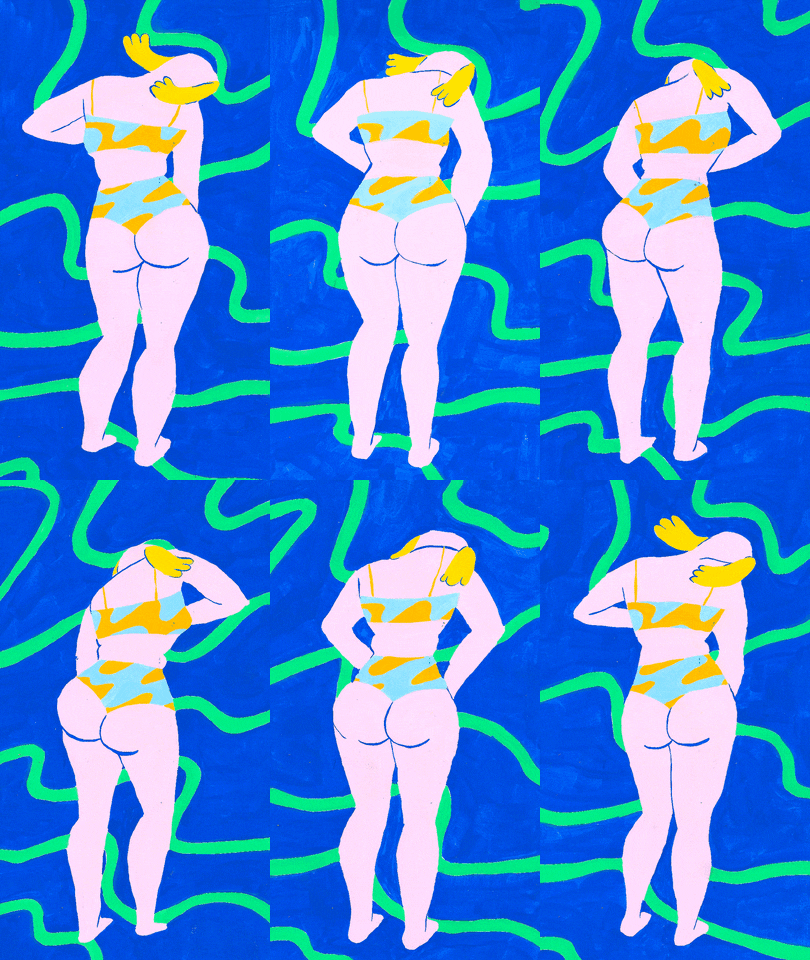

I know you already KNOW that I am going to say this but – The ONLY thing you need to do to achieve a “bikini” body is to put a damn bikini on your body!!

 GIF

If someone cares deeply about the way other women look in a bikini that says a lot more about the character of the person judging than it does about the person enjoying their time at the beach.

If you feel pressured in any way to achieve a certain type of body just because you may be in a bathing suit in the upcoming months remember that it is not worth stressing over because this “expectation” is simply a product of diet culture.  And may I remind you, DIET CULTURE IS BULL SHIT.

Don’t sacrifice your mental health for your physical health.  You are not an object. Though the media may have you believe that the only reason to wear a bikini is for others to scrutinize you.

The truth is the only reason to wear a bikini is:

  • Because you want to

Our bodies should be celebrated and not hated.  Every flaw or mark that separates your body from an airbrushed super model is a reminder of your journey and uniqueness. You are beautiful, and “beach body season” is bullshit.

Dealing with Weight Gain: Set Point Vs. Minimum “Healthy” Weight

What is your healthy weight?

I talk a lot about set point weight vs. minimum “healthy” weight (if you’re new here or have no idea wtf I’m talking about check out this post) but today I wanted to get into the difference between them. I will also touch on a few tips for dealing with the weight gain that comes with recovery and finding your set point.

Your lowest “healthy” weight is the minimum weight that is healthy for your body according to the bullshit BMI scale. A BMI of around 20 for example (but just a reminder, BMI is bullshit, I can’t say that enough).  Your set point weight is the weight that your body maintains happily without any interference.  It is the weight that your body likes to be when you are just living your life, eating freely and intuitively, and only exercising in the form of activities you love to do or not at all. It’s possible these weights are the exact same, everyone is unique, but it isn’t likely. When weight restoring for any recovery from a disordered relationship to your body or food your set point is the only weight that will keep you happy for life.

weightcollage
Left: Quasi Recovery, Minimum “Healthy” Weight – surviving on calorie counting and over exercising                                        Right: Set Point, Thriving on intuitive eating and living in freedom from numbers and scales

When I was in quasi-recovery I was maintaining my minimum “healthy” weight through calorie counting and intense exercising.  Way too much space in my brain was taken up by numbers and scales. I thought that this was just the way my life would be forever because there was no way I could be happier if I gained weight.  At that point I had already gained a little bit of weight from my anorexic body and was not comfortable with the idea of gaining ANY more.

Then one day it clicked and I began my journey towards my set point, but gaining weight was hard. It was not rainbow and sunshine. Here are some tips from my personal experience:

  1. Buy flowy clothes – loose dresses, leggings, big t-shirts, track pants.  As you gain weight you will not only put on weight you will also retain water, experience swelling, and possibly overshoot.  Feeling your body change and expand in clothes can be very triggering. It’s best to avoid it altogether. No more jeans or bodycon dresses for awhile (and you’re welcome btw, no one likes wearing that shit anyway!)
  2. Avoid mirrors, avoid scales – any form of body checking is futile and can be a quick trigger into a relapse. I covered my full length mirror and only used a small mirror for makeup. Despite that, there were days when I caught a glance of my reflection and thought a big fat ugly monster was staring back at me, but that monster was just me. After I finally settled into my set point I realized how distorted my own view of myself was while I was gaining weight.
  3. Be consistent with a counselor. Nothing is as helpful as stable accountability and someone to be honest about reality with you as your brain tries to fuck with you about your body and weight.
  4. Tell your friends and family so that they know exactly what’s going on. Sometimes people are afraid to recover or gain weight on their own because they are worried what others will think. You should never compromise your health for the opinions of others, but if you tell your friends and family then they will be aware and you don’t have to feel any shame around them.

It took me about a year to find my set point.  Now that I’ve been at this weight for over two years I am never looking back.  I’m at a weight that I once thought would be impossible for me to ever love myself at.  But I love myself more at this weight than I have at any other point in my life. I can eat whatever the fuck I want, I only workout when I feel like it, and I can just be me and live my life. I don’t have to stress about my weight because I am right where my metabolism and body wants to be at.  That freedom is the difference between surviving to maintain your minimum “healthy” weight and thriving at your set point. It takes time and patience with yourself, but it is worth it.